Puya, Genus, spp., Multiple species,
- Genus
- Multiple species
puya
Overview
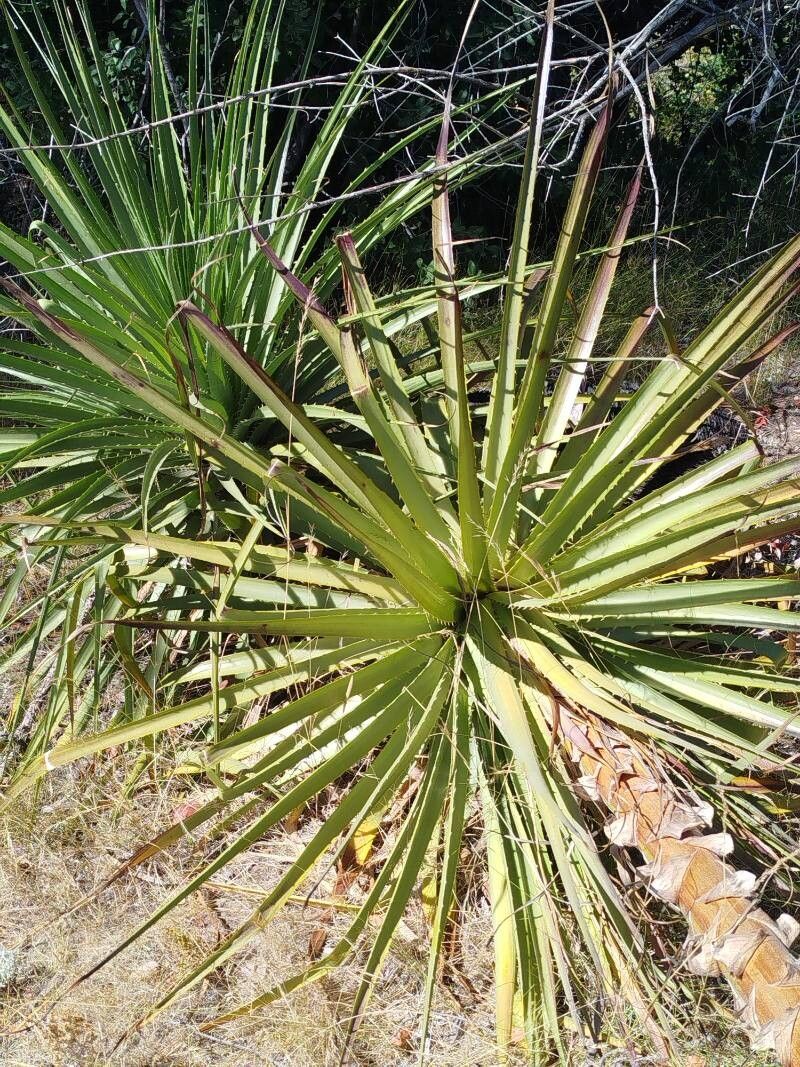
Puya is a genus of roughly 200 species of terrestrial bromeliads in the family Bromeliaceae, native to the mountains and arid zones of South and Central America, with the greatest diversity in the Andes. Plants form dense rosettes of stiff, narrow leaves armed along their margins with sharp recurved spines, the foliage grey-green to silvery and 1 to 4 feet (0.3 to 1.2 m) long. Unlike most bromeliads, Puya roots in the ground rather than growing on trees. At flowering, a stout spike rises well above the rosette, carrying densely packed flowers in metallic blue-green, teal, yellow, or purple, often with orange anthers; the spikes range from 3 feet (0.9 m) in smaller species to over 30 feet (9 m) in P. raimondii, which produces the tallest inflorescence of any bromeliad. Many species are monocarpic, with each rosette dying after it flowers, though offsets or seed continue the colony. The genus grows on rocky slopes and high grasslands, often at elevations where nights are cold, and several species tolerate light frost. P. alpestris and P. berteroniana are grown in dry gardens for their turquoise flowers. Plants are slow to reach flowering size, sometimes taking a decade or more, and the spined foliage makes large clumps awkward to work around.
Native Range
Puya is native to South and Central America, concentrated in the Andes from Colombia and Venezuela south to Chile and Argentina, with outlying species in Costa Rica. Plants grow on rocky mountain slopes, high grasslands, and arid coastal hills.Suggested Uses
Puya is grown in dry and gravel gardens, rockeries, and large containers, chiefly for its tall, metallic-flowered spikes. The spined rosettes also serve as barrier plantings in frost-free and Mediterranean climates.How to Identify
Appearance
Size & Dimensions
Height3' - 15'
Width/Spread2' - 6'
Bloom Information
Detailed Descriptions
Flower Description
Metallic blue-green, teal, yellow, or purpleFoliage Description
Grey-green to silveryGrowing Conditions
Sun Requirements
Requires 6-12 hours of direct sunlight daily
• Full Sun: 6+ hours of direct sunlight
• Partial Shade: 3-6 hours of direct sunlight
• Full Shade: Less than 3 hours of direct sunlight
Care & Maintenance
Care Guide
Puya grows in full sun and sharply drained, gritty or rocky soil, tolerating drought and poor ground once established. Hardier species such as P. alpestris withstand short frosts to about 20 F (minus 7 C), while tropical species are tender. Plants need moderate water during active growth and dry conditions in winter, since cold, wet soil causes the roots to rot. Container culture in free-draining mix and planting in raised, gravelly beds both suit the genus. The spined leaves make handling and dividing clumps awkward. Feeding is minimal, and overly rich soil produces soft, weak growth.Pruning
Puya needs little pruning. Spent flower spikes are cut to the base after seed has set or the display has faded, and dead outer leaves are removed to tidy the rosette. Monocarpic species can be cleared once the flowered rosette dies, leaving the offsets.Container Growing
Suitable for container growing
Minimum container size: 5 gallons