1 / 5
© Paul Paradis, some rights reserved (CC-BY-SA) · Wikimedia Commons
Hemerocallis 'Purple de Oro'
Purple de Oro Daylily
Horticultural origin (East Asian parent species)
At a Glance
TypePerennial
HabitClumping
FoliageSemi-evergreen
Height18-22 inches (45-55 cm)
Width18-24 inches (45-60 cm)
Maturity2 years
Overview
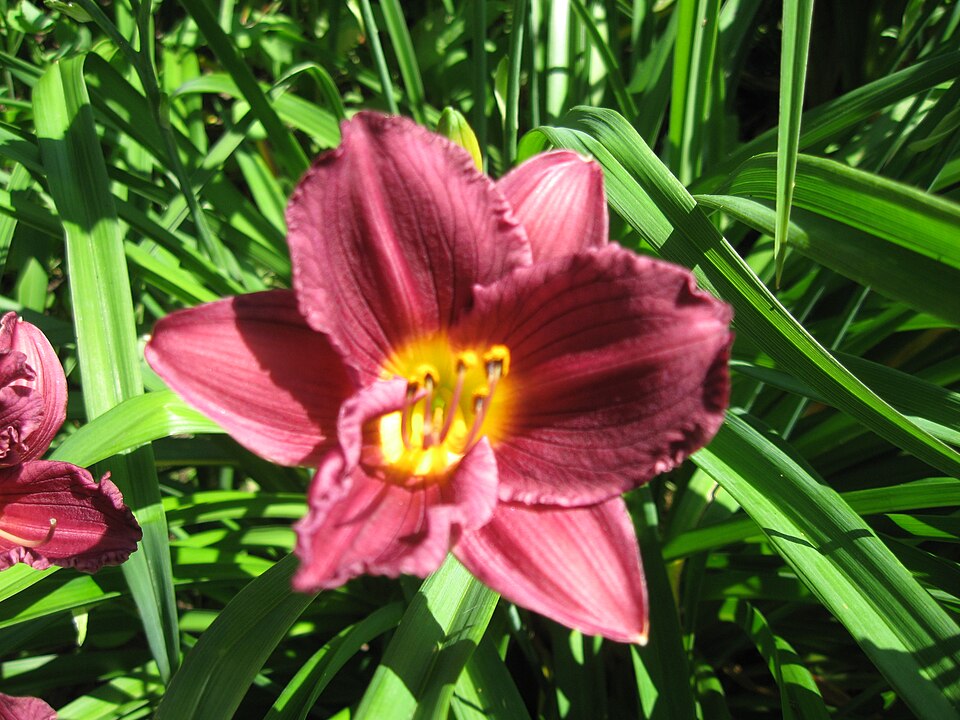
'Purple de Oro' is a compact reblooming daylily cultivar of Hemerocallis forming clumps 18-22 inches (45-55 cm) tall in flower and 18-24 inches (45-60 cm) wide. Foliage is medium green, strap-shaped and arching, 14-18 inches (35-45 cm) long, with semi-evergreen behavior in zones 7-9 and full dormancy in zones 3-6. Scapes carry 12-18 buds; individual flowers measure 3 inches (7.5 cm) across, deep purple with a small gold throat and a lighter purple midrib on each segment. Diploid genetics give thinner petals than tetraploid daylilies but allow more frequent rebloom. Initial bloom occurs from late June through July in zones 4-7 with reblooming through September in most years. In zones 8-9 bloom begins in May and rebloom can produce 3-4 flushes through October. Compact size suits front-of-border placement at 12-15 inch (30-38 cm) spacing. All parts are toxic to cats; ingestion can cause acute kidney failure within 24-72 hours. Susceptible to daylily rust in warm humid climates and to slug damage in spring.
Native Range
'Purple de Oro' is a horticultural hybrid with no native range. The genus Hemerocallis is native to temperate East Asia from Japan and Korea through eastern China and Siberia, with most species occurring in moist meadows, woodland edges, and roadsides at low to moderate elevations.Suggested Uses
Planted in front-of-border positions, as edging, in mass plantings, and in small-scale gardens at 12-15 inch (30-38 cm) spacing. Used in containers and as lawn-edge plantings due to compact size. Container culture works in pots of at least 3 gallons (11 L) with regular watering and division every 2-3 years.How to Identify
Appearance
Size & Dimensions
Height1'6" - 1'10"
Width/Spread1'6" - 2'
Reaches mature size in approximately 2 years
Bloom Information
Initial flowering from late June through July in zones 4-7. In zones 8-9 first bloom begins in mid- to late May. Reblooming occurs from August through September in zones 4-7, and through October in zones 8-9 with 3-4 distinct flushes per season. Each scape produces flowers over 3-4 weeks; total clump bloom typically lasts 8-12 weeks with deadheading.Detailed Descriptions
Flower Description
Deep purple with yellow throatFoliage Description
Medium greenGrowing Conditions
Sun Requirements
Requires 6-10 hours of direct sunlight daily
• Full Sun: 6+ hours of direct sunlight
• Partial Shade: 3-6 hours of direct sunlight
• Full Shade: Less than 3 hours of direct sunlight
Care & Maintenance
Care Guide
Plants establish within one growing season when watered weekly during dry periods of the first year. Mature clumps tolerate 2-3 weeks without rain. Apply balanced 10-10-10 fertilizer at half strength in early spring as new growth emerges. Daylily rust (Puccinia hemerocallidis) appears as orange-yellow pustules on leaf undersides in warm humid regions and is more severe in zones 7-10. Slugs and snails feed on emerging foliage in spring. Compact reblooming cultivars require more frequent division than full-size daylilies; divide every 2-3 years in early spring or late summer when bloom declines.Pruning
Spent scapes are cut to the base after the last flower opens to direct energy into root growth. Yellow lower leaves can be removed at any time during the season. Foliage is cut to 4-6 inches (10-15 cm) after the first hard frost or in early spring before new growth emerges. Removing seed pods extends flowering by 5-7 days in some seasons.Pruning Schedule
J
F
M
A
M
J
J
A
S
O
N
D
summerfall
Maintenance Level
lowContainer Growing
✓ Suitable for container growing
Minimum container size: 3 gallons