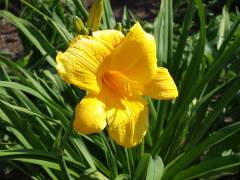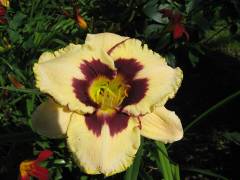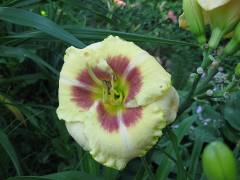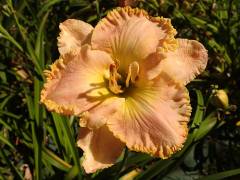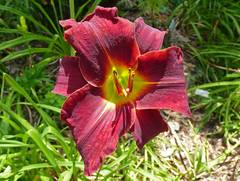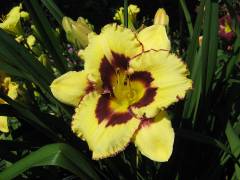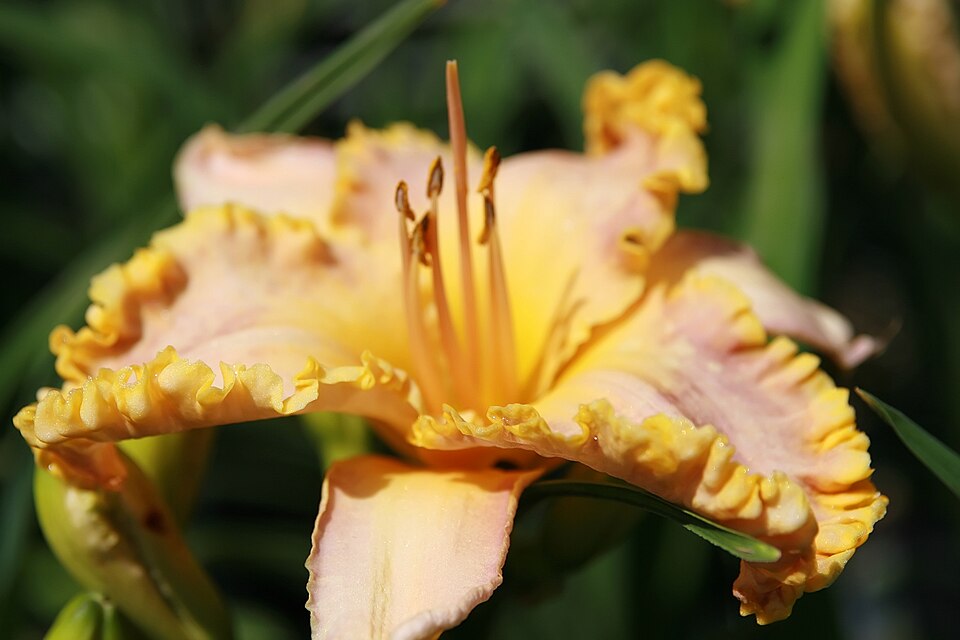
Hemerocallis, Genus, 'French Lingerie', Cultivar,
- Genus
- Cultivar
French lingerie daylily
Overview
Hemerocallis 'French Lingerie' is a clump-forming herbaceous perennial reaching 24-28 inches (60-70 cm) tall in bloom and forming dense clumps 18-24 inches (45-60 cm) wide from a thickened fibrous root system. Strap-like arching foliage rises 18-22 inches (45-55 cm) in mid-green and fans outward from a central crown. Flower scapes carry 6-10 buds opening sequentially over 14-21 days; each individual flower opens for a single day before closing and dropping cleanly. Flowers measure 5-6 inches (13-15 cm) across with 6 ruffled tepals in pale cream to soft blush pink and a green throat, displayed in an outward-facing cup form typical of modern tetraploid breeding. The cultivar is a midseason bloomer in zones 5-7 (mid-June through mid-July) and an early-midseason bloomer in zones 8-9 (early to mid-June). Plants are hardy through USDA zones 3-9 with deciduous foliage in zones 3-7 and semi-evergreen behavior in zones 8-9. Roots and flowers contain colchicine-like compounds and unidentified nephrotoxins; ingestion of any plant part causes acute kidney failure in cats and is potentially fatal without veterinary intervention, while dogs and humans typically experience only mild gastrointestinal upset. Established clumps support 3-5 years of bloom before dividing, and division is in early spring or late summer 4-6 weeks after bloom.
Native Range
The Hemerocallis genus is native to eastern Asia, ranging from Siberia and Mongolia through Japan, Korea, and China, with wild species growing in mountain meadows, stream margins, and forest edges at 200-2,500 m (650-8,200 ft) elevation. Modern hybrid daylilies including 'French Lingerie' descend from H. fulva, H. lilioasphodelus, H. citrina, and other Asian species crossed and selected by breeders in the United States, Europe, and Australia since the 1930s. The cultivar was raised in commercial breeding programs and does not occur in the wild.Suggested Uses
Used in mixed perennial borders, mass plantings, and along sunny driveways spaced 18-24 inches (45-60 cm) apart, paired with later-summer perennials such as Echinacea, Phlox paniculata, and ornamental grasses for sequential bloom. Used as a tough mass-planting in full-sun slopes where the fibrous root system holds soil. Container culture is workable in 5-gallon (19 L) or larger containers in zones 4-9 with reliable summer water; container plants are particularly susceptible to drought during scape development.How to Identify
Appearance
Size & Dimensions
Height2' - 2'4"
Width/Spread1'6" - 2'
Bloom Information
Blooms mid-June through mid-July in zones 5-7, early to mid-June in zones 8-9, and late June through July in zones 3-4. Each flower scape opens 6-10 flowers in sequence, with 1-2 open per day on a single scape; an established clump carries 4-8 scapes producing 15-30 days of continuous flower display. Individual flowers last a single day, opening at dawn and closing by dusk; cool overcast days extend flower duration by 4-6 hours but do not produce a second day. Reblooming behavior is not typical for this cultivar; a single seasonal display is standard.
Detailed Descriptions
Flower Description
pale cream to soft blush pink with green throatFoliage Description
mid-greenGrowing Conditions
Sun Requirements
Requires 6-10 hours of direct sunlight daily
• Full Sun: 6+ hours of direct sunlight
• Partial Shade: 3-6 hours of direct sunlight
• Full Shade: Less than 3 hours of direct sunlight
Care & Maintenance
Care Guide
Performs in full sun to part sun with at least 6 hours of direct light, with light afternoon shade tolerated in zones 8-9 where pale-colored flowers can fade in intense midday sun. Soil should be moisture-retentive but well-drained, with pH 6.0-7.5; the genus tolerates a wide range of soil types from sandy loam through heavy clay. Watering needs are deep weekly soaks during the first growing season and during scape emergence in late spring; established plants tolerate 4-6 weeks of summer drought without supplemental water but produce more flowers with consistent moisture. A balanced 5-10-10 fertilizer applied at 2 oz per square yard in early spring as new foliage emerges and again 4 weeks before bloom supports flower count. Daylily rust (Puccinia hemerocallidis), thrips on scape buds, and slugs on emerging spring foliage are the main pressures; rust is reduced by dividing congested clumps and removing fallen foliage in autumn.Pruning
Spent flower scapes are cut at the base after the last bud opens, redirecting energy from seed-pod development into root reserves. Yellowing and damaged foliage may be removed throughout the growing season; in autumn after the first hard frost, all remaining foliage is cut back to 2-3 inches (5-7.5 cm) above the crown to reduce overwintering rust spores. Clumps are divided every 3-5 years in early spring or 4-6 weeks after bloom, splitting the crown into 3-fan divisions for replanting.Pruning Schedule
Prune: November
fall
Container Growing
Suitable for container growing
Minimum container size: 5 gallons