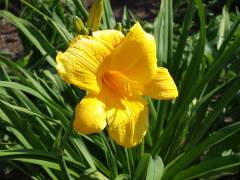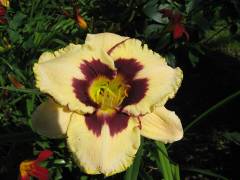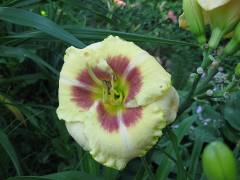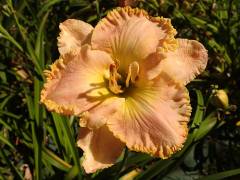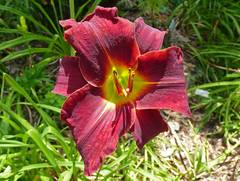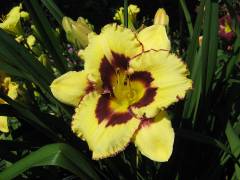
Hemerocallis, Genus, 'Wineberry Candy', Cultivar,
- Genus
- Cultivar
wineberry candy jumbo daylily
Overview
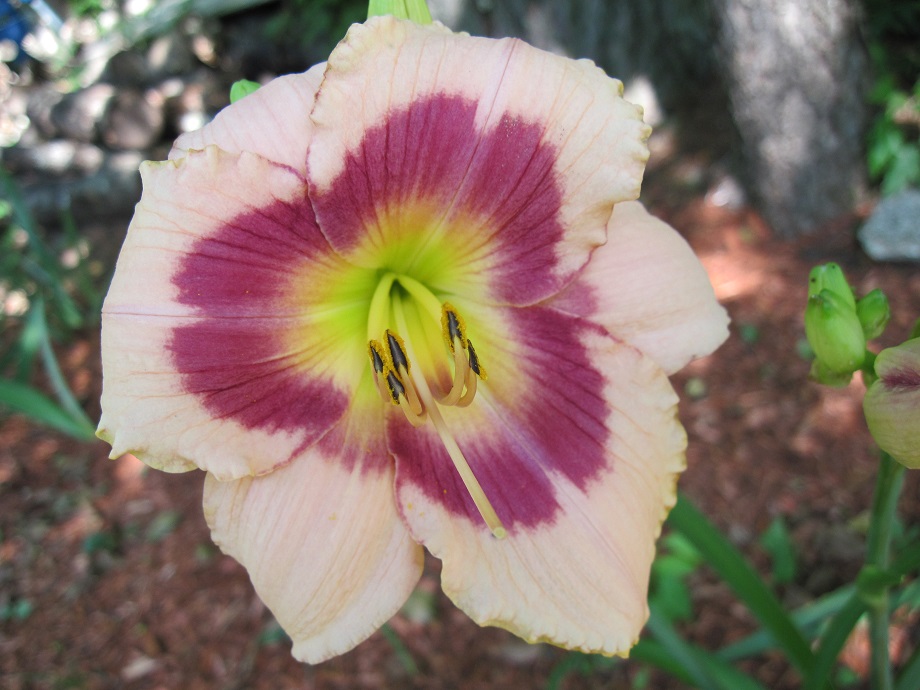
Hemerocallis 'Wineberry Candy' is a clump-forming diploid daylily reaching 26-28 inches (66-71 cm) tall in bloom and 18-24 inches (45-60 cm) wide. Foliage forms a basal fountain of arching strap-shaped leaves 16-20 inches (40-50 cm) long, medium green, deciduous in zones 3-6 and semi-evergreen in zones 7-9. Flower scapes carry 12-18 buds, each opening to a 5.5 inch (14 cm) wide circular flower in light pink with a raspberry-wine eye band 1 inch (2.5 cm) across and a yellow-green throat. Tepals are lightly ruffled and slightly recurved. Each flower lasts a single day; total bloom extends 4-6 weeks per clump in early to mid-summer. Foliage may yellow during August drought; cutting affected leaves to 6 inches (15 cm) above the crown prompts a flush of fresh foliage. Daylily rust (Puccinia hemerocallidis) develops on lower foliage in humid southern climates and produces orange pustules on leaf undersides. Crown rot occurs in waterlogged soils. Plants tolerate most pests and divide readily; the cultivar was awarded the American Hemerocallis Society Stout Silver Medal in 2002.
Native Range
Hemerocallis 'Wineberry Candy' is a diploid hybrid daylily registered in 1992 by Patrick Stamile. Parent species in the genus Hemerocallis are native to Asia, occurring in meadows, scrub, forest edges, and stream banks of China, Japan, and Korea from sea level to 8,000 feet (2,400 m); none are native to North America.Suggested Uses
Used in mixed perennial borders, mass plantings on slopes, and roadside plantings at 18-24 inch (45-60 cm) spacing. Grows in containers of at least 5 gallons (19 L) with consistent moisture during bloom. Massed in groups of 5-9 plants for sustained early-summer color in zones 3-9.How to Identify
Appearance
Size & Dimensions
Height2'2" - 2'4"
Width/Spread1'6" - 2'
Bloom Information
Early to mid-summer bloom, mid-June through late July in zones 4-7. In zones 8-9, bloom shifts to early to mid-June. Each scape blooms over 14-21 days; new buds open daily. Total bloom per clump extends 4-6 weeks. Rebloom is sporadic in zones 7-9 in warm autumns.
Detailed Descriptions
Flower Description
Light pink with raspberry-wine eye band and yellow-green throatFoliage Description
Medium greenGrowing Conditions
Sun Requirements
Requires 6-12 hours of direct sunlight daily
• Full Sun: 6+ hours of direct sunlight
• Partial Shade: 3-6 hours of direct sunlight
• Full Shade: Less than 3 hours of direct sunlight
Care & Maintenance
Care Guide
Water 1-2 times weekly during the first growing season. Established plants tolerate 3-4 weeks without rain and flower most heavily with consistent moisture during scape development in spring. Apply a balanced 10-10-10 fertilizer at 1/4 cup per square yard in early spring as new growth begins. Daylily rust (Puccinia hemerocallidis) develops on lower leaves in humid southern climates; affected leaves are cut and discarded to slow spread. Crown rot occurs in waterlogged soils. Daylily gall midge larvae deform spring buds in the Pacific Northwest; affected buds are removed and discarded. Divide every 4-5 years in early spring or after bloom when bloom production declines.Pruning
Cut spent flower scapes to the base after the last bloom on each scape. Remove yellowing or rust-affected leaves at any point in the growing season. Cut foliage to 4-6 inches (10-15 cm) above the crown in late autumn after first hard frost or in early spring before new growth emerges.Pruning Schedule
Prune: March–April & November
fallearly spring
Container Growing
Suitable for container growing
Minimum container size: 5 gallons