Polemonium, Genus, caeruleum, Species,
- Genus & species
Jacob's ladder
Overview
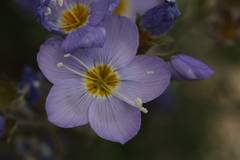
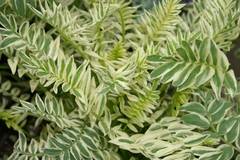
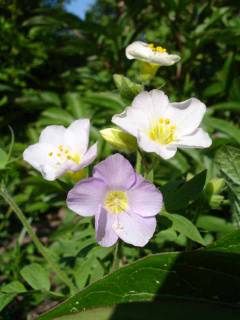
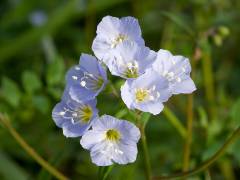
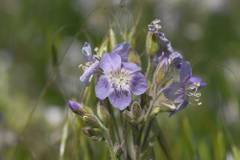
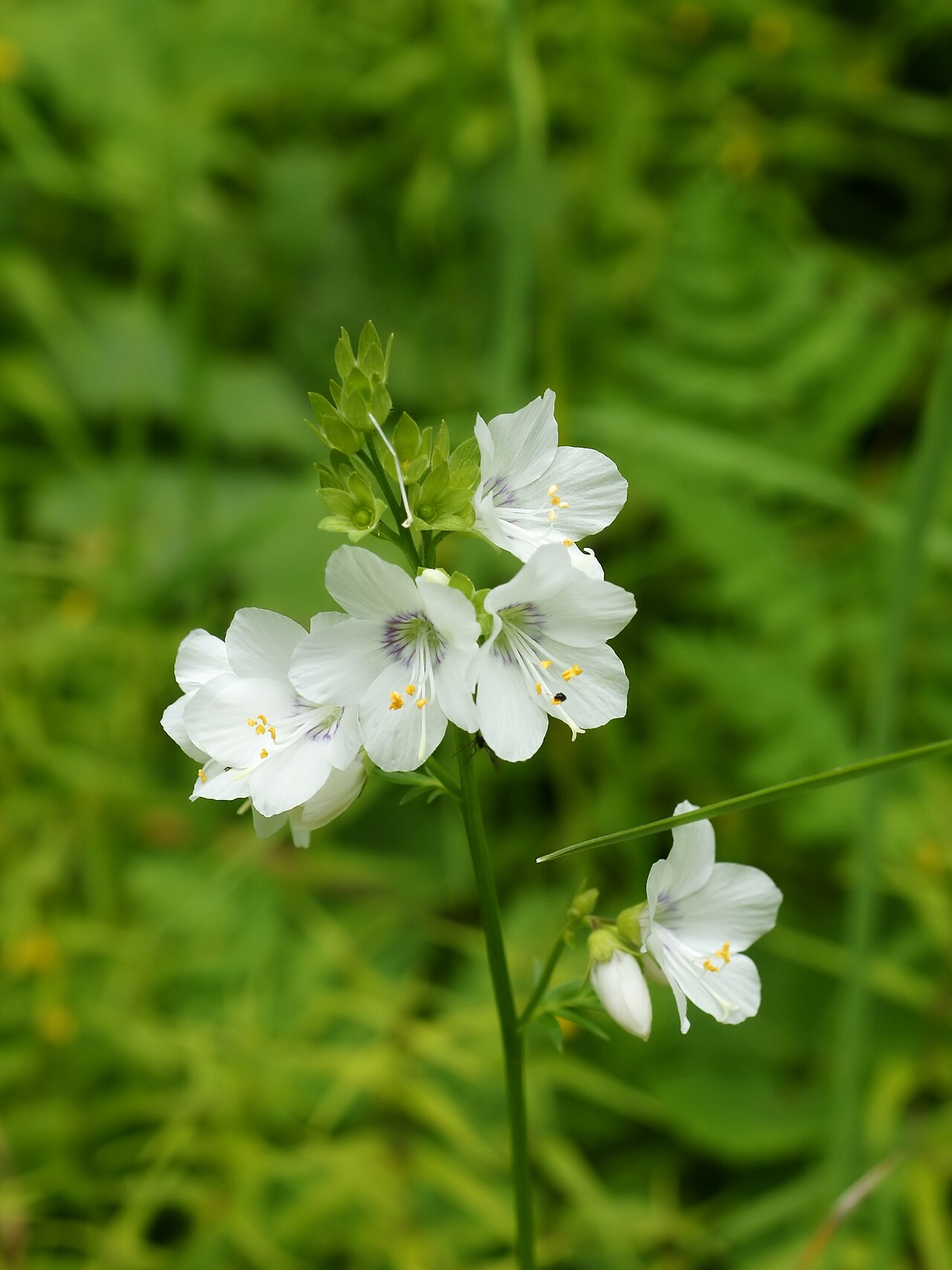
Polemonium caeruleum is a herbaceous perennial forming a clump 18-36 inches (45-90 cm) tall and 18-24 inches (45-60 cm) wide from a short rhizome. Leaves are pinnate, 6-16 inches (15-40 cm) long, with 19 to 27 lance-shaped leaflets 0.8-1.6 inches (2-4 cm) long set in opposite pairs along the stalk in a ladder arrangement. Flowers are cup to bell-shaped, 0.6-1 inch (1.5-2.5 cm) across, blue-violet with five rounded lobes and projecting orange-yellow stamens, carried in branched terminal panicles of 20 to 50 flowers. Flowering runs through June and July for 4-6 weeks, and white-flowered forms are grown under cultivar names. Foliage falls outward after flowering and opens a gap at the centre of the clump. Each plant self-seeds at 50 to 200 seedlings if panicles are left to ripen. Powdery mildew and leaf spot mark the foliage from July onward in dry summers, and affected leaves do not recover. Plants persist 3-5 years in moist, free-draining ground and are shorter-lived on dry or waterlogged soil. Growth restarts from the crown in March and reaches full height by late May.
Native Range
Polemonium caeruleum grows in damp meadows, streamsides, limestone grassland, and open woodland across Europe and temperate Asia, from sea level to 8,200 feet (2,500 m). In Britain it is a nationally scarce native confined to limestone dales and screes in the Pennines and the Peak District. It occupies neutral to alkaline soils that stay moist through summer.Suggested Uses
Planted in borders, damp meadow plantings, and light woodland edges at 18-24 inch (45-60 cm) spacing, where the ladder foliage forms a low layer beneath taller perennials. Used in pollinator plantings, where flowers carry bumblebees and hoverflies through June and July. Container culture uses pots of 3 gallons (11 L) or larger with steady moisture, and cut stems hold 4-6 days in water.How to Identify
Appearance
Size & Dimensions
Height1'6" - 3'
Width/Spread1'6" - 2'
Bloom Information
Panicles open through June and July in zones 4-8, and from late May in zones 7-8. An individual flower lasts 3-5 days, and total bloom on a plant runs 4-6 weeks. Cutting the flowering stems at the base as the last flowers fade prompts a second, lighter flush in August in about half of seasons. Flowering ends 2-3 weeks earlier in dry soil.
Detailed Descriptions
Flower Description
blue-violet with orange-yellow stamensFoliage Description
mid greenGrowing Conditions
Sun Requirements
Requires 4-8 hours of direct sunlight daily
• Full Sun: 6+ hours of direct sunlight
• Partial Shade: 3-6 hours of direct sunlight
• Full Shade: Less than 3 hours of direct sunlight
Care & Maintenance
Care Guide
Soil stays moist through the growing season, and plants in ground receiving less than 1 inch (25 mm) of water weekly flower for 2-3 weeks less and mildew earlier. Plants grow in full sun in zones 3-6 and under 4-6 hours of sun in zones 7-8, where afternoon shade limits leaf scorch. Feeding is limited to a spring mulch, since nitrogen produces soft foliage that falls outward and mildews. Powdery mildew and Septoria leaf spot mark the foliage from July onward, and cutting the plant to the basal leaves after flowering produces clean regrowth within 3-4 weeks. Self-seeding runs to 50-200 seedlings per clump if panicles are left to ripen, and seedlings flower in their second year. Clumps are divided in March or September every 3-4 years, since plants decline after 3-5 years.Pruning
Flowering stems are cut at the base as the last flowers on the panicle fade in July, which stops self-seeding and prompts a second flush in some seasons. The whole clump is cut to the basal leaves in late July where mildew marks the foliage, producing clean regrowth within 3-4 weeks. Dead foliage is cleared to the crown in March before new growth starts. No woody growth forms, so no structural pruning applies.Pruning Schedule
Prune: March & July
early springsummer
Container Growing
Suitable for container growing
Minimum container size: 3 gallons