Polemonium, Genus, carneum, Species,
- Genus & species
salmon Jacob's ladder
Pacific Northwest of North America (southern Washington, western Oregon, northern California)
Overview
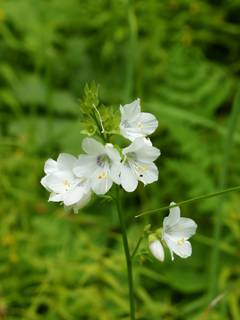
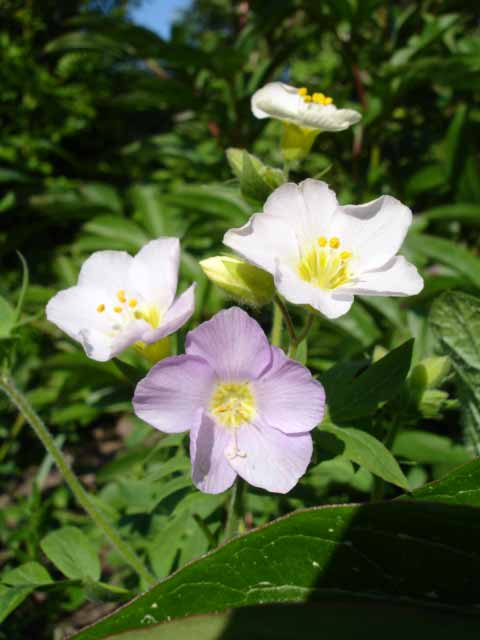
Polemonium carneum is a deciduous herbaceous perennial reaching 12–18 inches (30–45 cm) tall and 12–15 inches (30–38 cm) wide, with an upright to mounding clump-forming habit. The species is the pink-flowered member of Polemonium among commonly cultivated species — flowers appear in salmon-pink to apricot-pink (the specific epithet 'carneum' translates as 'flesh-colored'), while P. caeruleum, P. boreale, P. reptans, and the hybrid cultivars flower in blue-violet, lavender-blue, or purple-blue tones. Flowers are saucer-shaped to bell-shaped, 0.8–1.2 inches (2–3 cm) wide, with yellow stamens, borne in open terminal clusters from May through June over a 3–4 week window. Color varies across individual plants and seed lines: some plants lean toward a warmer salmon, others toward a cooler apricot, and a small number show pale yellow-cream flowers. Leaves are pinnately compound with 11–21 ovate to elliptic leaflets, medium green. Growth rate is moderate; the clump reaches full mature size in 2 growing seasons. The plant is a Pacific Northwest native with a restricted range: southern Washington through western Oregon to northern California, occurring in moist meadows, open woodlands, and grassy slopes at low to moderate elevations. Hardy to USDA zone 5. Not known to be toxic to pets or humans. The plant is short-lived at 3–5 years but self-sows readily in favorable garden conditions, so plantings persist through replacement seedlings rather than long-lived individual crowns.
Native Range
Polemonium carneum is native to the Pacific Northwest of North America — southern Washington through western Oregon to northern California — occurring in moist meadows, open woodlands, and grassy slopes at low to moderate elevations under 3,000 feet (900 m).Suggested Uses
Used in shaded mixed perennial borders, woodland garden edges, native plant plantings in the Pacific Northwest, or moist meadow plantings at 12–15 inch (30–38 cm) spacing. The salmon-pink to apricot-pink flower color reads as a warm-tone option among the blue-dominant Polemonium group, and pairs with blue-flowered partners such as Iris sibirica or Camassia leichtlinii for summer color combinations. Pacific Northwest gardens suit the species because the climate matches its native range — cool moist summers, partial shade from evergreen canopy, and humus-rich loam soils replicate natural habitat conditions. The short 3–5 year individual lifespan means plantings rely on self-sowing for persistence; deadheading every flower stem across the planting eliminates the seedling replacement pool and shortens the planting's total lifespan to the individual lifespan of the original plants. The plant does not grow well in dry soils, full sun positions in hot-summer climates above USDA zone 7, or formal plantings requiring long-lived permanence from individual plants.How to Identify
Appearance
Size & Dimensions
Height1' - 1'6"
Width/Spread1' - 1'3"
Bloom Information
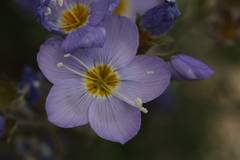
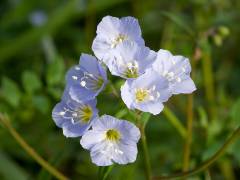
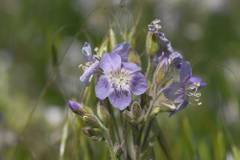
Saucer-shaped to bell-shaped flowers 0.8–1.2 inches (2–3 cm) wide in salmon-pink to apricot-pink with yellow stamens appear in open terminal clusters from May through June over a 3–4 week window. Flower color varies across individual plants and seed lines: some plants lean warmer salmon, others cooler apricot; a small number show pale yellow-cream flowers.
Detailed Descriptions
Flower Description
Salmon-pink to apricot-pink with yellow stamens; saucer-shaped to bell-shaped 0.8-1.2 inches wide in open terminal clusters; May-June; color varies across seed lines from warmer salmon to cooler apricotFoliage Description
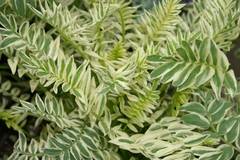
Medium green; pinnately compound with 11-21 ovate to elliptic leafletsGrowing Conditions
Sun Requirements
Requires 3-6 hours of direct sunlight daily
• Full Sun: 6+ hours of direct sunlight
• Partial Shade: 3-6 hours of direct sunlight
• Full Shade: Less than 3 hours of direct sunlight
Care & Maintenance
Care Guide
Grow in partial shade with 3–6 hours of direct or filtered light in moist, well-drained loam or silt at pH 5.5–7.0. Consistent soil moisture is required — the plant is sensitive to drought stress and drops lower leaves and finishes flowering early when soils dry through the summer months. Water deeply once per week during dry periods from May through September. Apply 2–3 inches (5–8 cm) of organic mulch over the root zone in spring to retain soil moisture and moderate root-zone temperature. The plant is short-lived at 3–5 years under garden conditions but self-sows readily, so plantings persist through replacement seedlings rather than long-lived individual crowns — allowing the flower stems to remain after bloom and shed seed onto surrounding soil maintains the planting over multiple years without active propagation work. Hardy to USDA zone 5.Pruning
Deadhead after bloom to prolong flowering for an additional 2–3 weeks, or allow flower stems to set and shed seed to maintain the planting through self-sowing. Cut back foliage to ground in late autumn after the first hard frost.Pruning Schedule
Prune: June–July
summer
Container Growing
Suitable for container growing
Minimum container size: 2 gallons