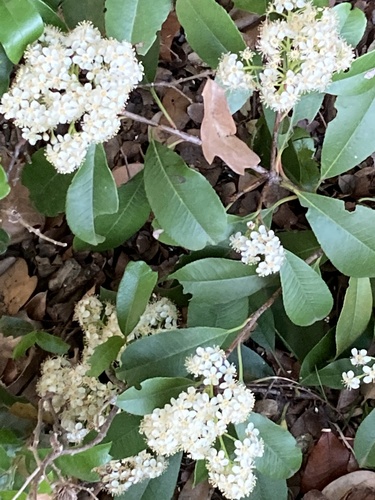
Photinia, Genus, spp., Multiple species,
- Genus
- Multiple species
christmas berries
Asia, mainly Himalaya to Japan and SE Asia
Overview
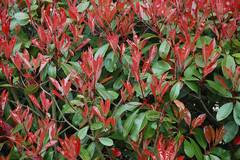
Photinia is a genus of about 40 to 60 species of evergreen and deciduous shrubs and small trees in the rose family Rosaceae, native mainly to warm-temperate and subtropical Asia, from the Himalaya through China to Japan and Southeast Asia. Plants range from large shrubs to trees 6 to 30 feet (1.8 to 9 m) tall, with alternate, leathery, finely toothed leaves; in many evergreen species and hybrids the new growth emerges bright red or bronze before turning green. Flat clusters of small white five-petalled flowers open in spring, sometimes with a strong scent, and are followed by clusters of small red berries that persist into winter. Photinia × fraseri, with its red young foliage, is grown as a hedge and screen across mild-temperate gardens, while deciduous species such as P. villosa add autumn leaf color and fruit. The genus grows in full sun to light shade and most well-drained soils. Plants are prone to a leaf-spot fungus and to fireblight, both of which can disfigure or kill stressed plants, especially where air movement is poor. The leaves contain cyanogenic compounds that are poisonous if eaten in quantity.
Native Range
Photinia is native mainly to Asia, from the Himalaya and China through Japan and into Southeast Asia, with a few species in the warmer parts of North and Central America. Plants grow in woodland margins, thickets, and hillsides in warm-temperate and subtropical zones.Suggested Uses
Photinia is grown as an evergreen hedge, screen, or clipped specimen, chiefly for the red flush of new foliage, and deciduous species are used as small garden trees for spring flowers and autumn fruit. The dense growth also serves as a windbreak and boundary planting.How to Identify
Appearance
Size & Dimensions
Height6' - 30'
Width/Spread6' - 15'
Bloom Information
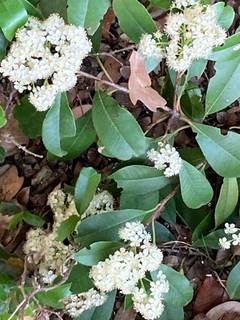
Photinia flowers in spring, generally April to May, with flat clusters of small white flowers that some find strongly scented. The flowers give way to red berries that color in autumn and hold into winter. Hedged plants clipped for foliage often produce few flowers.
Detailed Descriptions
Foliage Description
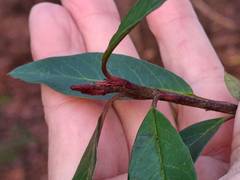
Glossy green, red to bronze when youngGrowing Conditions
Sun Requirements
Requires 4-10 hours of direct sunlight daily
• Full Sun: 6+ hours of direct sunlight
• Partial Shade: 3-6 hours of direct sunlight
• Full Shade: Less than 3 hours of direct sunlight
Care & Maintenance
Care Guide
Photinia grows in full sun to light shade and most well-drained soils, tolerating a range of conditions once established but disliking waterlogged ground. Evergreen kinds such as Photinia × fraseri are hardy in zones 7 to 9, while some deciduous species withstand colder winters. Good air movement and spacing reduce the leaf-spot fungus and fireblight that trouble the genus, and fallen diseased leaves are cleared to limit reinfection. Plants respond to clipping with flushes of red new growth, which is why evergreen forms are grown as hedges. Spring feeding supports dense growth, while the leaves are poisonous to people and animals if eaten in quantity. Overhead watering that wets the foliage encourages leaf spot and is limited where the disease is a problem.Pruning
Photinia is clipped in spring and again in summer to keep hedges dense and to draw out the red new growth that follows each cut. Evergreen forms tolerate hard renovation pruning into old wood. Cutting is timed away from the main fireblight infection period in warm, wet weather.Pruning Schedule
Prune: April & June
late springsummer
Container Growing
Suitable for container growing
Minimum container size: 10 gallons