Photinia, Genus, glabra, Species,
- Genus & species
Japanese photinia
Japan, southern China, and northern Thailand
Overview
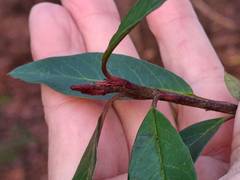
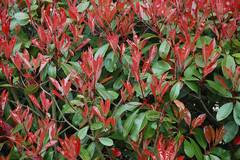
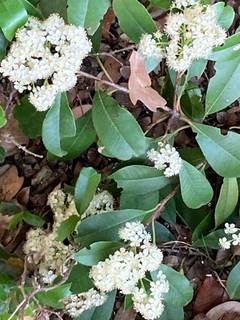
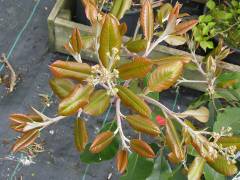
Photinia glabra is an evergreen shrub or small tree in the Rosaceae, reaching 6–12 feet (1.8–3.6 m) tall and 6–10 feet (1.8–3 m) wide, occasionally to 15 feet (4.5 m) on old plants. New shoots emerge bronze-red to coppery red and hold that colour for 3–5 weeks before hardening to glossy dark green, so plants clipped repeatedly through the season carry successive flushes of coloured growth. Leaves are alternate, leathery, elliptic to oblong, 2–3.5 inches (5–9 cm) long and 1–1.5 inches (2.5–4 cm) wide, hairless on both surfaces with finely serrate margins. Flowers are white, about 0.3 inch (8 mm) across, in flat terminal corymbs 2–4 inches (5–10 cm) wide during May and June, and the scent is musty and carries several feet from the plant. Fruit is a red pome about 0.2 inch (5 mm) across, ripening in autumn and persisting into winter. The species is one parent of Photinia × fraseri, crossed with P. serratifolia. Entomosporium leaf spot (Entomosporium mespili) produces red-margined leaf lesions and repeated defoliation in humid regions, and is the main constraint on planting in the southeastern United States.
Native Range
Photinia glabra is native to Japan, occurring on Honshu, Shikoku, and Kyushu, and extends through southern China into northern Thailand. It grows in thickets, forest margins, and on hillsides from near sea level to about 3,600 feet (1,100 m). Long cultivation across East Asia leaves the boundary between wild and naturalised populations indistinct in parts of that range.Suggested Uses
Grown as a clipped hedge and screen, spaced 3–4 feet (0.9–1.2 m) apart for a continuous line within three seasons, or 6–8 feet (1.8–2.4 m) apart as free-standing shrubs. Also trained as a small standard tree and grown in containers of 10 gallons (38 L) or larger on terraces. Close hedge spacing raises Entomosporium leaf spot pressure, so wider spacing is used in humid summer-rainfall regions.How to Identify
Appearance
Size & Dimensions
Height6' - 12'
Width/Spread6' - 10'
Bloom Information
Flowering runs three to four weeks across May and June, later at higher elevations and in zone 7. Corymbs are flat-topped, 2–4 inches (5–10 cm) across, and hold 30–100 white flowers about 0.3 inch (8 mm) wide with five petals and roughly 20 stamens. The scent is musty and detectable several feet from the plant, and flies and short-tongued bees make up most of the visitors. Hedges clipped in spring carry few flowers, since the corymbs form on the tips of the previous season shoots.
Detailed Descriptions
Foliage Description
Bronze-red when new, glossy dark green when matureGrowing Conditions
Sun Requirements
Requires 4-10 hours of direct sunlight daily
• Full Sun: 6+ hours of direct sunlight
• Partial Shade: 3-6 hours of direct sunlight
• Full Shade: Less than 3 hours of direct sunlight
Care & Maintenance
Care Guide
Four to ten hours of direct sun daily supports dense growth and the deepest colour in new shoots; in heavier shade the bronze flush is paler and the interior thins. Free-draining soil with a pH of 5.5 to 7.5 suits the roots across loam, sand, and amended clay, while root rot follows in ground that stays wet. Weekly watering through the first two growing seasons establishes the plant, after which it tolerates 3–4 weeks without rain in mild climates. The shrub is hardy in USDA zones 7–9, with foliage damaged below about 5°F (-15°C) and stems killed to the ground near 0°F (-18°C). Entomosporium leaf spot spreads by rain splash between crowded plants, and spacing that allows air movement together with watering at the base rather than overhead lowers infection rates. Fireblight (Erwinia amylovora) blackens shoot tips in warm wet springs, and scale insects build up on plants grown in still air.Pruning
Clipping is carried out two to three times between April and July, each cut prompting a flush of bronze-red growth within 2–3 weeks. Pruning after August leaves soft growth that is damaged by the first hard frost. Hedges are cut to a batter, wider at the base than at the top, so lower foliage receives light and does not thin. Older plants are renovated by shortening main stems to 18–24 inches (45–60 cm) in early spring, from which they resprout over one to two seasons.Pruning Schedule
Prune: April–July
late springsummer
Container Growing
Suitable for container growing
Minimum container size: 10 gallons