Photinia, Genus, serratifolia, Species,
- Genus & species
Chinese photinia
Overview
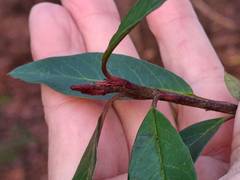
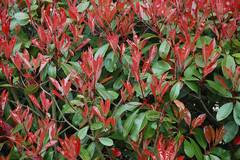
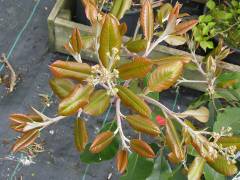
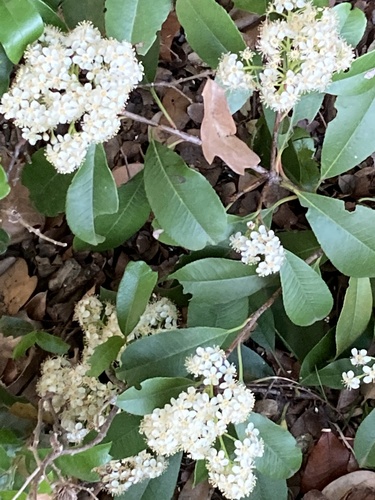
Photinia serratifolia is a large evergreen shrub or small tree of the rose family native to China, Taiwan, and parts of Southeast Asia. It grows 15-40 feet (4.5-12 m) tall with a dense, rounded to upright crown spreading 12-25 feet (3.7-7.5 m). The leathery, glossy dark green leaves are oblong, 4-9 inches (10-22 cm) long, with finely serrated margins; new growth emerges bronze to coppery red before maturing green. In spring it bears broad, flattened clusters 4-7 inches (10-18 cm) across of small white flowers with a strong, somewhat unpleasant scent that attracts flies and bees. These are followed by small red berries about 0.2 inch (5 mm) wide that ripen in autumn and persist into winter, drawing birds. It tolerates a range of soils and urban conditions but is prone to fungal leaf spot and fire blight, especially in humid climates and on sheared hedges, which limits its lifespan in some regions. A parent of the widely grown Photinia hybrids, it is used as a screen, clipped or informal hedge, and specimen tree where space allows.
Native Range
Native to China, Taiwan, and parts of Southeast Asia, including Vietnam and the Philippines. It grows in mixed forests, thickets, and on hillsides, and is widely planted elsewhere in warm-temperate regions.Suggested Uses
Used as an evergreen screen, hedge, or specimen tree in warm-temperate gardens and as a backdrop in mixed borders. It also serves in informal boundary plantings where its height and berries suit larger spaces.How to Identify
Appearance
Size & Dimensions
Height15' - 40'
Width/Spread12' - 25'
Bloom Information
Broad, flat clusters of small white flowers open in mid to late spring, April to May. The flowers carry a strong scent that draws flies and bees. Red berries follow in autumn and persist into winter.
Detailed Descriptions
Foliage Description
dark greenGrowing Conditions
Sun Requirements
Requires 6-12 hours of direct sunlight daily
• Full Sun: 6+ hours of direct sunlight
• Partial Shade: 3-6 hours of direct sunlight
• Full Shade: Less than 3 hours of direct sunlight
Care & Maintenance
Care Guide
Grow in full sun to part shade in moist, well-drained soil of average fertility; the species adapts to clay, loam, and slightly acidic to neutral conditions. Water regularly while young, then occasionally once established, as it has moderate drought tolerance. Good air circulation reduces the leaf spot and fire blight that trouble plants in humid climates or dense hedges. Feed lightly in spring if growth is weak. It is hardy in USDA zones 7-9 and may be damaged by hard freezes at the colder edge. Overhead watering spreads foliar disease.Pruning
Prune after flowering to shape the plant or maintain a hedge, cutting into the previous year's wood. Light, regular trimming encourages bronze-red new growth but raises leaf-spot risk on dense canopies. Remove diseased or dead wood promptly and clean tools between cuts.Pruning Schedule
Prune: May–June
late springsummer
Container Growing
Suitable for container growing
Minimum container size: 10 gallons