Image 1 of 12
1 / 12
Plant Reference
Photinia, Genus, ×, Hybrid, fraseri, Species,
- Genus & species
- Hybrid
red tip photinia
Hybrid of garden origin; {P. glabra} (Japan) crossed with {P. serratifolia} (China); first noticed in Birmingham, Alabama, USA
Overview
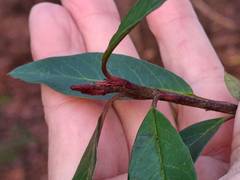
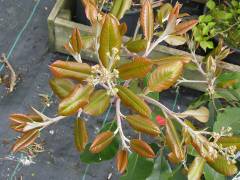
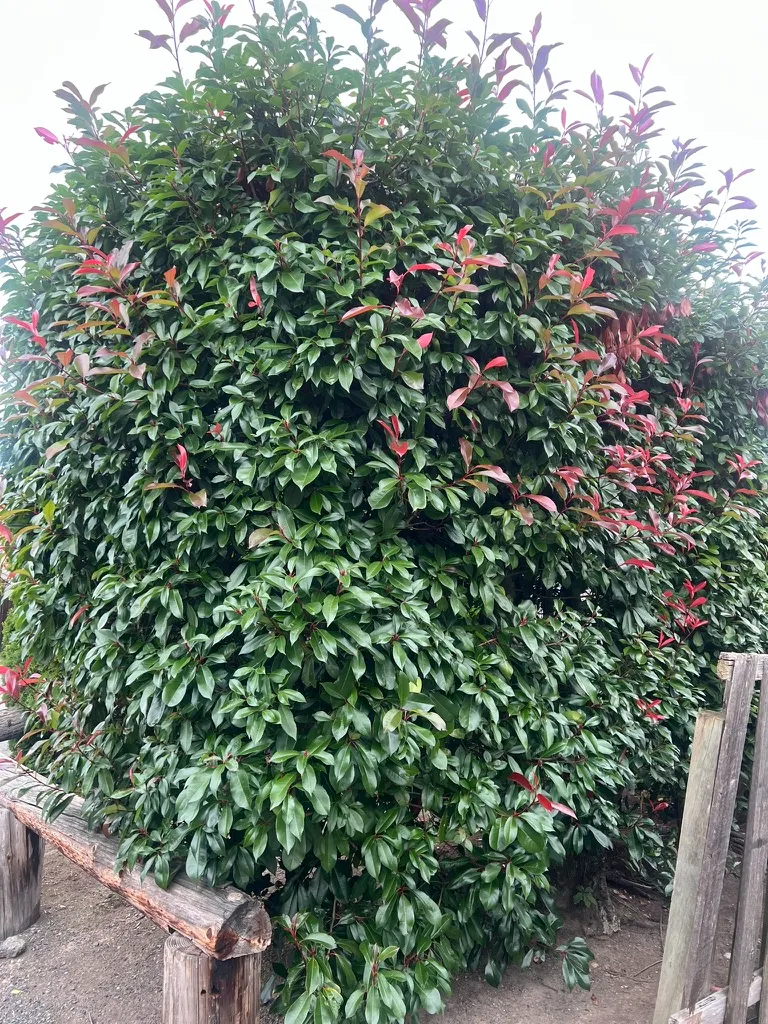
Photinia × fraseri is an upright evergreen shrub reaching 10-15 feet (3-4.5 m) tall and 8-12 feet (2.4-3.6 m) wide. A hybrid of P. glabra and P. serratifolia, it was first noticed in Birmingham, Alabama. Its main feature is the new growth: each flush emerges bright red to copper-red before hardening to glossy dark green, and repeated shearing draws fresh red flushes from spring through fall. Flat-topped clusters of small white flowers 3-6 inches (7-15 cm) across open in March and April for about 3 weeks and carry a strong odor that many find unpleasant. Leaves are oblong, 2-4 inches (5-10 cm) long. The shrub is prone to Entomosporium leaf spot (Entomosporium mespili), which produces circular red-brown spots and heavy leaf drop; this disease is the main limitation and thinned plantings across the southeastern United States. Damage runs worst under overhead watering and where air moves poorly. Deer browse the plant, so it is not deer-resistant, though established shrubs tolerate drought. All parts are non-toxic. It grows quickly in full sun in zones 7-9.
Native Range
A hybrid of garden origin, crossing P. glabra of Japan with P. serratifolia of China. It was first noticed in Birmingham, Alabama, USA.Suggested Uses
Grown as an evergreen formal hedge, screen, or single specimen, and in containers of at least 10 gallons (38 L), spaced 8-12 feet (2.4-3.6 m) apart. The red new growth reads from a distance. Deer browse it, all parts are non-toxic, and it is hardy in zones 7-9.How to Identify
Appearance
Size & Dimensions
Height10' - 15'
Width/Spread8' - 12'
Bloom Information
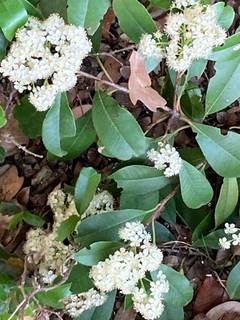
White five-petaled flowers 0.3 inch (8 mm) wide open in flat-topped clusters 3-6 inches (7-15 cm) across in March and April for about 3 weeks. The flowers carry a strong odor and are often sheared off before they open. Bees visit them.
Detailed Descriptions
Flower Description
White, 0.3 inch (8 mm) wide, five-petaled, in flat-topped clusters 3-6 inches (7-15 cm) across; March to April; strong odor; often sheared off before openingFoliage Description
New growth bright red to copper-red, hardening to glossy dark green; mature leaves oblong to obovate, 2-4 inches (5-10 cm) long; repeated shearing brings fresh red flushes from spring through fallGrowing Conditions
Sun Requirements
Requires 6-10 hours of direct sunlight daily
• Full Sun: 6+ hours of direct sunlight
• Partial Shade: 3-6 hours of direct sunlight
• Full Shade: Less than 3 hours of direct sunlight
Care & Maintenance
Care Guide
Grow in full sun with 6-10 hours of light in well-drained soil at pH 5.5-7.5. Established shrubs tolerate drought. Entomosporium leaf spot is the main disease; watering at the base rather than overhead, opening up air flow, and clearing fallen infected leaves all cut it back. Shear the tips after each red flush hardens to green to bring on another flush. Deer browse the plant. All parts are non-toxic, and it is hardy in zones 7-9.Pruning
Shear the tips after each flush of red growth matures to green, roughly April through July, to trigger another red flush; this repeated shearing is the routine maintenance. It takes hard renovation cuts back to 12-18 inches (30-45 cm) when overgrown.Pruning Schedule
Prune: April–July
early springlate springsummer
Container Growing
Suitable for container growing
Minimum container size: 10 gallons