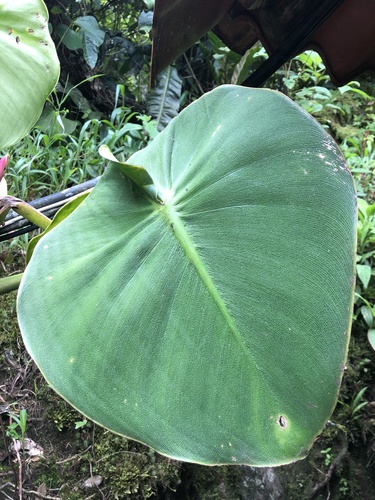
Philodendron, Genus, rugosum, Species,
- Genus & species
philodendron pig skin
Cloud forests of western Ecuador and Colombia, Andes mountains
Overview
Pig skin philodendron is a tropical climbing aroid native to cloud forests, growing as a hemiepiphyte on host trees. Indoor mature specimens reach 4-6 feet (1.2-1.8 m) tall on a moss pole, with potential to climb 20-30 feet (6-9 m) on trees in native habitat. Leaves are heart-shaped to ovate, 6-10 inches (15-25 cm) long and 4-7 inches (10-18 cm) wide, with thick leathery texture and pronounced rugose surface created by deeply impressed veins. Leaf color is dark green above with paler green underside; new leaves emerge bronze-pink before maturing. Petioles are stout, terete, and 4-6 inches (10-15 cm) long. Stems show internodes of 2-4 inches (5-10 cm) with aerial roots emerging at each node for attachment to host substrates. Mature climbing specimens may produce inflorescences with 4-6 inch (10-15 cm) green spathes from spring through summer in tropical greenhouses; indoor plants rarely flower. Growth rate is slow, producing 4-8 new leaves per year under optimal conditions. All parts contain calcium oxalate crystals causing oral and skin irritation. Population numbers in native habitat are declining due to deforestation; the species is listed as Near Threatened by the IUCN.
Native Range
Native to cloud forests of the western slopes of the Ecuadorian and Colombian Andes at elevations of 1,500-6,500 feet (450-2,000 m), where it grows as a hemiepiphyte climbing tree trunks under high humidity and constant moisture.Suggested Uses
Grown indoors as a climbing specimen on moss poles 3-6 feet (90-180 cm) tall in 8-12 inch (20-30 cm) pots, or as a tabletop plant when juvenile. Used in atriums, conservatories, and heated greenhouses where humidity exceeds 60 percent and temperatures remain above 60°F (15°C). Cultivated by aroid collectors and indoor plant enthusiasts for the textured foliage; commercial availability remains limited due to slow propagation rates.How to Identify
Appearance
Size & Dimensions
Height4' - 6'
Width/Spread2' - 3'
Bloom Information
Indoor specimens rarely flower. Mature climbing specimens in tropical greenhouses produce green spathes 4-6 inches (10-15 cm) long enclosing pale spadices from late spring through summer. Flowering requires the plant to reach mature size by climbing 6-10 feet (1.8-3 m) on a supportive structure with constant humidity above 70 percent.
Detailed Descriptions
Flower Description
Green spathe (rare indoors)Foliage Description
Dark green with bronze-pink new growthGrowing Conditions
Sun Requirements
Tolerates up to 4 hours of direct sunlight daily
• Full Sun: 6+ hours of direct sunlight
• Partial Shade: 3-6 hours of direct sunlight
• Full Shade: Less than 3 hours of direct sunlight
Care & Maintenance
Care Guide
Water when the top 1-2 inches (2.5-5 cm) of soil dries; reduce watering frequency by 30-50 percent during winter dormancy. Maintain bright indirect light at 1,500-2,500 foot-candles; direct sun scorches the rugose leaf surface within 1-2 hours. Hold temperatures of 65-85°F (18-29°C) and humidity above 60 percent; foliage develops crispy edges below 50 percent humidity. Fertilize monthly with balanced 20-20-20 at half strength from spring through fall. Repot every 2-3 years into chunky aroid mix containing orchid bark, perlite, and coir for maximum drainage. Root rot develops in dense or saturated soil; spider mites colonize the textured leaf surfaces in low humidity.Pruning
Cut stems back to a node with sharp pruners to control height or encourage branching; new growth emerges from the node below within 6-10 weeks. Remove yellowing or damaged leaves at the petiole base year-round. Train climbing stems onto moss poles or wooden slabs by tying loosely with garden ties; aerial roots attach within 12-16 weeks under humidity above 70 percent.Container Growing
Suitable for container growing
Minimum container size: 2 gallons
Toxicity Warning
Toxic to pets and humansRelated Philodendron species
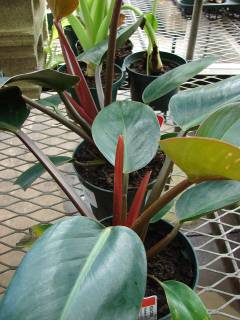 Rojo congo philodendronPhilodendron 'Rojo Congo'
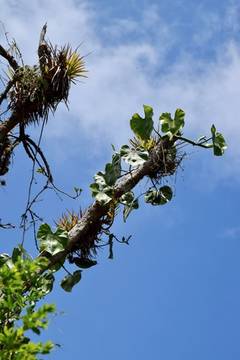 Heartleaf philodendronPhilodendron hederaceum
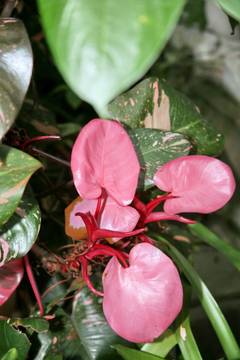 Pink princess philodendronPhilodendron erubescens 'Pink Princess'
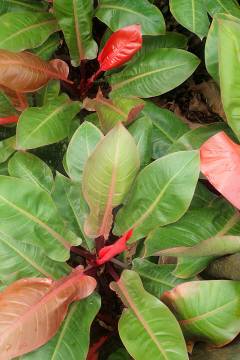 Prince of orange philodendronPhilodendron 'Prince of Orange'
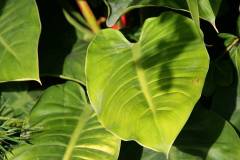 Moonlight philodendronPhilodendron 'Moonlight'
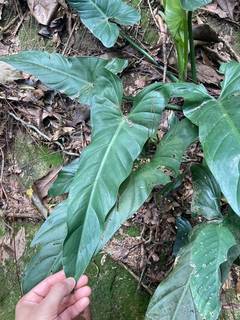 Silver sword philodendronPhilodendron hastatum