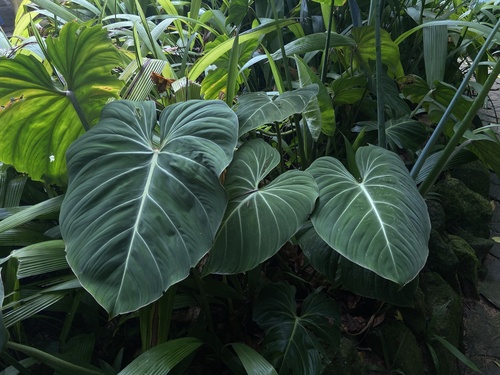
Philodendron, Genus, spp., Multiple species,
- Genus
- Multiple species
philodendrons
Tropical Central and South America and the Caribbean
Overview
Philodendron is a genus of roughly 480 evergreen tropical species in the arum family, Araceae, native to the rainforests of Central and South America and the Caribbean. The genus falls into two broad growth forms: climbing or trailing species that scramble up trees by aerial roots, such as the heartleaf philodendron P. hederaceum, and self-heading species that build a stout, non-climbing crown of arching leaves, such as P. bipinnatifidum. Leaves vary widely, from small heart shapes a few inches long to deeply lobed or pinnately cut blades over 3 ft (90 cm), generally glossy and deep green though some are red, bronze, or variegated. Climbing forms can reach 10-20 ft (3-6 m) on a support, while self-heading types form mounds 3-6 ft (1-1.8 m) across. As in other aroids, the flowers are tiny and packed on a finger-like spadix wrapped in a leaf-like spathe, but most plants rarely bloom in cultivation. All parts contain calcium oxalate crystals that irritate the mouth and are toxic to people and pets if chewed. Philodendrons grow in warmth and bright indirect light and are widely grown as indoor foliage plants.
Native Range
The genus is native to tropical Central and South America and the Caribbean, growing in lowland and montane rainforest from Mexico south to Argentina. Most species root in the ground and climb host trees, while some grow as epiphytes high in the canopy.Suggested Uses
Philodendrons are grown chiefly as indoor and conservatory foliage plants, in pots, hanging baskets, and trained up moss poles. In frost-free climates they are planted outdoors as ground cover, climbers, and large-leaved accents in shade. Compact self-heading forms suit tabletops and shaded patios.How to Identify
Appearance
Size & Dimensions
Height1' - 20'
Width/Spread1' - 6'
Colors
Foliage Colors
Fall Foliage Colors
Bloom Information
Flowering is rare in cultivation and uncommon even in the wild for many species. Where it occurs, a finger-like spadix of tiny flowers sits within a hooded spathe of green, white, or maroon, often warming and releasing scent to draw beetle pollinators. Most cultivated philodendrons are grown for foliage and may never bloom indoors.
Detailed Descriptions
Flower Description
green, white, or maroon spatheFoliage Description
glossy deep green, some red, bronze, or variegatedGrowing Conditions
Sun Requirements
Needs bright indirect light. Keep it out of direct sun, which can scorch the leaves.
• Bright indirect light: a bright spot near a window, with no direct sun on the leaves
Care & Maintenance
Care Guide
Philodendron grows in warmth above 60F (16C) and bright indirect light, tolerating lower light at the cost of slower, leggier growth. Plant in a loose, freely draining mix kept evenly moist, allowing the top inch to dry between waterings, and reduce water in winter. Climbing species grow fuller when given a moss pole or other support for their aerial roots. The calcium oxalate sap irritates skin and is toxic to people and pets if eaten. Common problems include root rot in soggy soil, leaf yellowing from overwatering, and scale, aphids, and spider mites. Brown leaf edges usually signal dry air or salt buildup from tap water.Pruning
Trim Philodendron in spring or summer to control size and shape, cutting climbing stems just above a leaf node, from which new growth and roots emerge. Removing yellow or damaged leaves at the base keeps plants tidy, and pinching stem tips encourages branching. Cuttings root readily in water or moist mix.Container Growing
Suitable for container growing
Minimum container size: 2 gallons
Toxicity Warning
Toxic to pets and humansRelated Philodendron species
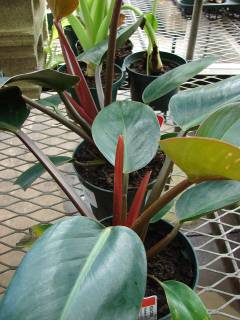 Rojo congo philodendronPhilodendron 'Rojo Congo'
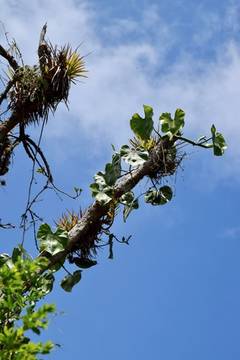 Heartleaf philodendronPhilodendron hederaceum
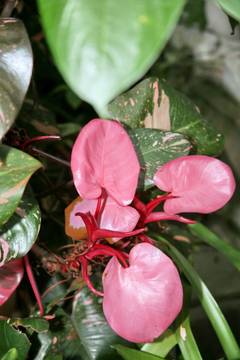 Pink princess philodendronPhilodendron erubescens 'Pink Princess'
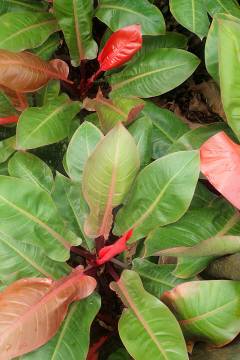 Prince of orange philodendronPhilodendron 'Prince of Orange'
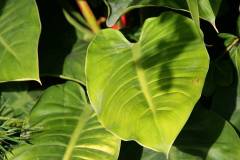 Moonlight philodendronPhilodendron 'Moonlight'
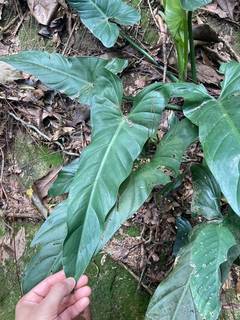 Silver sword philodendronPhilodendron hastatum