Philodendron, Genus, 'Prince of Orange', Cultivar,
- Genus
- Cultivar
prince of orange philodendron
Overview
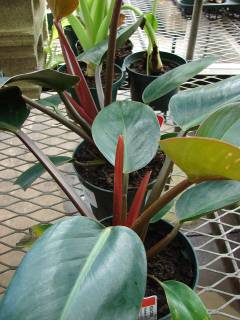
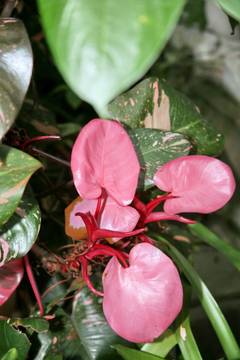
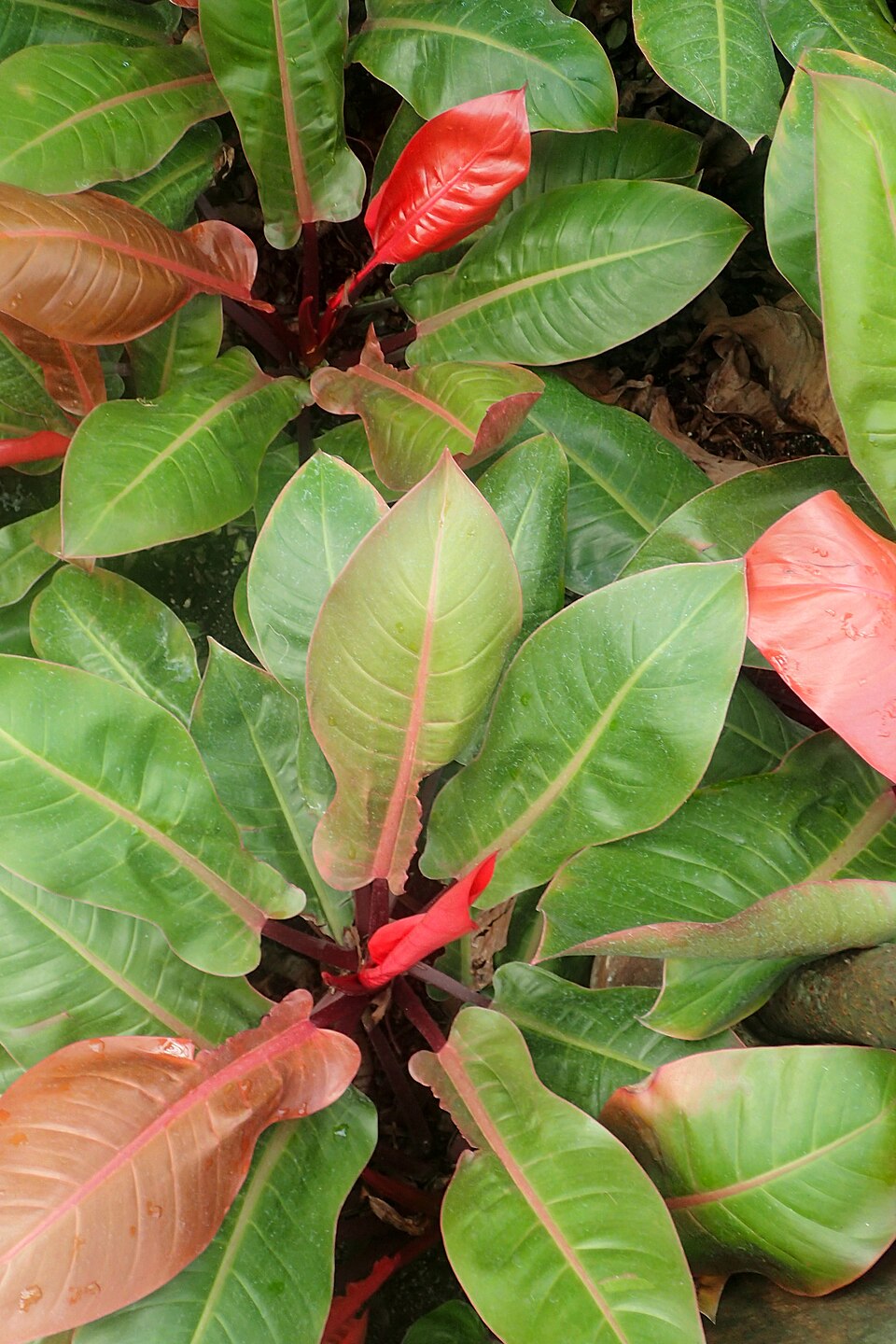
Philodendron 'Prince of Orange' is an orange-new-growth philodendron, growing 18–24 inches (45–60 cm) tall and wide. New leaves emerge bright orange — a saturated warm orange — then mature through copper, yellow-green, and finally dark green over several weeks. Multiple leaf-age stages visible simultaneously on a mature plant create a gradient from orange at the center to green on the outer leaves. Self-heading: grows as a compact upright rosette without climbing, requiring no support pole. Brighter indirect light (200–400 foot-candles) produces more saturated orange on new growth; low light shifts new leaves toward yellow-green. Fast-growing for a self-heading type, producing a new leaf every 2–3 weeks in favorable conditions. Toxic to cats and dogs (calcium oxalate raphides). Propagation by division only — self-heading philodendrons do not root reliably from stem cuttings. The compact, non-climbing form rarely exceeds 24 inches (60 cm). Overwatering causes root rot; allow the top inch (2.5 cm) of soil to dry between waterings. Compared to Philodendron 'Moonlight' (chartreuse new growth) and P. 'Rojo Congo' (red new growth), 'Prince of Orange' fills the warm-orange position in the color spectrum.
Native Range
Philodendron 'Prince of Orange' is a garden hybrid.Suggested Uses
Grown in containers of 1–3 gallons (4–12 liters) on tabletops, plant stands, and floor positions in bright indirect light. The self-heading, non-climbing form suits small to medium spaces. Toxic to cats and dogs.How to Identify
Appearance
Size & Dimensions
Height1'6" - 2'
Width/Spread1'6" - 2'
Colors
Bloom Information
Spathe-and-spadix inflorescence rarely produced indoors. The orange-to-green foliage gradient is the year-round display.
Detailed Descriptions
Flower Description
Green-white spadix (rare indoors)Foliage Description
New leaves emerge vivid BRIGHT ORANGE → mature through copper → yellow-green → dark green; multiple color stages visible simultaneouslyGrowing Conditions
Sun Requirements
Needs bright indirect light. Keep it out of direct sun, which can scorch the leaves.
• Bright indirect light: a bright spot near a window, with no direct sun on the leaves
Care & Maintenance
Care Guide
Bright indirect light for the most saturated orange new growth. Allow the top inch (2.5 cm) to dry between waterings. Self-heading — no support needed. Fast-growing (new leaf every 2–3 weeks). Toxic to cats and dogs (calcium oxalate). Propagate by division.Pruning
Remove yellowed outer leaves at the base. The self-heading habit requires minimal pruning. Propagation is by division of the crown.Container Growing
Suitable for container growing
Minimum container size: 5 gallons