Phelipanche, Genus, spp., Multiple species,
- Genus
- Multiple species
broomrape
Europe, Asia, and Africa (centered on the Mediterranean)
Overview
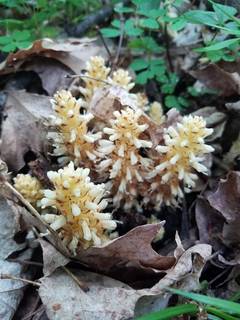
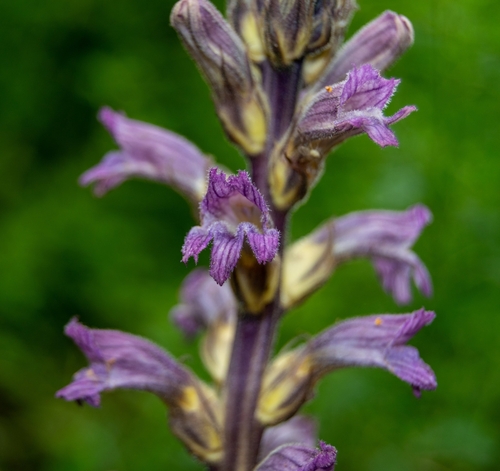
Phelipanche is a genus of about 40 species of holoparasitic flowering plants in the broomrape family, Orobanchaceae, native to Europe, Asia, and Africa and centered on the Mediterranean and temperate Eurasia. The plants lack chlorophyll and true foliage, drawing all their water and nutrients from the roots of host plants through a swollen attachment called a haustorium. Above ground they appear as erect, fleshy, pale stems 4-24 in (10-60 cm) tall, clothed in small brown scales rather than leaves and tipped with spikes of two-lipped, snapdragon-like flowers in blue, violet, lilac, or white. Each plant can set thousands of dust-like seeds that survive many years in the soil and germinate only when they sense chemical signals from a nearby host root. Phelipanche was long included in the genus Orobanche, from which it is separated by floral and pollen characters. Several species, especially branched broomrape P. ramosa and P. aegyptiaca, are damaging agricultural parasites of crops such as tomato, tobacco, oilseed rape, and legumes, lowering yields where they take hold. P. ramosa is regulated as a noxious or quarantine weed in the United States, Australia, and other regions, and is the target of eradication programs.
Native Range
Phelipanche is native to Europe, Asia, and Africa, with the greatest diversity around the Mediterranean Basin and across temperate and subtropical Eurasia. The plants occur wherever suitable host plants grow, in fields, grassland, scrub, and disturbed ground, and several species have spread as weeds far beyond their native range.Suggested Uses
Phelipanche has no horticultural or landscape use and is undesirable wherever crops are grown. It is studied in agriculture and plant science as a model parasitic weed and in research on host-parasite signaling. Records of its presence are used in quarantine and crop-protection monitoring.How to Identify
Appearance
Size & Dimensions
Height4" - 2'
Width/Spread2" - 8"
Bloom Information
Phelipanche flowers mainly in spring and summer, as the parasitic shoots emerge and bloom alongside the growth of their host crop. Flowering stems appear above ground only briefly to set seed, then wither. In warm climates and on long-season hosts, emergence can continue over several months.
Detailed Descriptions
Flower Description
blue, violet, lilac, or whiteFoliage Description
brown scales; no true leaves