Overview
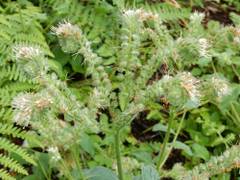
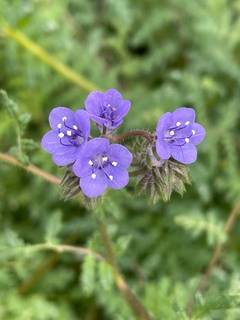
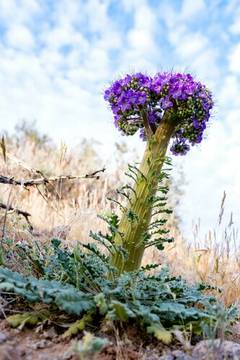
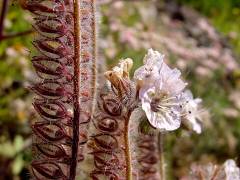
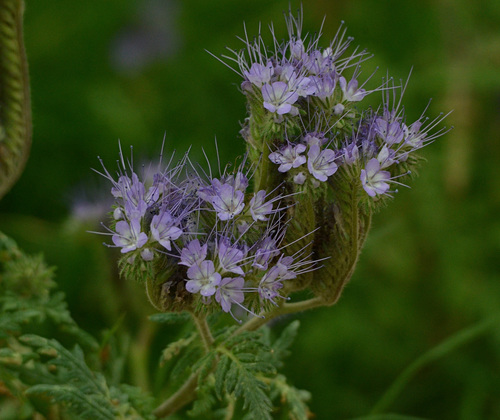
Phacelia tanacetifolia is an upright annual growing 1.5-3 feet (45-90 cm) tall and 8-12 inches (20-30 cm) wide, with stout, bristly-hairy stems. Its leaves are 2-8 inches (5-20 cm) long, deeply pinnately divided into toothed segments that give a fern-like outline. Flowers are borne in tight, coiled clusters that uncurl as they open, each flower lavender to blue, about 0.3 inch (8 mm) wide, with long stamens that project well beyond the petals. Bloom comes quickly from seed, lasting several weeks in late spring and summer, and the flowers draw large numbers of bees and hoverflies. It grows wild in open desert, grassland, and disturbed ground in the southwestern United States and Mexico, and is widely sown elsewhere as a bee plant and green-manure cover crop. The stiff hairs can cause skin irritation in sensitive people who handle the foliage. As an annual it completes its cycle in one season and dies after setting seed.
Native Range
Phacelia tanacetifolia is native to the southwestern United States and northern Mexico, including California and Arizona. It grows in open desert, grassland, and disturbed ground, and has naturalized in many other regions from cultivation.Suggested Uses
Sown in pollinator strips, cover-crop mixes, orchards, and the gaps in vegetable beds, spaced about 8 inches (20 cm) apart. It is grown as a green manure to add organic matter and suppress weeds. It also fills annual borders and cut-flower plots.How to Identify
Appearance
Size & Dimensions
Height1'6" - 3'
Width/Spread8" - 1'
Bloom Information
Flowering begins about six to eight weeks after sowing, mainly in late spring and summer, and continues for several weeks. The coiled clusters unroll progressively so new flowers open over a long period. The bloom draws heavy numbers of honeybees and bumblebees while it lasts.
Detailed Descriptions
Flower Description
lavender to blueFoliage Description
greenGrowing Conditions
Sun Requirements
Requires 6-10 hours of direct sunlight daily
• Full Sun: 6+ hours of direct sunlight
• Partial Shade: 3-6 hours of direct sunlight
• Full Shade: Less than 3 hours of direct sunlight
Water & Climate
Water Needs
Drought Tolerance
Drought tolerant when established
Care & Maintenance
Care Guide
Grow in full sun in light, free-draining soil of low to moderate fertility. Sow seed directly where plants are to grow, in spring after frost or in autumn for early bloom, since seedlings transplant poorly. Water lightly until established; mature plants tolerate dry conditions. Successive sowings every few weeks extend the flowering season. On rich soils plants grow tall and may flop and need support. It self-sows where seed is allowed to ripen.Pruning
No pruning is needed. Spent plants can be cut down and composted, or turned into the soil as a green manure before they set seed. Removing faded clusters prolongs flowering slightly.Toxicity
Non-toxicPlanting Guide
Planting Methods & Timing
Planting Method
direct sow
Direct Sow Timing
spring after frost or autumn
Plant Spacing
8 inches