Phacelia, Genus, crenulata, Species,
- Genus & species
notch-leaf scorpionweed
Southwestern United States and northern Mexico
SunFull Sun
Overview
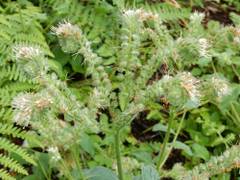
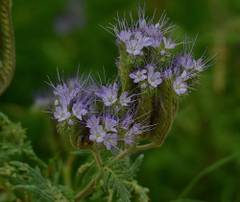
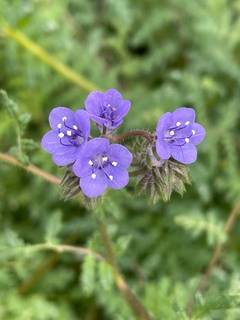
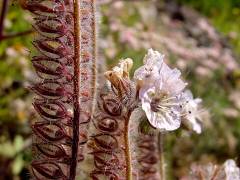
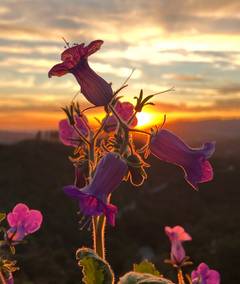
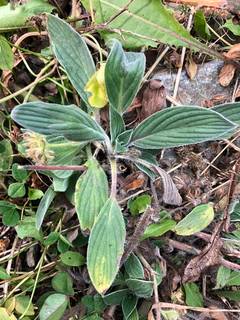
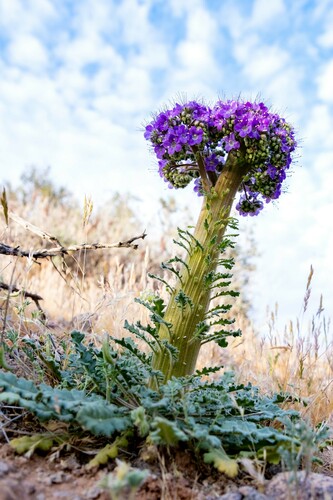
Phacelia crenulata, the notch-leaf scorpionweed, is a desert annual in the Boraginaceae growing 6-32 inches (15-80 cm) tall and 6-18 inches (15-45 cm) wide, with erect, often reddish, glandular-hairy stems. The grey-green leaves are 1-4 inches (2.5-10 cm) long and divided into rounded, scalloped, or notched lobes, and the whole plant is coated in sticky glandular hairs with a strong, pungent scent. From spring the stems carry coiled, scorpion-tail clusters of bell-shaped flowers about 0.3 inch (8 mm) long, blue-purple to violet, with pale throats and stamens that protrude well beyond the petals. The coils uncurl as the flowers open in sequence from the base. It grows in open desert, on sandy and gravelly flats, washes, slopes, and roadsides, often appearing in large numbers after wet winters. The glandular hairs cause an itching, blistering skin rash in many people, similar to the reaction to poison ivy. As an annual it dies after seeding, persisting only through the seed bank.
Native Range
Native to the southwestern United States and northern Mexico, across the Mojave, Sonoran, and Great Basin deserts from California and Nevada to Utah, Arizona, and New Mexico. It grows in open desert scrub, on sandy or gravelly flats, washes, rocky slopes, and disturbed roadsides.Suggested Uses
Used in desert and native wildflower gardens, dry meadow seedings, and naturalised plantings on sandy or gravelly ground, sown in autumn and spaced about 10 inches (25 cm) apart. It suits low-water desert plantings and pollinator gardens for bees. The skin-irritating foliage makes it poorly suited to paths, play areas, or beds that need frequent handling.How to Identify
Appearance
Size & Dimensions
Height6" - 2'8"
Width/Spread6" - 1'6"
Bloom Information
Flowers open in spring, mainly March through May, with timing and abundance tied to winter rainfall. The coiled flower clusters unroll gradually, so a plant blooms over several weeks. In dry years plants are small and flower briefly, while wet winters bring tall plants and mass bloom.
Detailed Descriptions
Flower Description
blue-purple to violetFoliage Description
grey-greenGrowing Conditions
Sun Requirements
Requires 6-12 hours of direct sunlight daily
• Full Sun: 6+ hours of direct sunlight
• Partial Shade: 3-6 hours of direct sunlight
• Full Shade: Less than 3 hours of direct sunlight
Water & Climate
Water Needs
Drought Tolerance
Drought tolerant when established
Care & Maintenance
Care Guide
Grows in full sun in fast-draining sandy, gravelly, or rocky soil across a pH range of about 6.5-8.5. As a cool-season desert annual it relies on autumn and winter rain, germinating in cool soil and flowering before summer heat. Water needs are low, and established plants tolerate drought and finish their cycle quickly in dry years. Sown in autumn on bare ground in mild-winter areas, it self-sows where conditions suit. The glandular foliage can cause skin irritation during handling and weeding.Pruning
Requires no pruning as a desert annual. Spent plants are pulled or left to scatter seed once the capsules ripen. Clearing plants before seed set limits self-sowing, and the glandular foliage can irritate skin during handling.Toxicity Warning
Toxic to humansPlanting Guide
Planting Methods & Timing
Planting Method
direct sow
Direct Sow Timing
Sow in autumn in mild-winter deserts for spring bloom; seed germinates with cool-season rain.
Days to Maturity
60–90 days
Plant Spacing
10 inches