Phacelia, Genus, imbricata, Species,
- Genus & species
mountain phacelia
Overview
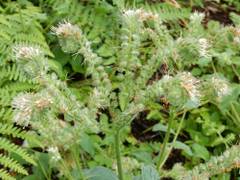
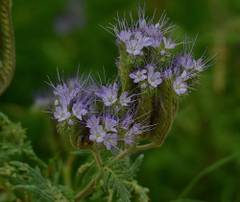
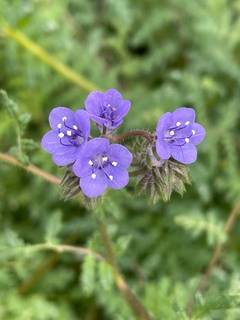
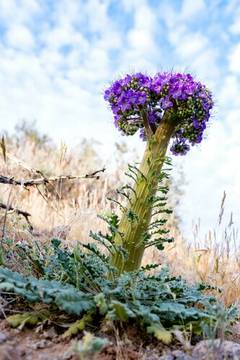
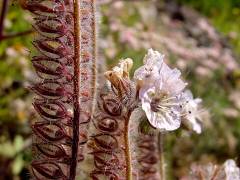
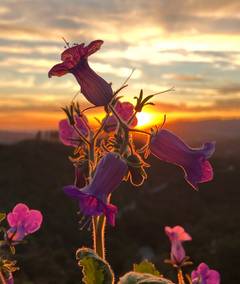
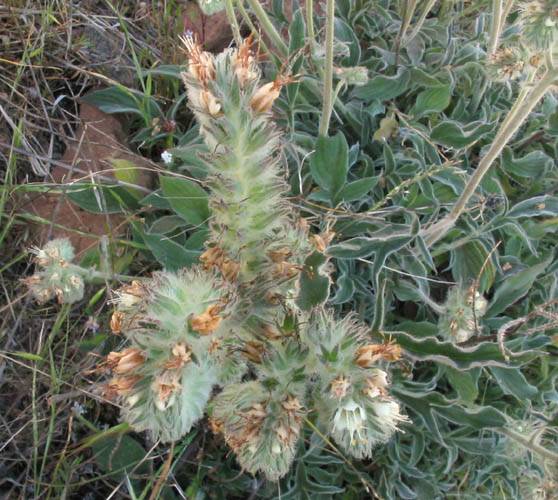
A clump-forming perennial herb growing 8–24 inches (20–60 cm) tall, usually forming a basal rosette of leaves with one to several flowering stems. Leaves are 2–6 inches (5–15 cm) long, pinnately divided into lobed segments, and covered with stiff white bristly hairs that give a rough texture. Foliage is gray-green to green. Flowers are borne in dense coiled clusters that unroll as they open, white to pale lavender or cream, each flower 0.2–0.3 inch (5–8 mm) wide with five lobes and stamens that extend beyond the petals. Bloom occurs from April through July. As the coils straighten, small capsules form, each holding several pitted seeds. The plant grows from a woody taproot and crown, regrowing from the base each year. Stems and leaves bear glandular and bristly hairs that can cause skin irritation in sensitive individuals. Foliage dies back during summer drought and re-emerges with fall and winter rains in its native range. Plants are short-lived, typically persisting 3–5 years before declining.
Native Range
Native to California and southwestern Oregon, from the Coast Ranges and Sierra Nevada foothills to the Cascade Range. Grows on dry rocky slopes, chaparral, oak woodland, and openings in coniferous forest at elevations from 300 to 7,500 feet (90 to 2,300 m).Suggested Uses
Grown in native plant gardens, rock gardens, and dry slopes at 12–18 inch (30–45 cm) spacing. Used in pollinator and meadow plantings, where the early bloom supports native bees. In irrigated borders, summer moisture shortens its lifespan.How to Identify
Appearance
Size & Dimensions
Height8" - 2'
Width/Spread8" - 1'4"
Bloom Information
Detailed Descriptions
Flower Description
White to pale lavender or creamFoliage Description
Gray-green to greenGrowing Conditions
Sun Requirements
Requires 6-10 hours of direct sunlight daily
• Full Sun: 6+ hours of direct sunlight
• Partial Shade: 3-6 hours of direct sunlight
• Full Shade: Less than 3 hours of direct sunlight
Care & Maintenance
Care Guide
Grows in full sun to partial shade in well-drained soils, including rocky and sandy types. Water occasionally during the first growing season to establish the taproot; established plants tolerate summer drought and may go dormant without irrigation. Excess summer water in heavy soils causes crown rot. Self-sows where soil is left undisturbed, producing volunteer seedlings the following winter. Bristly hairs on stems and leaves can cause skin irritation on contact. Plants are short-lived and are replaced from self-sown seedlings every 3–5 years.Pruning
Cut spent flowering stems to the base after seed capsules mature if self-seeding is not wanted. Leave some seedheads to allow natural reseeding, as plants are short-lived. Dried foliage can be removed after summer dormancy. No other routine pruning is needed.Pruning Schedule
Prune: July–August
summer