Phacelia, Genus, campanularia, Species,
- Genus & species
desert bluebells
Mojave and Colorado deserts, southern California
SunFull Sun
Overview
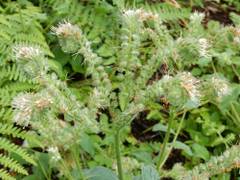
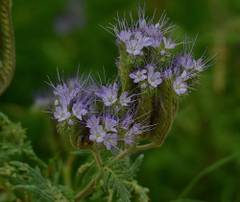
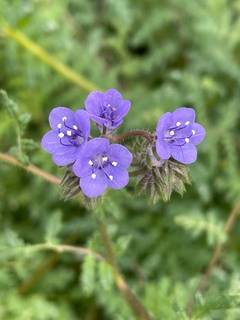
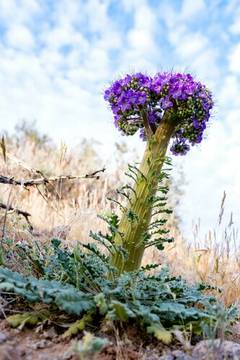
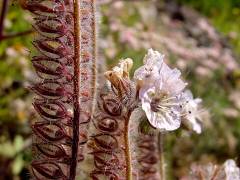
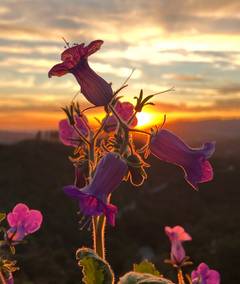
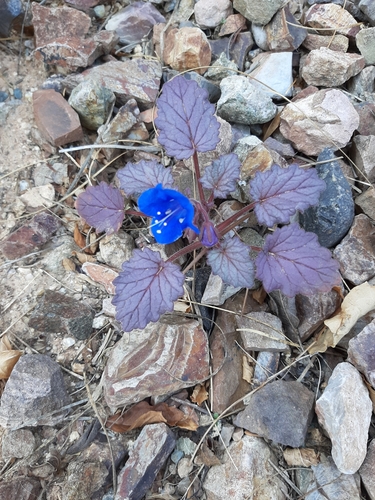
Phacelia campanularia, desert bluebell, is a fast-growing winter annual of the deserts of southern California, reaching 8-30 inches (20-75 cm) tall. It forms a branching, often reddish-stemmed plant carrying rounded to oval leaves 1-2.5 inches (2.5-6 cm) long, with coarsely toothed margins and a dark green, sometimes purple-tinged surface. In spring it bears deep gentian-blue, bell- to cup-shaped flowers about 1 inch (2.5 cm) long, each with a paler throat and stamens that protrude beyond the petals. The flowers open along coiled, one-sided clusters that uncurl as buds mature. P. campanularia grows on sandy and gravelly desert flats and washes, germinating with winter rains and flowering before the dry season. It tolerates heat and drought and self-sows where conditions suit, but it is short-lived, fading once the soil dries, and the glandular, hairy foliage can irritate the skin of sensitive people on contact.
Native Range
Native to the Mojave and Colorado deserts of southern California and adjacent Arizona and Baja California. It grows on open, sandy or gravelly desert slopes, flats, and washes, appearing after winter and early spring rains.Suggested Uses
Grown in desert and dry gardens, wildflower meadows, rock gardens, and containers for spring color. It combines with desert annuals such as Eschscholzia and Nemophila in seed mixes. The flowers draw bees and other early pollinators.How to Identify
Appearance
Size & Dimensions
Height8" - 2'6"
Width/Spread8" - 1'4"
Bloom Information
Flowering occurs in spring, mainly February to April in the desert and a few weeks later in cultivation, timed to follow winter rains. The coiled flower clusters open progressively from the base, extending bloom over several weeks. Plants finish and set seed as the soil dries, completing their cycle by early summer.
Detailed Descriptions
Foliage Description
dark green, often reddish-tingedGrowing Conditions
Sun Requirements
Requires 6-12 hours of direct sunlight daily
• Full Sun: 6+ hours of direct sunlight
• Partial Shade: 3-6 hours of direct sunlight
• Full Shade: Less than 3 hours of direct sunlight
Water & Climate
Water Needs
Drought Tolerance
Drought tolerant when established
Care & Maintenance
Care Guide
Sow seed in autumn or late winter where plants are to grow, in full sun on light, well-drained, sandy or gravelly soil. Seed needs darkness to germinate, so it is covered lightly and kept moist until seedlings appear. Water moderately during growth, then reduce as flowering ends, since the plant is adapted to dry conditions and rots in heavy, wet soil. It needs little or no fertilizer and self-sows freely where the ground stays open. Plants are short-lived and decline after flowering, so successional sowing extends the display. The glandular foliage can cause skin irritation, so gloves are useful when handling seedlings.Pruning
No pruning is needed for this annual. Removing spent flower clusters can prolong bloom and limit self-sowing where volunteers are not wanted. Plants are cleared once they yellow and set seed at the end of the season.Container Growing
Suitable for container growing
Minimum container size: 2 gallons
Toxicity
Non-toxicPlanting Guide
Planting Methods & Timing
Planting Method
direct sow
Direct Sow Timing
fall to late winter in mild climates
Days to Maturity
60–90 days
Plant Spacing
8 inches