Phacelia, Genus, parryi, Species,
- Genus & species
Parry's phacelia
Southern California and Baja California
SunFull Sun
Overview
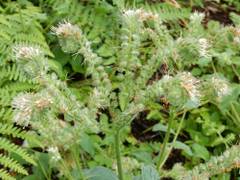
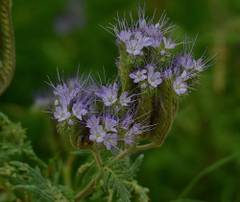
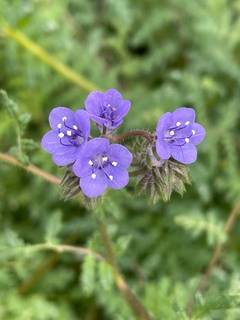
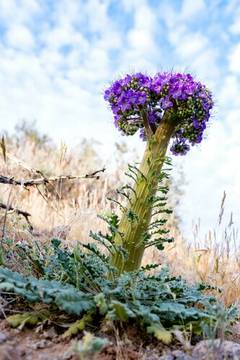
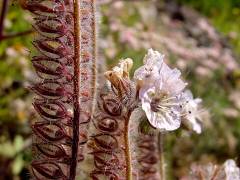
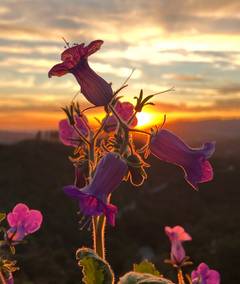
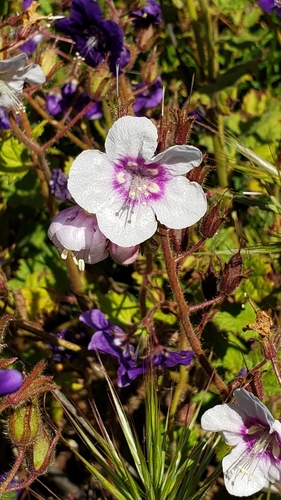
Phacelia parryi is an annual herb reaching 6-20 inches (15-50 cm) tall, with branched, glandular-hairy stems that can cause skin irritation on contact in sensitive individuals. Leaves are oval to lance-shaped, 1-3 inches (2.5-8 cm) long, with toothed or shallowly lobed margins and a sticky, hairy surface. Flowers are broadly bell- to bowl-shaped, about 1 inch (2.5 cm) across, deep purple to violet with a paler center and long, protruding stamens, carried in coiled clusters that uncurl as the flowers open from late winter into spring. Each plant blooms over 4-6 weeks. Small capsules follow, splitting to release several seeds. Seeds germinate after winter rains and often appear in large numbers on recently burned or disturbed ground. The plant completes its cycle in one season and dies as the soil dries in late spring. Bloom is brief and sparse in dry years with little winter rain.
Native Range
Native to southern California and northern Baja California, Mexico, mainly in the Transverse Ranges, Peninsular Ranges, and the western edge of the Mojave and Colorado deserts. Grows on dry slopes, washes, and burned chaparral below 5,000 feet (1,500 m), often abundant the spring after fire.Suggested Uses
Used in California native wildflower plantings, seed mixes for slopes, and post-fire restoration, broadcast or spaced about 6-12 inches (15-30 cm) apart. Supports native bees and other early-spring pollinators. The single-season life cycle leaves bare ground after the plants die back.How to Identify
Appearance
Size & Dimensions
Height6" - 1'8"
Width/Spread6" - 1'
Bloom Information
Detailed Descriptions
Flower Description
Purple to violet with pale centerFoliage Description
GreenGrowing Conditions
Sun Requirements
Requires 6-10 hours of direct sunlight daily
• Full Sun: 6+ hours of direct sunlight
• Partial Shade: 3-6 hours of direct sunlight
• Full Shade: Less than 3 hours of direct sunlight
Water & Climate
Water Needs
Drought Tolerance
Drought tolerant when established
Care & Maintenance
Care Guide
Grow in full sun in sandy, gravelly, or rocky well-drained soil. Sow seed in fall for germination with winter rains; the plant grows through the cool season and flowers in spring. Provide occasional water during dry winter spells; waterlogged soil causes damping-off of seedlings. No fertilizer is needed on lean soils. The glandular hairs can irritate skin on contact. Plants die back after seeding in late spring and reappear from self-sown seed.Pruning
No pruning is needed for this annual. Spent plants can be pulled after they set seed. Leaving plants in place lets seed drop for the next season.Container Growing
Suitable for container growing
Minimum container size: 1 gallons
Toxicity Warning
Toxic to humansPlanting Guide
Planting Methods & Timing
Planting Method
direct sow
Direct Sow Timing
Fall, for germination with winter rains
Days to Maturity
70–120 days
Plant Spacing
9 inches