Phacelia, Genus, bipinnatifida, Species,
- Genus & species
purple phacelia
Central and southeastern United States
Overview
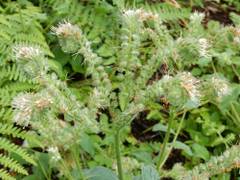
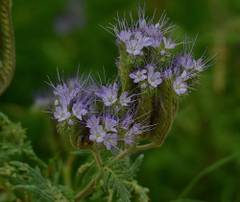
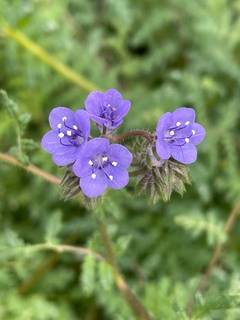
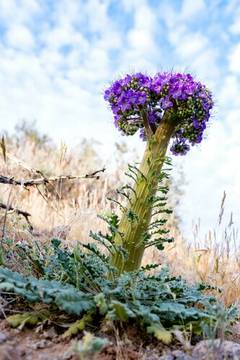
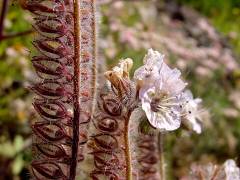
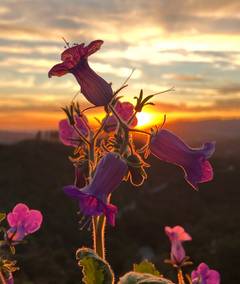
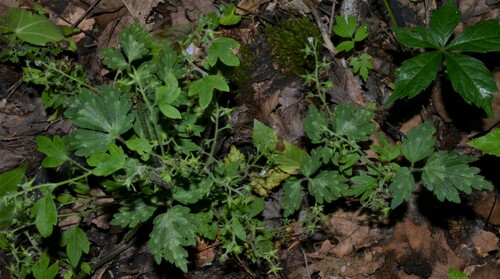
Phacelia bipinnatifida is a woodland biennial in the borage family that forms a low leaf rosette in its first year and sends up branched, hairy flowering stems 12-24 inches (30-60 cm) tall in its second spring before setting seed and dying. The leaves are 2-5 inches (5-13 cm) long and deeply cut into toothed lobes, giving a lacy outline, and the whole plant is covered in coarse, sometimes sticky hairs. From April to June it bears loose coiled clusters of bell-shaped flowers 0.5-0.75 inch (12-18 mm) across in lavender to blue-purple with paler centers and long, projecting stamens. Native to the central and southeastern United States, it grows in rich, moist deciduous woods, on shaded slopes, and along streambanks, often in limestone-influenced soils. P. bipinnatifida needs shade and consistently moist, humus-rich soil; it wilts and declines in dry or sunny sites. As a biennial it persists in a planting only by self-sowing, so it can vanish if seedlings are weeded out or the ground is disturbed. It can also seed around more widely than intended in moist shade.
Native Range
Native to the central and southeastern United States, from Virginia and Ohio west to Missouri and south to Alabama and Arkansas. It grows in moist, rich deciduous woodlands, shaded slopes, and streamsides, frequently over limestone.Suggested Uses
Used in shade and woodland gardens, native-plant borders, and naturalized drifts under deciduous trees, spaced 10-12 inches (25-30 cm) apart. Its spring flowers draw early bees and other pollinators. It combines with other spring woodland wildflowers that share its need for moisture and shade.How to Identify
Appearance
Size & Dimensions
Height1' - 2'
Width/Spread9" - 1'3"
Bloom Information
Flowering runs from mid spring to early summer, mainly April through June. The blue to violet bell-shaped flowers open progressively along coiled stalks, so each cluster shows buds and open flowers at once. After bloom the plant ripens seed and dies.
Detailed Descriptions
Flower Description
lavender to blue-purpleFoliage Description
greenGrowing Conditions
Sun Requirements
Requires 2-5 hours of direct sunlight daily
• Full Sun: 6+ hours of direct sunlight
• Partial Shade: 3-6 hours of direct sunlight
• Full Shade: Less than 3 hours of direct sunlight