Osteomeles, Genus, anthyllidifolia, Species,
- Genus & species
Ulei
Hawaiian Islands and southern Polynesia
Overview
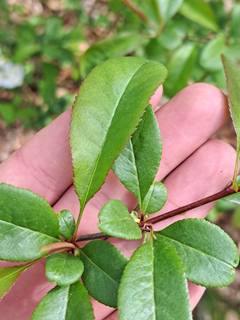
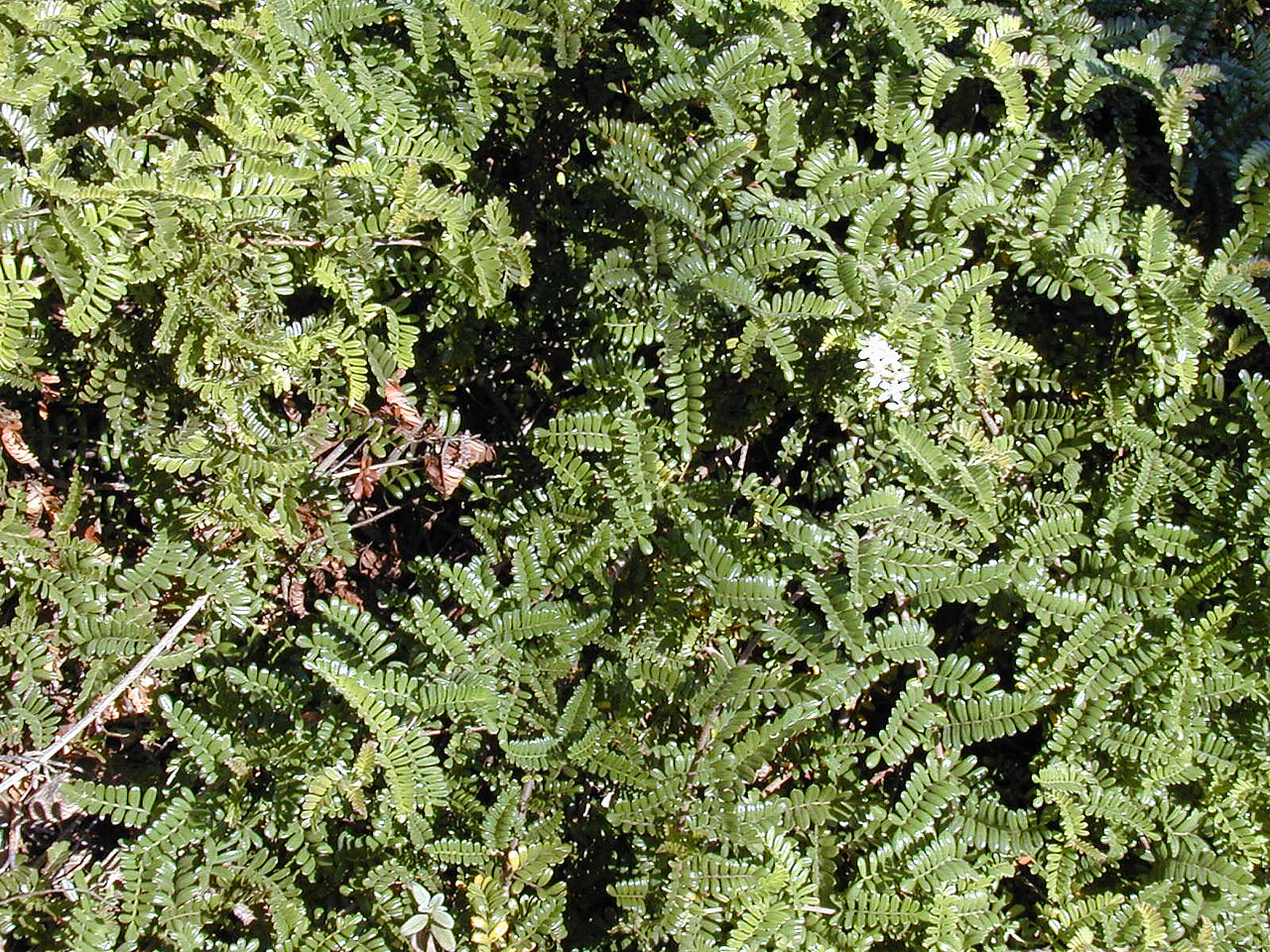
Osteomeles anthyllidifolia is an evergreen shrub in the Rosaceae with arching to sprawling branches, reaching 3-10 feet (0.9-3 m) tall and spreading 6-15 feet (1.8-4.6 m) wide. Branches that contact the ground root at the nodes, building thickets over time. Leaves are pinnately compound, 1-3 inches (2.5-7.5 cm) long, each carrying 15-25 leaflets of 0.2-0.5 inch (5-13 mm), dark green and glossy above with a paler underside. Flowers are white, five-petalled, 0.5-0.8 inch (13-20 mm) across, and carried in terminal clusters of 3-8, with a light scent. Fruit is a pome 0.2-0.4 inch (6-10 mm) across, white to pale pink, dry and mealy in texture, holding 3-5 seeds. Wood is dense and hard, and stems 1 inch (2.5 cm) thick resist bending. Growth runs 12-18 inches (30-45 cm) per year once established. Plants withstand salt spray and wind on exposed coastal sites, where they grow prostrate at under 24 inches (60 cm) tall. Under less than 4 hours of direct sun, stems stretch and flowering falls off sharply. Root systems are shallow, and plants rock loose in soft soil before they anchor.
Native Range
Native to the Hawaiian Islands on all main islands, from coastal dunes and lava flows to dry and mesic forest between sea level and 7,500 feet (2,300 m). It grows on cinder, aa lava, and shallow rocky soils where few other shrubs take hold. The species also occurs in southern Polynesia, including the Cook Islands and Tonga.Suggested Uses
Planted on dry slopes, coastal banks, and lava substrates at 6-8 foot (1.8-2.4 m) spacing for erosion control, where rooting branches bind loose material within 2-3 years. Used in native Hawaiian landscapes as an informal low hedge or bank cover, and grown in containers of 7 gallons (26 L) or larger. The dense wood was worked into digging sticks, fishing spears, and the musical bow known as ukeke.How to Identify
Appearance
Size & Dimensions
Height3' - 10'
Width/Spread6' - 15'
Bloom Information
Flowering runs from February through August, heaviest between March and May. Scattered flowers appear in other months on plants below 1,000 feet (300 m) with year-round moisture. Individual clusters last 10-14 days, and a plant flowers across 12-16 weeks. Fruit ripens 8-10 weeks after flowering, turning from green to white.
Detailed Descriptions
Foliage Description
dark glossy green above, pale green beneathGrowing Conditions
Sun Requirements
Requires 6-12 hours of direct sunlight daily
• Full Sun: 6+ hours of direct sunlight
• Partial Shade: 3-6 hours of direct sunlight
• Full Shade: Less than 3 hours of direct sunlight
Care & Maintenance
Care Guide
Plants grow from seed, which germinates in 4-12 weeks, or from semi-hardwood cuttings taken in spring. Water weekly through the first 6-12 months; established plants grow without irrigation where annual rainfall reaches 20 inches (500 mm) or more. Soil must drain freely, since roots rot within one season in ground that holds water; cinder, coral rubble, and rocky loam all carry the species. Growth slows under 4 hours of direct sun and stems become leggy, with 6-10 inch (15-25 cm) gaps between leaf clusters. Chinese rose beetles and aphids feed on new growth from April through September without killing established plants. Lifespan runs 15-25 years, with layered branches producing replacement stems along the way.Pruning
Stems are cut back in winter or early spring ahead of the main flowering flush, taking up to one third of the canopy. Cuts into leafless older wood produce few replacement shoots, so cuts are made where leaves remain on the stem. Layered branches are severed from the parent plant and lifted once rooted, usually after 6-9 months. Sheared plants flower at roughly half the rate of unpruned plants, because flower buds form on the outer 12 inches (30 cm) of growth.Pruning Schedule
Prune: January–February
winterearly spring
Container Growing
Suitable for container growing
Minimum container size: 7 gallons