Image 1 of 9
1 / 9
Plant Reference
Chaenomeles, Genus, speciosa, Species,
- Genus & species
flowering quince
Central and eastern China; mountain slopes and forest margins
Overview
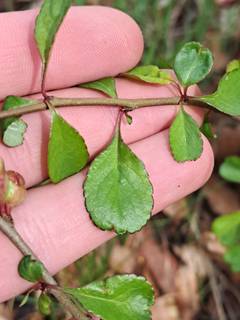
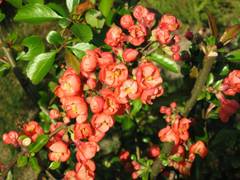
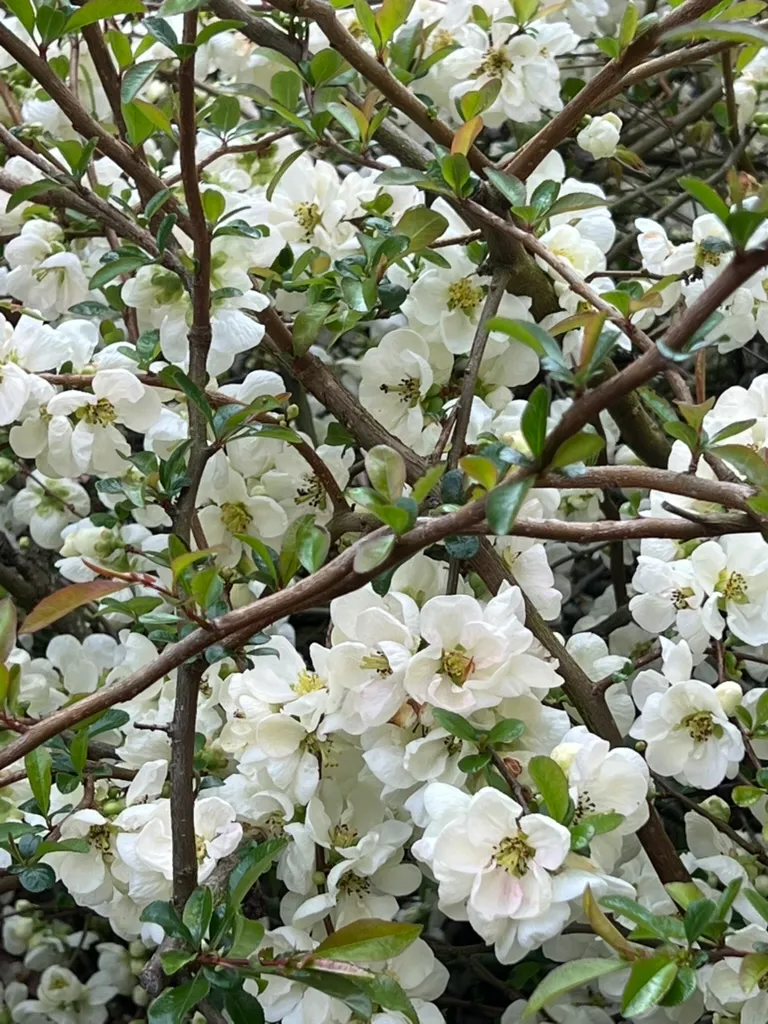
Chaenomeles speciosa is a thorny deciduous shrub reaching 6–10 feet (1.8–3 m) tall and 6–10 feet (1.8–3 m) wide with dense tangled branching from a suckering base. Leaves are oval, 1.5–3 inches (4–7 cm) long, dark green and glossy, with finely serrated margins. Flowers are 1–2 inches (2.5–5 cm) across, single or double, and carried in clusters of 2–4 along the bare branches in February through April before the leaves emerge; flower color varies by cultivar across red, orange, pink, and white. Stems carry sharp spines 0.5–1 inch (1.3–2.5 cm) long at the leaf nodes. Hard yellowish-green pome fruits 1–2 inches (2.5–5 cm) across (true quinces) ripen in September and October; the fruits are high in pectin and used cooked in jellies and preserves but are unpalatable raw. Bloom occurs on previous-season wood, so corrective pruning is done immediately after flowering. The species is among the first deciduous shrubs to flower in temperate zones, opening in February in mild regions before most other shrubs leaf out. Limitation: the species suckers from the base and forms a spreading thicket without periodic removal of suckers, the dense tangled branching becomes congested without renewal pruning of the oldest stems, and leaf spot and fire blight (Erwinia amylovora) can disfigure foliage in humid summers.
Native Range
Native to central and eastern China, growing on mountain slopes and along forest margins.Suggested Uses
Used as a specimen shrub, thorny barrier planting, or informal hedge at 6–10 foot (1.8–3 m) spacing. Container culture is possible in pots of at least 5 gallons (19 L). The February through April bloom on bare wood supplies color earlier than most deciduous shrubs in temperate gardens. The dense thorny habit produces a barrier planting suitable for property boundaries. Sites near walkways and high-traffic areas are unsuitable because of the spines.How to Identify
Appearance
Size & Dimensions
Height6' - 10'
Width/Spread6' - 10'
Bloom Information
Flowers 1–2 inches (2.5–5 cm) across in red, orange, pink, or white open in clusters of 2–4 along the bare branches from February through April before the leaves emerge, lasting about 4 weeks. Hard yellowish-green pome fruits 1–2 inches (2.5–5 cm) across develop through summer and ripen in September and October.
Detailed Descriptions
Flower Description
red, orange, pink, or white (varies by cultivar); single or double, 1-2 inches (2.5-5 cm) across, in clusters of 2-4 along bare branches before leaf emergenceFoliage Description
dark green and glossy; oval, 1.5-3 inches (4-7 cm) long, with finely serrated margins; turns yellow in fallGrowing Conditions
Sun Requirements
Requires 4-8 hours of direct sunlight daily
• Full Sun: 6+ hours of direct sunlight
• Partial Shade: 3-6 hours of direct sunlight
• Full Shade: Less than 3 hours of direct sunlight
Care & Maintenance
Care Guide
Site in full sun to partial shade with 4–8 hours of direct sun per day in well-drained soil with a pH of 5.5–7.0. The species tolerates clay and a wide range of soil fertility and is drought-tolerant once established. Bloom occurs on previous-season wood, so corrective pruning is done immediately after flowering in April and May rather than in late winter, which would remove the next year's flower buds. Hardy in USDA zones 4–9. Routine fertilization is not required. Sharp stem spines call for leather gloves during any pruning operation.Pruning
Pruning is done immediately after flowering (April and May) because the shrub blooms on previous-season wood. Renewal pruning consists of cutting the oldest stems to the base each year to thin congested interior growth and stimulate new flowering wood. Suckers from the base can be cut at the soil line to limit thicket spread.Pruning Schedule
Prune: April–May
late spring
Container Growing
Suitable for container growing
Minimum container size: 5 gallons