Image 1 of 13
1 / 13
Plant Reference
Amelanchier, Genus, spp., Multiple species,
- Genus
- Multiple species
serviceberries
Temperate North America covers the range of most species, with several species native to Europe and Asia
Overview
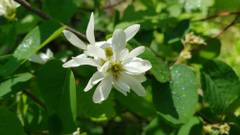
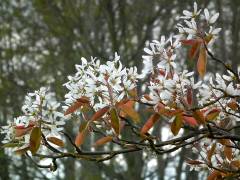
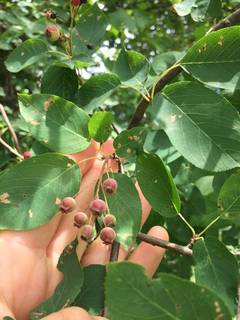
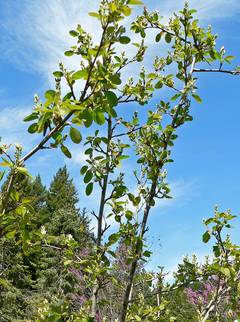
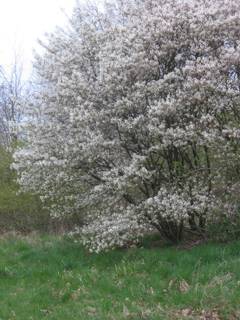
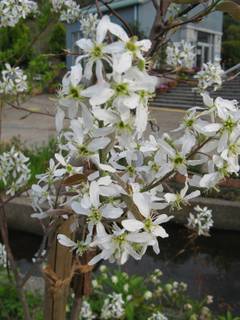
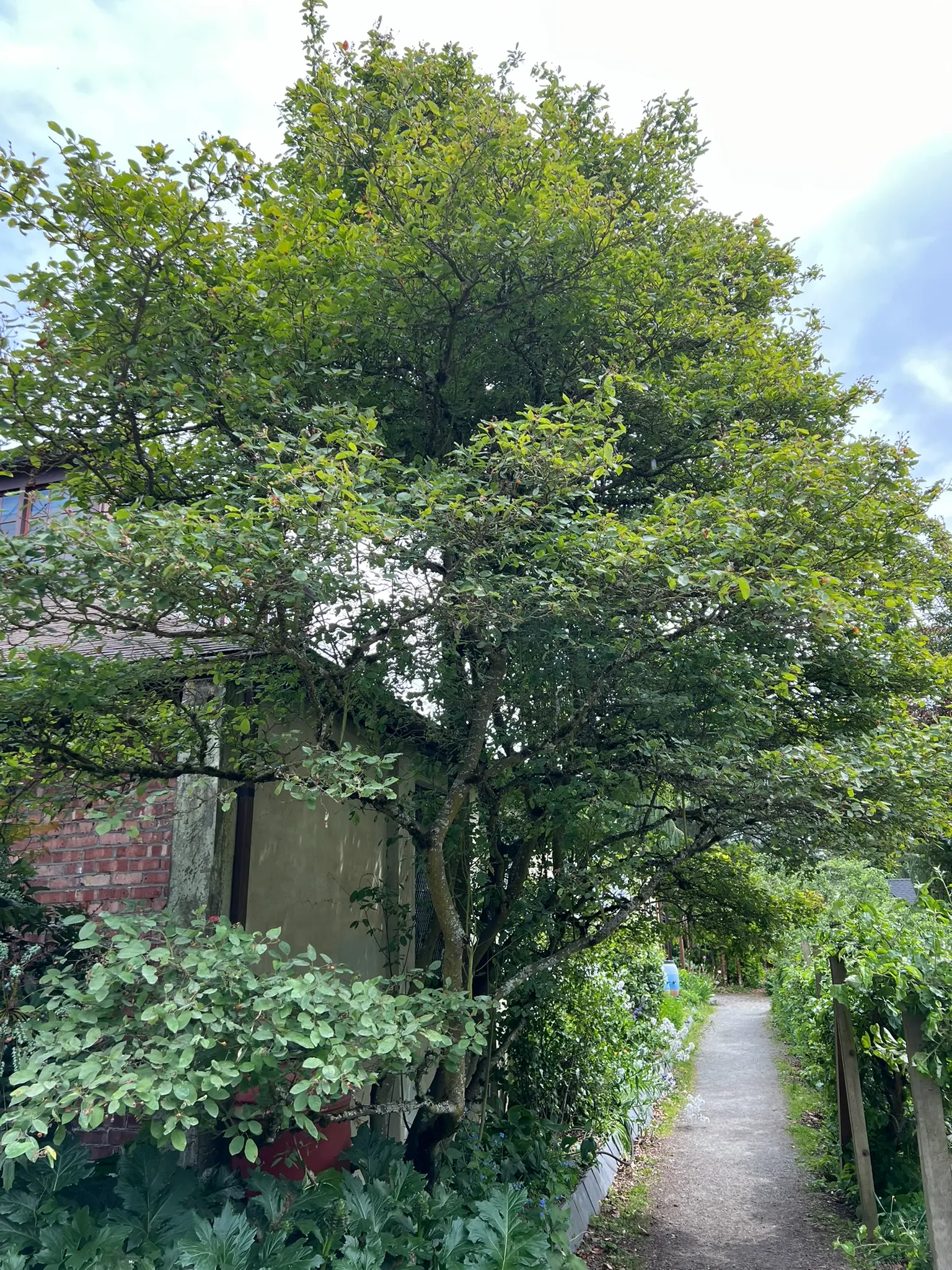
Amelanchier spp. is a genus of approximately 20 species of deciduous trees and large shrubs in the family Rosaceae, ranging from 8-25 feet (2.4-7.5 m) tall and 6-20 feet (1.8-6 m) wide. This is a genus-level database record covering the group as a whole rather than a single species. White 5-petaled flowers 0.5-1 inch (1.3-2.5 cm) across open in drooping racemes 2-4 inches (5-10 cm) long from March through April, before or with the bronze-tinged emerging foliage — serviceberry is often the first native tree to flower in its range. Edible dark purple-black berries 0.25-0.5 inch (6-13 mm) long ripen from June through July; the fruit is sweet and is consumed rapidly by songbirds, which carries secondary implications for how long the berries remain on the plant for human harvest. Fall foliage turns yellow, orange, and red. Cultivated species and hybrids include A. arborea (downy serviceberry), A. canadensis (Canadian serviceberry), A. laevis (Allegheny serviceberry), and A. × grandiflora (apple serviceberry — a hybrid of A. arborea and A. laevis). Most species in cultivation are native to temperate North America. Many species sucker from the base and form multi-stemmed clumps rather than single-trunk trees; the suckering habit is the main limitation for gardeners wanting a tidy single-trunk tree form. Cedar-apple rust (Gymnosporangium spp.) and fire blight (Erwinia amylovora) can affect foliage and fruit in regions where the pathogens are established. Bark is smooth and gray with vertical striping on some species.
Native Range
Most Amelanchier species in cultivation are native to temperate North America, ranging from Newfoundland and Alaska south through the United States into northern Mexico. Several species are native to Europe and Asia. The genus occupies a wide range of habitats from bottomlands and stream banks to upland forests, rocky slopes, and open meadows. The hybrid A. × grandiflora (apple serviceberry) is a naturally occurring cross between A. arborea and A. laevis that also occurs in the wild.Suggested Uses
Planted as a small specimen tree, in native plant gardens, hedgerows, woodland edges, and mixed shrub-tree borders at 6-20 foot (1.8-6 m) spacing depending on species. Early-spring flowers, edible summer berries, vivid fall color, and songbird value carry the ornamental and ecological interest. Native range across most of temperate North America makes the genus well-suited to native plant gardens from zones 2-8. Combined with Cornus sericea, Viburnum trilobum, and Vaccinium corymbosum in native woodland-edge plantings. Species-level or hybrid selections are specified where specific size, habit, or fall color are required — the genus-level record covers the group in general and does not substitute for species-specific planting decisions. Not suited to sites near Juniperus virginiana where cedar-apple rust is a concern or to heavy poorly-drained soils.How to Identify
Appearance
Size & Dimensions
Height8' - 25'
Width/Spread6' - 20'
Bloom Information
White 5-petaled flowers 0.5-1 inch (1.3-2.5 cm) across open in drooping racemes 2-4 inches (5-10 cm) long from March through April in zones 2-8, before or with the emerging bronze-tinged leaves, averaging 2 weeks of bloom. Flowers are bee- and butterfly-pollinated. Edible dark purple-black berries 0.25-0.5 inch (6-13 mm) long ripen from June through July and are consumed rapidly by songbirds.
Detailed Descriptions
Flower Description
white; 5-petaled; 0.5-1 inch (1.3-2.5 cm) across; borne in drooping racemes 2-4 inches (5-10 cm) long appearing before or with the leavesFoliage Description
medium green; oval to elliptical leaves 1-3 inches (2.5-7 cm) long with finely serrated margins; emerges bronze-tinged in spring; turns yellow, orange, and red in fallGrowing Conditions
Sun Requirements
Requires 4-8 hours of direct sunlight daily
• Full Sun: 6+ hours of direct sunlight
• Partial Shade: 3-6 hours of direct sunlight
• Full Shade: Less than 3 hours of direct sunlight
Care & Maintenance
Care Guide
Plant in well-drained soil with a pH of 5.5-7.0 in full sun to part shade; tolerated soil types include loam and sand. Water weekly through the first 1-2 growing seasons. Established plants are drought-tolerant in most of the native range. Cedar-apple rust and fire blight can affect foliage and fruit in regions where Juniperus virginiana is nearby (cedar-apple rust requires both genera to complete its life cycle) or where fire blight is established on nearby Malus, Pyrus, or Crataegus. Many species sucker from the base — basal suckers are removed at their point of origin for a single-trunk tree form, or retained for a multi-stemmed clump form. Fruit is eaten quickly by songbirds once ripe, and netting is the usual method where fruit is wanted for human consumption. Pruning is done in winter dormancy. Non-toxic to pets, livestock, and humans.Pruning
Pruning is done during winter dormancy (November through February). Dead, crossing, or damaged branches are removed at the branch collar. Basal suckers are removed at their point of origin if a single-trunk tree form is wanted and retained if a multi-stemmed clump form is wanted. Crowded interior branches are thinned to improve air circulation, which reduces cedar-apple rust severity. The natural multi-stemmed clump form is the default for many species and requires minimal intervention.Pruning Schedule
Prune: November–February
winter