Amelanchier, Genus, grandiflora, Species,
- Genus & species
apple serviceberry
Garden hybrid (Amelanchier arborea × Amelanchier laevis)
Overview
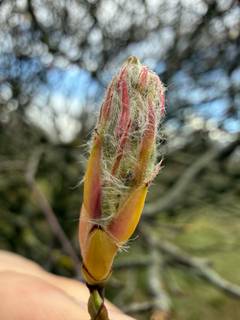
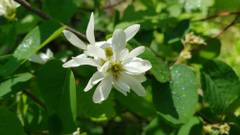
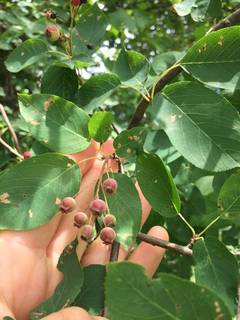
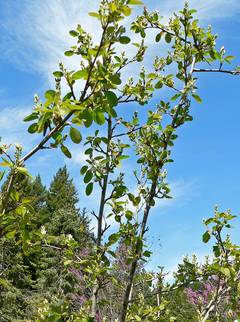
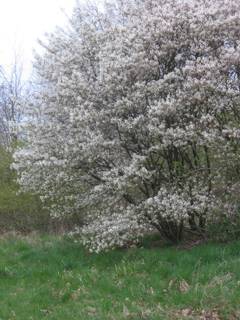
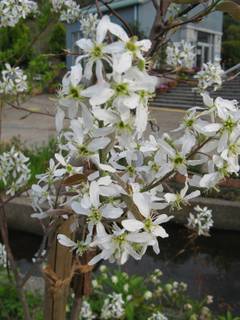
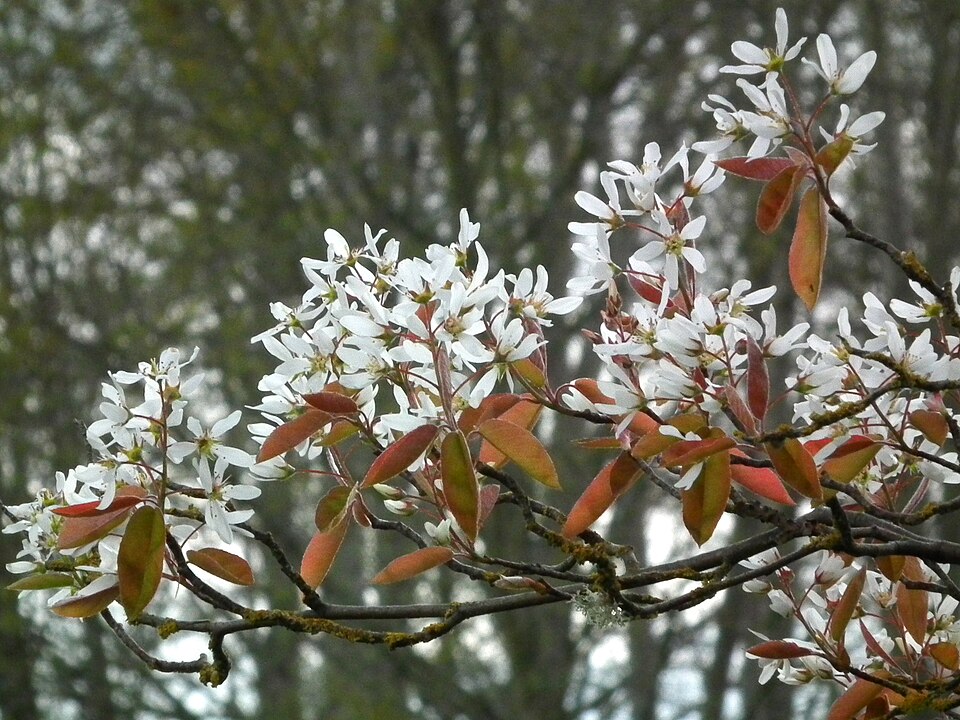
Amelanchier grandiflora is a small deciduous tree or large multi-stemmed shrub reaching 15–25 feet (4.5–7.5 m) tall and 15–25 feet (4.5–7.5 m) wide, a hybrid between A. arborea and A. laevis. Bark is smooth and gray, developing shallow vertical fissures on older trunks. Leaves are elliptic to ovate, 2–3 inches (5–8 cm) long, emerging bronze-purple in spring, maturing to dark green by early summer, and turning orange to red in fall, typically in October in zones 5–6. White flowers appear in pendulous racemes 2–4 inches (5–10 cm) long in March–April, before or as leaves emerge. Individual flowers are 0.75–1.25 inches (2–3 cm) across with 5 narrow petals. Fruit ripens to dark purple, 0.3–0.5 inch (8–13 mm) in diameter, in June–July; berries are edible and sweet. Growth rate is moderate at 12–18 inches (30–45 cm) annually. Trees can be trained as single-trunk or multi-stemmed forms. Suckering from the base varies by cultivar. Cedar-apple rust (Gymnosporangium species) and fire blight (Erwinia amylovora) affect susceptibility in humid climates. Japanese beetles feed on foliage in June–July in eastern populations. Fruit drop may create litter on paved surfaces.
Native Range
Amelanchier × grandiflora is a garden hybrid between A. arborea (native to eastern North America) and A. laevis (native to northeastern North America). The cross occurs both naturally and in cultivation. Parent species grow in woodland edges, stream banks, and rocky slopes from Nova Scotia to Georgia.Suggested Uses
Commonly planted as a small specimen tree in residential yards, patios, and mixed borders at 15–20 foot (4.5–6 m) spacing. Multi-season interest (spring flowers, summer fruit, fall color, winter bark) suits prominent locations. Fruit can be harvested for preserves. Not suited to sites where fruit drop on pavement is unacceptable, or adjacent to ornamental junipers where cedar-apple rust would be problematic.How to Identify
Appearance
Size & Dimensions
Height15' - 25'
Width/Spread15' - 25'
Bloom Information
Flowers March through April in zones 4–8. Bloom occurs before or as leaves emerge, lasting approximately 2 weeks. In zone 8, bloom may begin in late February. Late frosts can damage open flowers and reduce fruit set.
Detailed Descriptions
Foliage Description
Bronze-purple emerging, maturing to dark green, turning orange to red in fallGrowing Conditions
Sun Requirements
Requires 4-10 hours of direct sunlight daily
• Full Sun: 6+ hours of direct sunlight
• Partial Shade: 3-6 hours of direct sunlight
• Full Shade: Less than 3 hours of direct sunlight
Care & Maintenance
Care Guide
Water regularly during the first 2 growing seasons. Established trees tolerate moderate drought. Cedar-apple rust causes orange-brown leaf spots where junipers (Juniperus) grow nearby; resistant cultivars or separation from junipers reduces incidence. Fire blight causes blackened, wilted shoot tips in humid springs. Japanese beetles feed on foliage in June–July in eastern regions. Suckers at the base can be removed annually to maintain a tree form. No regular fertilization is needed in average garden soils.Pruning
Prune during winter dormancy (November–February). Develop either a single central leader (tree form) or allow multiple stems (shrub form). Remove suckers at the base annually to maintain tree form. Thin crossing or crowded interior branches to improve air circulation, which reduces disease incidence. Mature trees require minimal pruning beyond dead wood removal and sucker management.Pruning Schedule
Prune: November–February
winter