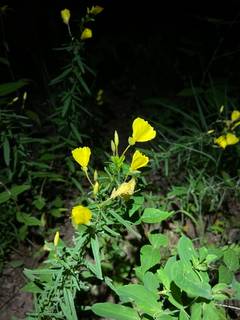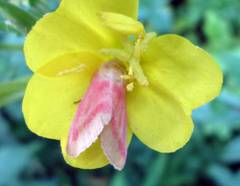
Oenothera, Genus, speciosa, Species,
- Genus & species
pinkladies, pink evening primrose
Central United States and northern Mexico
Overview
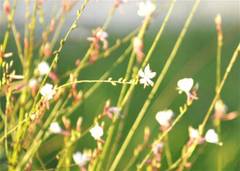
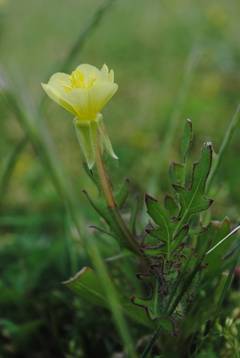
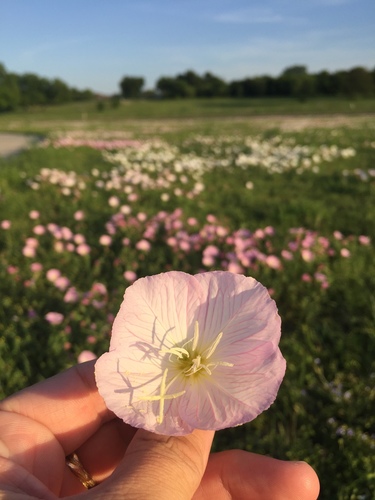
Oenothera speciosa is a low spreading perennial in the family Onagraceae, native to the central United States and northern Mexico, in dry prairies, roadsides, and open ground. Plants spread by underground rhizomes to form low dense mats 6-12 inches (15-30 cm) tall with a lateral spread of 24-36 inches (60-90 cm) within 2-3 growing seasons, extending further in fertile moist sites. Leaves are narrow lance-shaped to oblong, 1-3 inches (2.5-8 cm) long, often shallowly pinnately lobed. From late spring through midsummer, erect leafy stems carry four-petaled flowers 1.5-3 inches (4-8 cm) across that open white and age to soft pink with deeper pink veining; despite the common name evening primrose, the flowers of O. speciosa open during the day. Each flower lasts 1-2 days, with continuous bud production over 4-6 weeks. Listed as a regulated invasive plant in Alabama, Arkansas, Georgia, Kentucky, Louisiana, Mississippi, North Carolina, South Carolina, Tennessee, and Virginia; planting outside contained settings is restricted under those state regulations. Growth rate is fast, reaching full colony size in 1 year. Hardy in USDA zones 4-8. Non-toxic.
Native Range
Oenothera speciosa is native to the central United States (Kansas, Oklahoma, Texas, and adjacent states) and northern Mexico, in dry prairies, meadow edges, roadsides, and open disturbed ground in full sun on well-drained to dry soils.Suggested Uses
Planted as a ground cover on dry sunny slopes, banks, and roadside edges at 18-24 inch (45-60 cm) spacing where the spreading habit is wanted. Erosion control in hot dry difficult sites is the main use. Contained settings such as plantings bounded by pavement or raised-bed walls suit the species in garden use. Sites adjacent to natural grasslands, prairies, or woodland edges in Alabama, Arkansas, Georgia, Kentucky, Louisiana, Mississippi, North Carolina, South Carolina, Tennessee, and Virginia fall outside the use range due to invasive-species regulations in those states.How to Identify
Appearance
Size & Dimensions
Height6" - 1'
Width/Spread2' - 3'
Bloom Information
Four-petaled flowers 1.5-3 inches (4-8 cm) across opening white and aging to soft pink with deeper pink veining, borne May through July in zones 4-8 with peak display in May-June. Individual flowers last 1-2 days, and the plant produces flowers continuously over the 4-6 week main flush. Sporadic flowers appear through summer. In the Pacific Northwest, reliable bloom is May-June on warm well-drained sites.
Detailed Descriptions
Flower Description
White aging to soft pink with deeper pink veining; four-petaled 1.5-3 inches (4-8 cm); daytime-opening; May-JulyFoliage Description
Medium green; narrow lance-shaped to oblong 1-3 inches (2.5-8 cm); often shallowly pinnately lobed; semi-evergreenGrowing Conditions
Sun Requirements
Requires 6-8 hours of direct sunlight daily
• Full Sun: 6+ hours of direct sunlight
• Partial Shade: 3-6 hours of direct sunlight
• Full Shade: Less than 3 hours of direct sunlight
Care & Maintenance
Care Guide
Grows in full sun in poor to average sharply drained dry to moderately moist soil at pH 6.0-7.5. Hardy to USDA zone 4. Hot dry conditions suit the species; wet or rich soils produce rapid decline. Spread containment uses hard edges such as pavement, walls, or buried root barriers; spading of perimeter runners in spring and fall limits outward growth when the boundary is not physical. Division every 2-3 years in early spring manages the expanding colony and yields propagation material. The species is regulated as invasive in ten southeastern and mid-Atlantic US states, and planting in or near natural areas in those states falls outside the use range.Pruning
A cutback of the entire planting by half to two-thirds after the main bloom flush in June-July produces fresh foliage and can prompt occasional rebloom. Rhizome runners at the planting perimeter are severed with a sharp spade in spring and fall to limit lateral spread. Stems are cut to ground in fall. Division in early spring every 2-3 years manages spread and renews vigor.Pruning Schedule
Prune: March, July & October
summerfallearly spring