Nepeta, Genus, ×, Hybrid, faassenii, Species, 'Walker's Low', Cultivar,
- Genus & species
- Hybrid
- Cultivar
Walker's Low catmint
Garden hybrid (parent species: Caucasus, Iran, southern Europe)
Overview
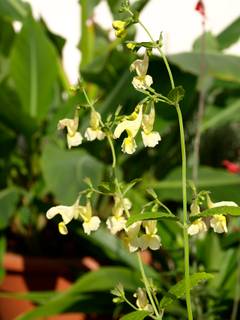
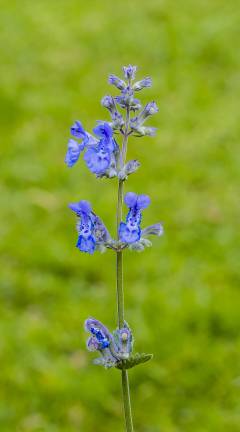
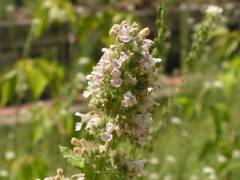
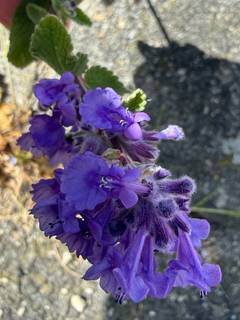
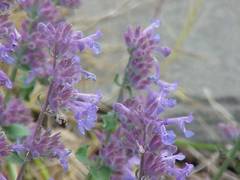
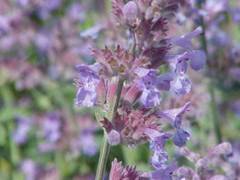
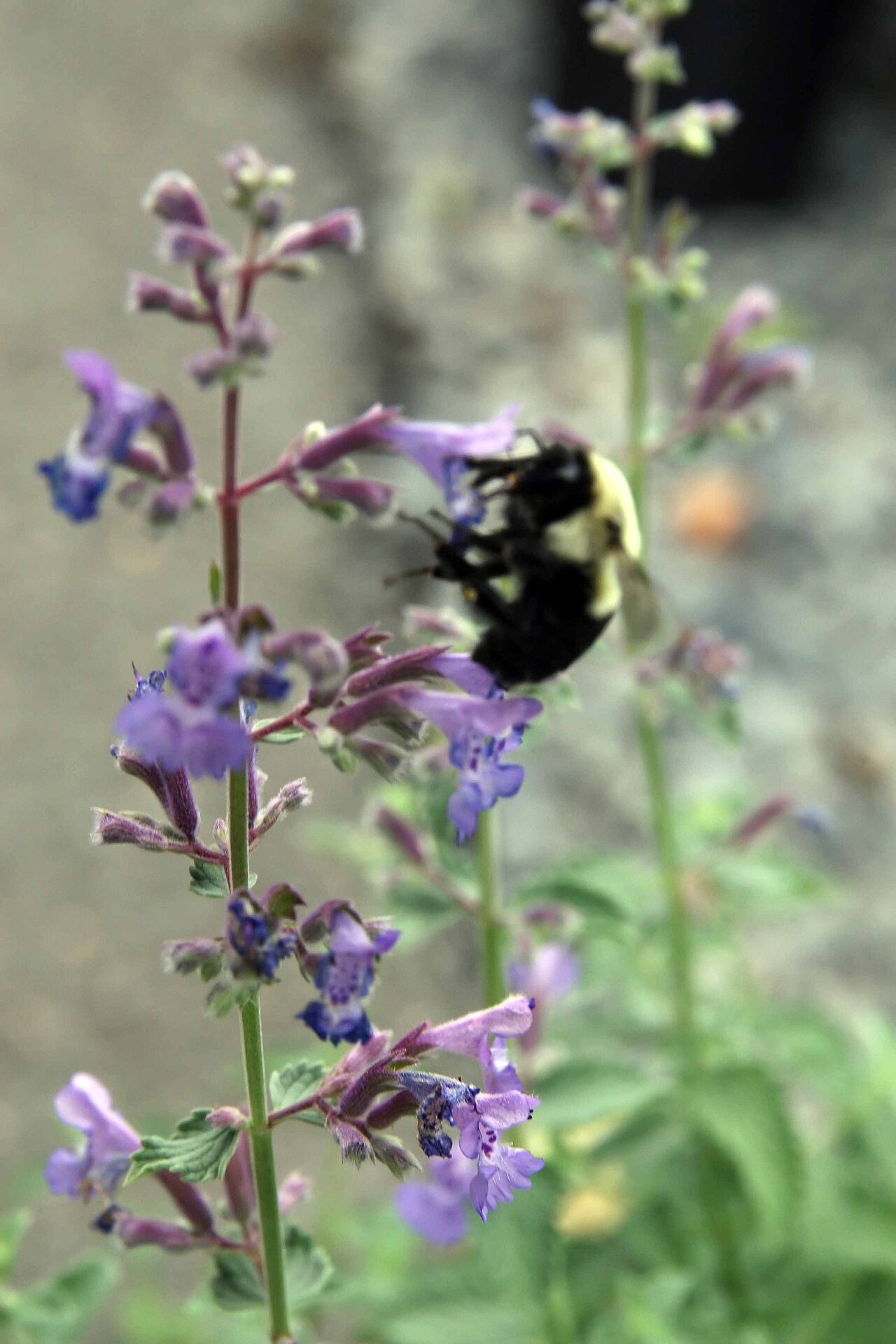
Nepeta × faassenii 'Walker's Low' is a mounding, aromatic perennial in the mint family (Lamiaceae) that reaches 24–30 inches (60–75 cm) tall and 30–36 inches (75–90 cm) wide. Stems are square in cross section and arch outward as the plant matures. Leaves are opposite, ovate to lance-shaped, 1–1.5 inches (2.5–4 cm) long, gray-green, softly hairy, with scalloped edges and a minty scent when crushed. Flowers are lavender-blue, tubular, 0.5 inch (12 mm) long, and borne in whorls along spikes 6–10 inches (15–25 cm) long. A mass of spikes covers the plant from May to June, with repeat flowering through September when stems are cut back after the first flush. The hybrid N. × faassenii is sterile or sets little seed, so plants do not self-sow readily; 'Walker's Low' is larger than the 12–18 inch (30–45 cm) tall cultivar 'Blue Wonder'. Plants are hardy in USDA zones 3–8. Stems flop open from the center in rich soil or shade, and plants decline in wet clay and hot, humid summers.
Native Range
Nepeta × faassenii is a garden hybrid of N. racemosa and N. nepetella, and 'Walker's Low' is a cultivar of that hybrid. The parent species are native to the Caucasus, Iran, and southern Europe, where they grow on dry, rocky slopes.Suggested Uses
Used in perennial borders, along paths, and in rose beds, spaced 24–36 inches (60–90 cm) apart. Plants edge walkways and mass in large drifts. Also grown in containers 14–18 inches (35–45 cm) wide.How to Identify
Appearance
Size & Dimensions
Height2' - 2'6"
Width/Spread2'6" - 3'
Bloom Information
Flowers open from late May to June, with a second flush in July to September after stems are cut back by one-half to two-thirds. Each spike stays in bloom for 3–4 weeks. Flowers are visited by bees, and plants bloom for a total of 16–20 weeks.
Detailed Descriptions
Foliage Description
Gray-greenGrowing Conditions
Sun Requirements
Requires 6-10 hours of direct sunlight daily
• Full Sun: 6+ hours of direct sunlight
• Partial Shade: 3-6 hours of direct sunlight
• Full Shade: Less than 3 hours of direct sunlight
Care & Maintenance
Care Guide
Plants grow in full sun in well-drained loam or sandy soil with a pH of 6.0–8.0. Hardiness covers USDA zones 3–8. Water is applied at 1 inch (25 mm) per week during the first season, and established plants tolerate dry periods of 3–4 weeks. Spacing of 24–36 inches (60–90 cm) allows air movement between plants. Stems flop open in rich soil, in shade deeper than 4 hours of sun, and after heavy rain. Plants decline in wet clay and in hot, humid summers where crown rot develops.Pruning
Stems are cut back by one-half to two-thirds after the first flush ends in late June to stimulate a second bloom. Old stems are cut to 2–3 inches (5–7.5 cm) in late winter before new growth emerges. Clumps are divided every 3–5 years in spring.Pruning Schedule
Prune: March & June
summerearly spring
Container Growing
Suitable for container growing
Minimum container size: 3 gallons