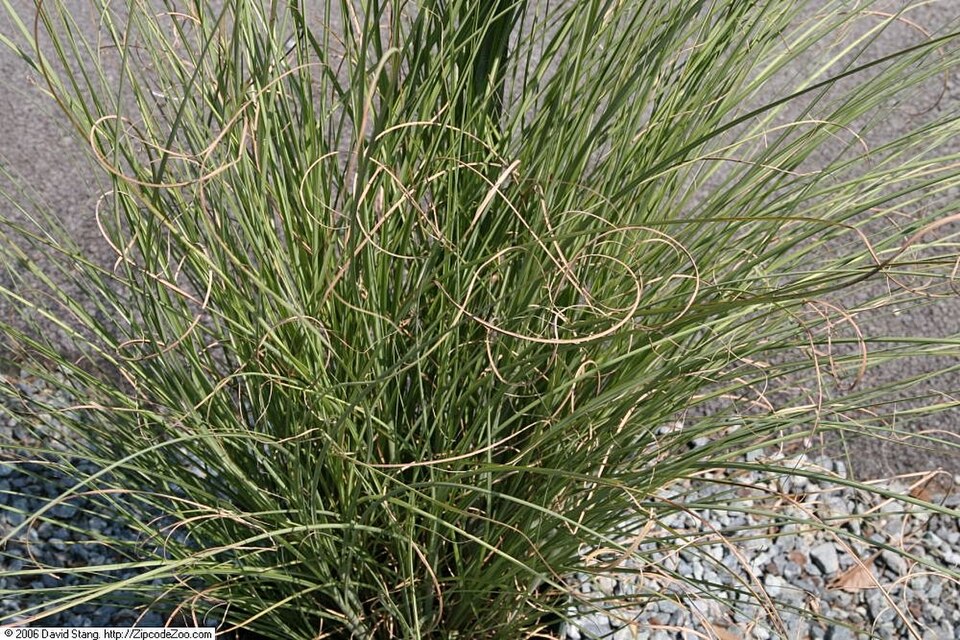
Miscanthus, Genus, sinensis, Species, 'Gracillimus', Cultivar,
- Genus & species
- Cultivar
Gracillimus maiden grass
Eastern Asia (Japan, Korea, China, Taiwan); grasslands and meadows; cultivar in cultivation since the late 19th century
Overview
Miscanthus sinensis 'Gracillimus' is a medium deciduous clump-forming ornamental grass reaching 5-7 feet (1.5-2.1 m) tall with a spread of 4-5 feet (1.2-1.5 m) and a dense narrowly arching, fountain-like habit. The cultivar has been in cultivation since the late 19th century and is widely sold in North American nurseries. Leaf blades are very narrow at 0.1-0.2 inch (3-5 mm) wide — the narrowest of commonly grown M. sinensis cultivars — with a pronounced silver midrib. The blade width produces a softly textured, weeping mound in summer. Foliage turns copper-orange to tan in autumn. Copper to bronze flower plumes emerge in October and November (late), aging to silvery-white; in short-season climates (zones 5-6) flowering may be sporadic or absent, so the cultivar functions primarily as a foliage plant in those zones. Hardy to USDA zone 5. Non-toxic. Growth rate is moderate; a divided clump reaches mature size in 2-3 growing seasons. Can self-seed in mild, moist climates and the species is listed as invasive in parts of the eastern United States.
Native Range
The species Miscanthus sinensis is native to eastern Asia — Japan, Korea, China, and Taiwan — in grasslands and meadows. 'Gracillimus' is a cultivar dating to the late 19th century and is propagated vegetatively by division.Suggested Uses
Used as a specimen, screen, or in mass plantings in zones 5-9 at 4-5 foot (1.2-1.5 m) spacing. The narrow blade width produces a softer texture than broader-leaved Miscanthus cultivars and contrasts with coarse-leaved perennials such as hostas and canna. In short-season climates (zones 5-6) flowering is unreliable and the cultivar functions as a foliage plant only. Self-seeding in mild, moist climates can be problematic; the species is listed as invasive in parts of the eastern United States and sterile alternatives or deadheading of plumes before seed shatter reduces escape risk. Not suited to shade, small gardens, or regions where M. sinensis is listed as regulated or invasive.How to Identify
Appearance
Size & Dimensions
Height5' - 7'
Width/Spread4' - 5'
Bloom Information
Copper to bronze flower plumes emerge in October and November (among the later-flowering M. sinensis cultivars), aging to silvery-white and persisting through winter when produced. In short-season climates (zones 5-6) flowering may be sporadic or absent. Bloom duration is 4-6 weeks fresh.
Detailed Descriptions
Flower Description
Copper to bronze plumes aging to silvery-white; emerges October-November (late); plumes may not develop in short-season zones 5-6Foliage Description
Silvery-green with silver midrib; very narrow 0.1-0.2 inch (3-5 mm) wide blade — the narrowest of commonly grown cultivars; turns copper-orange to tan in autumnGrowing Conditions
Sun Requirements
Requires 6-10 hours of direct sunlight daily
• Full Sun: 6+ hours of direct sunlight
• Partial Shade: 3-6 hours of direct sunlight
• Full Shade: Less than 3 hours of direct sunlight
Care & Maintenance
Care Guide
Grows in full sun in well-drained soil at pH 5.5-7.5. Full sun is required for dense upright growth; under shade the clump flops. Tolerates a wide range of soil types including clay, silt, and sand. Drought tolerant once established. Late flowering means plumes may not develop in zones 5-6, so gardeners in those zones plant it for foliage alone. Cut the clump back to 4-6 inches (10-15 cm) in late February or early March before new growth emerges. Can self-seed in mild, moist climates, and the species is listed as invasive in parts of the eastern United States.Pruning
Cut all stems to 4-6 inches (10-15 cm) above ground in late February to early March. Leave dried foliage standing through winter for structure and wildlife cover. Divide crowded clumps in early spring every 4-5 years by digging the crown and splitting it with a sharp spade.Pruning Schedule
Prune: February–March
early spring
Container Growing
Suitable for container growing
Minimum container size: 15 gallons
Toxicity
Non-toxicRelated Miscanthus species
 MiscanthusMiscanthus sinensis
 Morning light maiden grassMiscanthus sinensis 'Morning Light'
 Silver feather maiden grassMiscanthus sinensis 'Silberfeder'
 Cosmopolitan maiden grassMiscanthus sinensis 'Cosmopolitan'
 Variegated maiden grassMiscanthus sinensis 'Variegatus'
 Zebra grassMiscanthus sinensis 'Zebrinus'