Miscanthus, Genus, sinensis, Species, 'Cosmopolitan', Cultivar,
- Genus & species
- Cultivar
cosmopolitan maiden grass
E Asia (species: Japan, Korea, China, Taiwan); 'Cosmopolitan' from the var. condensatus type, introduced from Japan
Overview
Miscanthus sinensis 'Cosmopolitan' is a large deciduous clump-forming ornamental grass reaching 6–8 feet (1.8–2.4 m) tall with a spread of 4–6 feet (1.2–1.8 m) and a strongly upright vase-shaped habit. The cultivar carries wide leaves 0.8–1.2 inches (2–3 cm) across with green centers and broad white margins—the reverse of the variegation pattern found in the related cultivar 'Cabaret' (which carries white centers with green margins). The white-margined pattern produces a defined variegation at close range and a green-dominant appearance at garden viewing distances. Pinkish-copper flower plumes emerge in September–October and age to silvery-white through winter. Foliage turns golden-tan in autumn and holds its dried form through the cold months. Growth rate is moderate to fast. Hardy to zone 6. The wide white-margined leaves supply a bold architectural texture in garden positions that can accommodate the cultivar's mature 6-to-8-foot vertical scale.
Native Range
Miscanthus sinensis is native to eastern Asia, ranging across Japan, Korea, China, and Taiwan in open grasslands, meadows, and forest margins. 'Cosmopolitan' is a cultivar selection of the var. condensatus type that was introduced to Western horticulture from Japanese nursery stock in the late 20th century. The var. condensatus type produces wider leaves and taller stature than the typical M. sinensis variety and carries the genetic base for the cultivar's bold foliage character.Suggested Uses
Planted as a specimen or bold accent at 4–6 foot (1.2–1.8 m) spacing in zone-6-and-warmer gardens. White-margined leaves carry a defined variegation pattern at close viewing range that softens to a green-dominant reading at longer garden distances, which means the cultivar works well as a close-view textural element and as a background mass in larger compositions. Cold hardiness runs limited to zone 6, which restricts the cultivar relative to the more cold-hardy green-leaved M. sinensis cultivars hardy to zones 4–5. Wide leaves run susceptible to wind damage and tattering in exposed positions. Shade, exposed windy sites, and cold climates below zone 6 are poor fits for the cultivar.How to Identify
Appearance
Size & Dimensions
Height6' - 8'
Width/Spread4' - 6'
Bloom Information
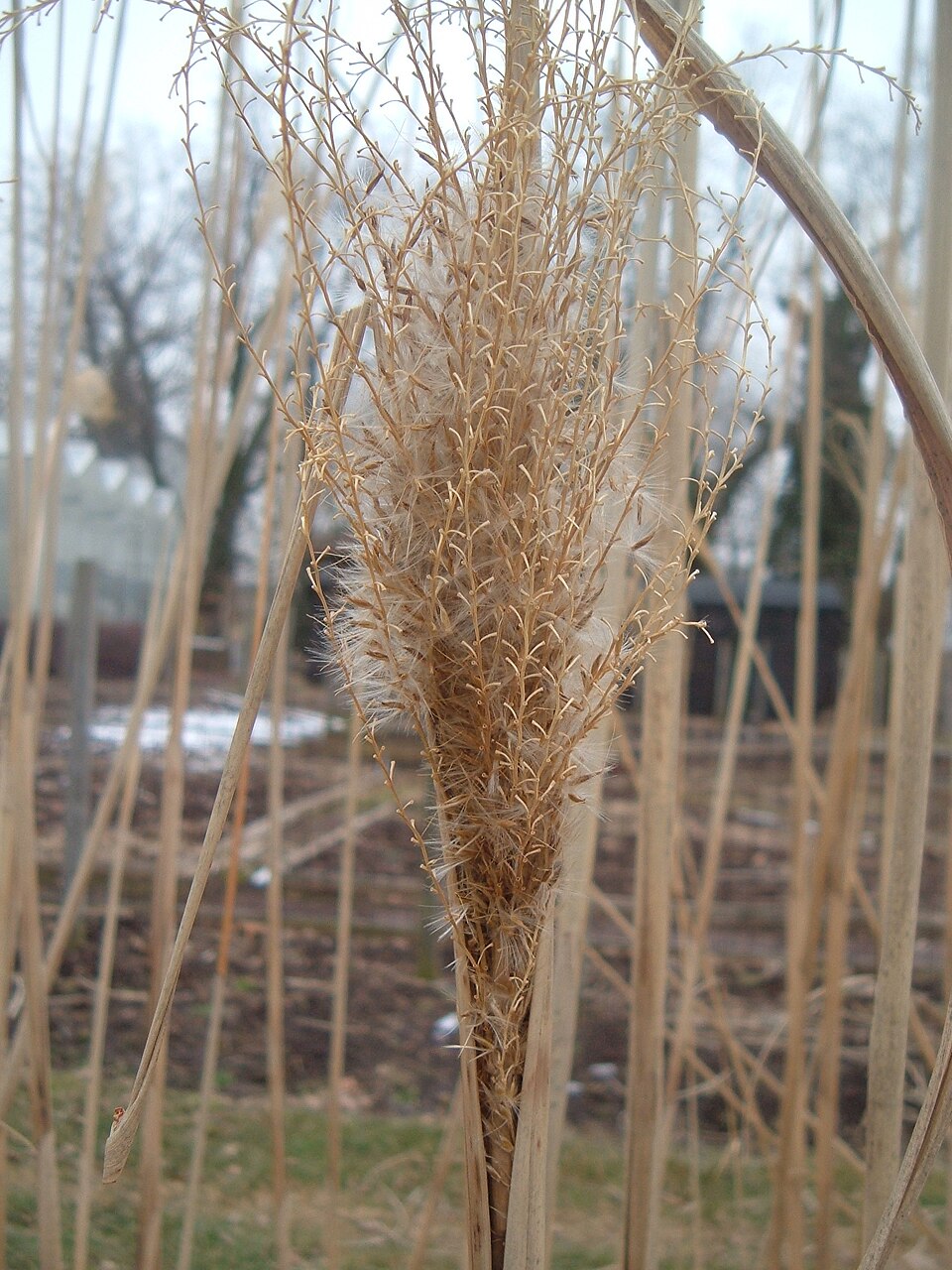
Pinkish-copper flower plumes emerge in September through October and age progressively to silvery-white across the autumn and winter months. Plumes persist through the winter on the standing foliage and supply secondary ornamental interest beyond the active bloom window. The cultivar may not bloom reliably in short-season climates because the flowering window runs late in the growing season and can be cut short by early autumn frost. Active fresh bloom duration is 4–6 weeks.
Detailed Descriptions
Flower Description
Pinkish-copper plumes aging to silvery-white; September-OctoberFoliage Description
Green center with broad white margins; wide 0.8-1.2 inches; reverse variegation pattern of 'Cabaret'; golden-tan autumn colorGrowing Conditions
Sun Requirements
Requires 6-10 hours of direct sunlight daily
• Full Sun: 6+ hours of direct sunlight
• Partial Shade: 3-6 hours of direct sunlight
• Full Shade: Less than 3 hours of direct sunlight
Care & Maintenance
Care Guide
Full sun in well-drained fertile soil (pH 5.5–7.5) matches the cultivar's cultivation needs. Hardy to zone 6 (−10°F / −23°C). Full sun positions develop the strongest variegation contrast; partial-shade plantings reduce the white margin width and weaken the overall variegation effect. Shelter from strong winds reduces leaf-blade tattering and tip burn on the wide leaves. Growth rate runs moderate to fast once established. Drought tolerance develops after the first year of establishment, and established plants persist through summer dry spells without irrigation. Cutback occurs in late winter before new growth emerges.Pruning
All stems are cut to 4–6 inches (10–15 cm) above ground level in late February through early March each year. Dried foliage is left standing through winter for structural ornamental interest and cut back only once the coldest weather passes and before new spring growth begins to emerge from the crown.Pruning Schedule
Prune: February–March
early spring
Toxicity
Non-toxicRelated Miscanthus species
 MiscanthusMiscanthus sinensis
 Gracillimus maiden grassMiscanthus sinensis 'Gracillimus'
 Morning light maiden grassMiscanthus sinensis 'Morning Light'
 Silver feather maiden grassMiscanthus sinensis 'Silberfeder'
 Variegated maiden grassMiscanthus sinensis 'Variegatus'
 Zebra grassMiscanthus sinensis 'Zebrinus'