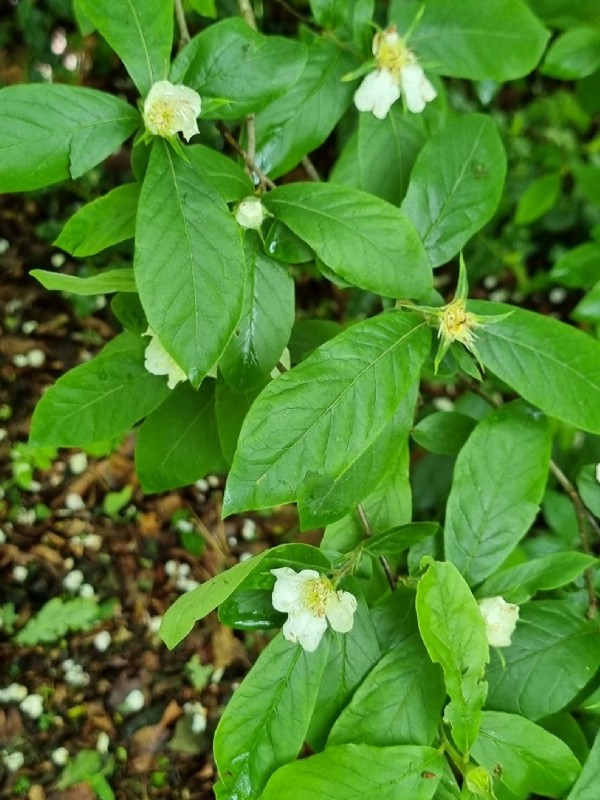
Mespilus, Genus, spp., Multiple species,
- Genus
- Multiple species
medlar
Southeastern Europe, Caucasus, and southwestern Asia
Overview
Mespilus is a small genus of deciduous trees and shrubs in the rose family (Rosaceae), typified by Mespilus germanica, the common medlar, long grown for its frost-softened fruit. Plants form a low, broad, often crooked-branched tree or large shrub 10-20 ft (3-6 m) tall and as wide, with a dense, twiggy habit. The leaves are simple, alternate, dull green, 3-6 in (8-15 cm) long, hairy beneath, turning russet to yellow-brown in autumn. Solitary white five-petalled flowers 1.5-2 in (4-5 cm) across open in late spring, each cupped by leafy sepals. The brown, rounded fruit, 1-2 in (2.5-5 cm) wide, has a wide open eye ringed by persistent sepals and stays hard and sour until softened by frost or storage, a process called bletting. Trees are hardy and adaptable but slow-growing, and the fruit must be bletted before it can be eaten.
Native Range
Mespilus germanica is native to southeastern Europe, the Caucasus, and southwestern Asia, where it grows in woodland edges, hedgerows, and scrub. It has been cultivated since antiquity and is naturalized across much of Europe. A second, rare species, M. canescens, is restricted to Arkansas in the United States.Suggested Uses
Mespilus is grown as a small ornamental and fruiting tree in orchards, edible landscapes, and lawns for its spring flowers, autumn color, and winter fruit. Single trees are spaced 12-15 ft (3.7-4.6 m) apart. The low, gnarled habit suits cottage gardens and small spaces.How to Identify
Appearance
Size & Dimensions
Height10' - 20'
Width/Spread10' - 20'
Bloom Information
Flowering occurs in late spring, generally May, after the leaves expand. Each white to pale-pink flower opens singly at the shoot tips and lasts about a week. Fruit develops through summer and ripens in late autumn, often staying on the branches after leaf fall.
Detailed Descriptions
Flower Description
White to pale pinkFoliage Description
Dull dark green, russet to yellow-brown in autumnGrowing Conditions
Sun Requirements
Requires 6-10 hours of direct sunlight daily
• Full Sun: 6+ hours of direct sunlight
• Partial Shade: 3-6 hours of direct sunlight
• Full Shade: Less than 3 hours of direct sunlight
Care & Maintenance
Care Guide
Mespilus grows in full sun to part shade in moist, well-drained loam across a pH of 6.0-7.5, and tolerates a range of soils once established. The genus is cold-hardy through USDA zones 5-8 and needs autumn frosts to blet the fruit, so it crops poorly in mild-winter regions. Plants are usually grafted onto hawthorn, pear, or quince rootstock, which influences final size. Growth is slow, and trees take several years to fruit well. Fireblight and leaf spot can affect plants in humid summers. Little pruning or feeding is needed once the framework is formed.Pruning
Mespilus needs only light pruning in winter to remove crossing, dead, or congested branches and to keep an open center. The naturally crooked, spreading framework is otherwise left alone. Grafted trees are checked for rootstock suckers, which are removed at the base.Container Growing
Suitable for container growing
Minimum container size: 15 gallons