No machine-readable author provided. Earthengine assumed (based on copyright claims)., no rights reserved (CC0) · Wikimedia Commons
Mangifera, Genus, spp., Multiple species,
- Genus
- Multiple species
mangoes
Overview
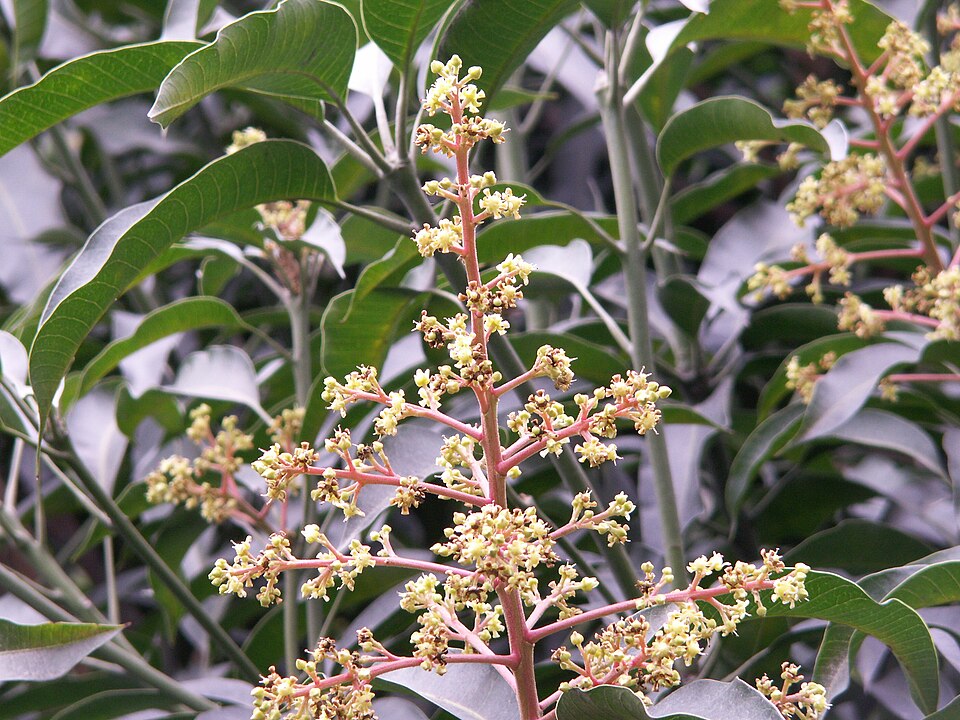
Mangifera is a genus of about 70 species of evergreen trees in the family Anacardiaceae, native to tropical South and Southeast Asia. Trees range from 30-130 feet (9-40 m) tall, with dense, rounded canopies of leathery lance-shaped leaves 6-16 inches (15-40 cm) long that emerge copper-red and mature to dark green. Branched panicles carry hundreds of small pink-white to yellow flowers, only a fraction of which set fruit. The fruit is a fleshy drupe with a single flattened stone, varying across the genus from small and fibrous to large and smooth. M. indica, the cultivated mango, is grown throughout the tropics for its fruit and has given rise to hundreds of named cultivars differing in size, color, and flavor. Trees are deep-rooted, long-lived, and adapted to seasonal tropical climates with a dry period that triggers flowering. They are frost-tender and damaged or killed below freezing, which restricts them to tropical and frost-free subtropical regions. The sap and the skin of the fruit contain compounds related to those in poison ivy, and contact can cause skin irritation in sensitive people. Most species need a long, warm growing season and ample space for the spreading canopy.
Native Range
Mangifera is native to tropical South and Southeast Asia, from India and Myanmar through the Malay Peninsula to Indonesia and the Philippines, where the greatest species diversity occurs. M. indica has been carried far beyond this range and is now grown across the tropics worldwide.Suggested Uses
Grown chiefly as a fruit tree in tropical and frost-free subtropical orchards and gardens, and as a shade tree where space allows. M. indica cultivars are selected for fresh fruit, juice, and processing. The dense canopy also serves as a windbreak and shade tree in warm climates.How to Identify
Appearance
Size & Dimensions
Height30' - 130'
Width/Spread20' - 50'
Bloom Information
Flowering occurs mostly in the dry season before the rains, which in much of the tropics falls between December and April. Large panicles open thousands of small flowers over several weeks, though only a small share develop into fruit. Fruit then ripens through the following warm, wet months.
Detailed Descriptions
Flower Description
pink-white to yellowFoliage Description
dark green (coppery-red when young)Growing Conditions
Sun Requirements
Requires 6-12 hours of direct sunlight daily
• Full Sun: 6+ hours of direct sunlight
• Partial Shade: 3-6 hours of direct sunlight
• Full Shade: Less than 3 hours of direct sunlight
Care & Maintenance
Care Guide
Mango and its relatives need a frost-free tropical or subtropical climate, full sun, and deep, well-drained soil. A distinct dry season helps trigger heavy flowering, while rain or high humidity at bloom time encourages fungal diseases such as anthracnose that reduce fruit set. Young trees are watered regularly to establish, after which mature trees are deep-rooted and tolerate dry spells. Trees grow large, so they need wide spacing of 25-40 feet (8-12 m) for orchard specimens. The sap can irritate skin during pruning and harvest. Grafted cultivars fruit sooner and more reliably than seedlings.Pruning
Prune young trees to build a strong open framework and to limit height for easier harvest. Remove crossing, dead, or diseased wood after harvest, and thin the canopy to improve air movement and reduce fungal disease. The sap can irritate skin during cutting.Container Growing
Suitable for container growing
Minimum container size: 15 gallons