Magnolia, Genus, figo, Species,
- Genus & species
Banana shrub
Overview
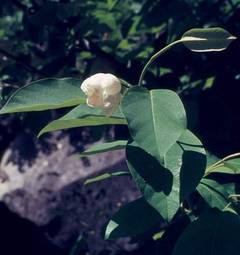
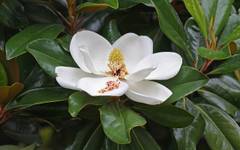
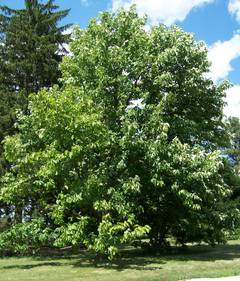
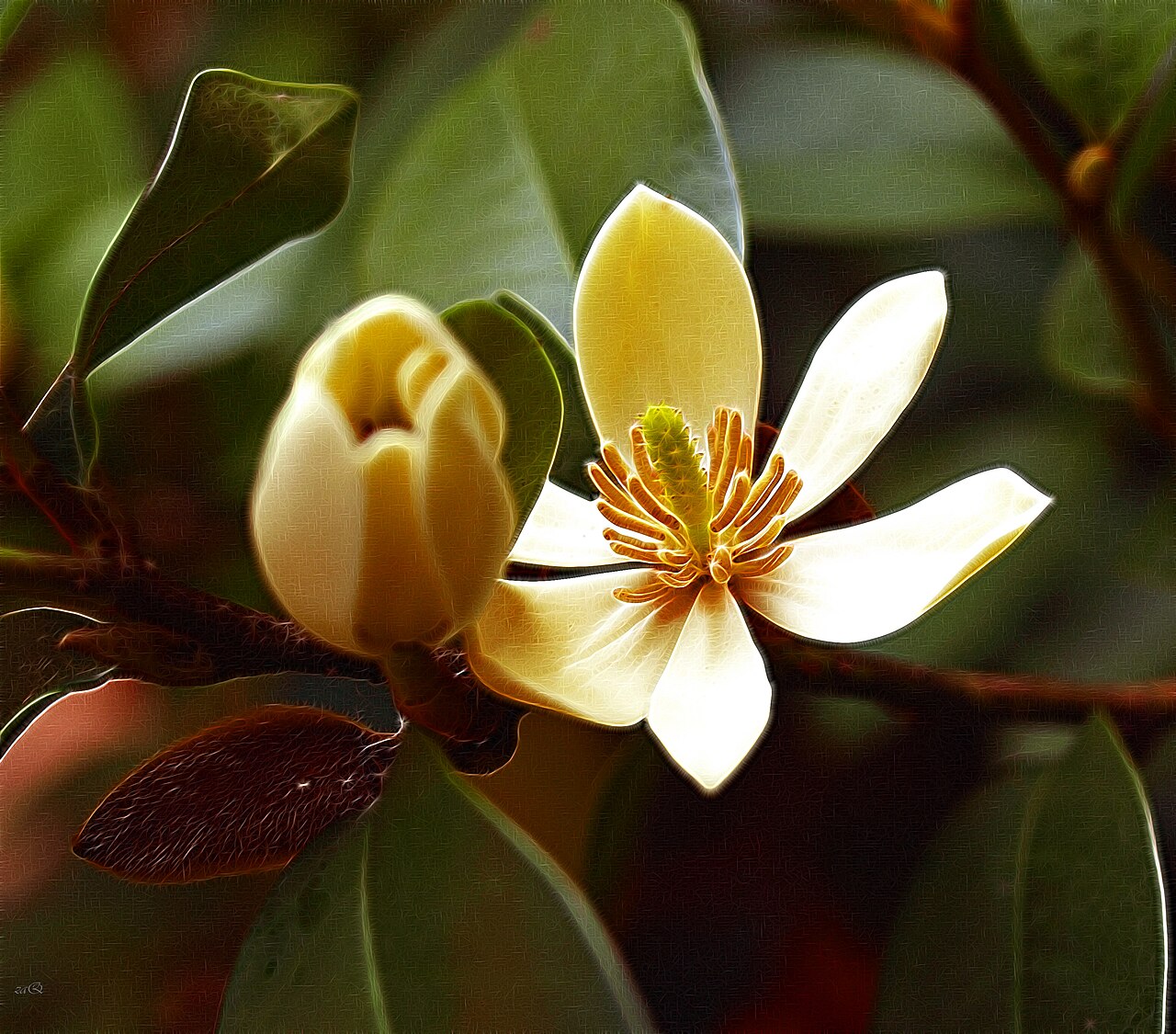
Magnolia figo is an evergreen shrub reaching 6-15 feet (1.8-4.5 m) tall and 6-10 feet (1.8-3 m) wide, branching densely to ground level and holding a rounded outline without pruning. Young stems, leaf stalks, and flower buds are covered in rust-brown hairs that rub away as the growth hardens. Leaves are alternate, elliptic to obovate, 1.5-4 inches (4-10 cm) long, leathery, and glossy dark green above. Flowers are cup-shaped and 1-1.5 inches (2.5-4 cm) across, with six cream to pale yellow tepals edged in maroon; they never open flat, and the scent carries the smell of ripe banana, strongest between 70 and 85F (21-29C) and slight on cool days. Bloom runs from March to May with scattered flowers into summer. Growth is slow at 6-12 inches (15-30 cm) per year, so a plant takes 8-10 years to fill a 6 foot (1.8 m) space. Foliage is damaged at 10F (-12C) and stems die back near 5F (-15C), which holds the shrub to USDA zones 7b-10. Leaves yellow between the veins on soils above pH 7.0, and the flowers sit inside the canopy rather than on its surface, so the scent is met before the bloom is seen.
Native Range
Magnolia figo is native to southern China, in Guangdong, Guangxi, Fujian, and Yunnan, where it grows in evergreen broadleaf forest and along stream margins below 3,300 feet (1,000 m). It has been cultivated in Chinese gardens for centuries and was carried to Britain in 1789, reaching the southeastern United States soon after. Parts of the nursery trade list it under the older name Michelia figo.Suggested Uses
Planted at 6-8 foot (1.8-2.4 m) spacing beside paths, doorways, and seating areas across USDA zones 7b-10, where the scent is picked up at 10-20 feet (3-6 m) in warm weather. Used as a clipped or informal evergreen hedge and as a wall shrub on shaded aspects. Container culture in pots of 10 gallons (38 L) or larger holds plants at 4-6 feet (1.2-1.8 m) and allows them to be moved under cover in zone 7 and colder.How to Identify
Appearance
Size & Dimensions
Height6' - 15'
Width/Spread6' - 10'
Bloom Information
Flowering runs March to May in USDA zones 8-10 and April to June in zone 7b, over 5-8 weeks, with scattered flowers through summer on new growth. Each flower lasts 2-3 days, and the scent is released from mid-morning through the afternoon, dropping away below 60F (16C). Buds form on wood made the previous summer, so a hard cut after midsummer removes the following spring's flowers. Beetles carry pollination in the native range, and fruit seldom sets on cultivated plants outside it.
Detailed Descriptions
Flower Description
Cream to pale yellow with maroon tepal marginsFoliage Description
Glossy dark green with rust-brown hairs on new growthGrowing Conditions
Sun Requirements
Requires 4-8 hours of direct sunlight daily
• Full Sun: 6+ hours of direct sunlight
• Partial Shade: 3-6 hours of direct sunlight
• Full Shade: Less than 3 hours of direct sunlight
Care & Maintenance
Care Guide
Four to eight hours of sun supports flowering, and shade from midday sun holds leaf colour in climates that pass 95F (35C). Moist, free-draining soil at pH 5.5-6.5 with organic matter suits the roots, and interveinal yellowing above pH 7.0 is corrected with chelated iron. Water at 1 inch (25 mm) per week through the first three seasons and during summer dry spells after that, since the shallow root system dries out faster than the canopy size suggests. A slow-release fertilizer for acid-loving plants applied in early spring covers the year's growth. Scale insects colonise the interior stems and algal leaf spot marks older leaves in humid summers, both on plants with little air movement through the canopy. Foliage is damaged at 10F (-12C), and plants regrow from the base after die-back at 5F (-15C).Pruning
Pruning is carried out within 4-6 weeks of the main flowering flush, since the buds for the next season form over the following summer. The dense habit holds without pruning, and cuts are usually limited to dead wood and shortening the outer canopy by 4-6 inches (10-15 cm). Plants take shearing into a formal hedge at 4-6 feet (1.2-1.8 m), at the cost of most of the flowers, which sit in the leaf axils of the outer growth. Cuts into leafless wood older than four years regrow slowly.Pruning Schedule
Prune: May–June
late spring
Container Growing
Suitable for container growing
Minimum container size: 10 gallons