Linaria, Genus, vulgaris, Species,
- Genus & species
common toadflax
Overview
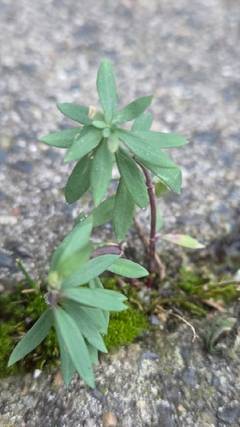
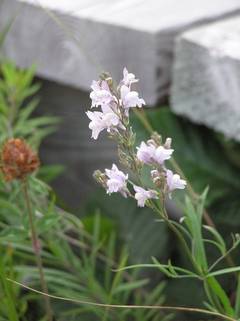
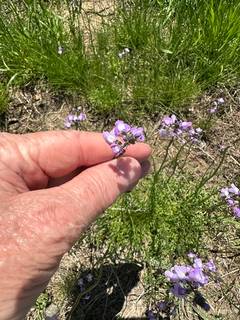
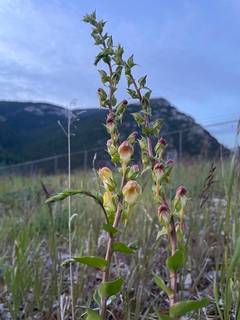
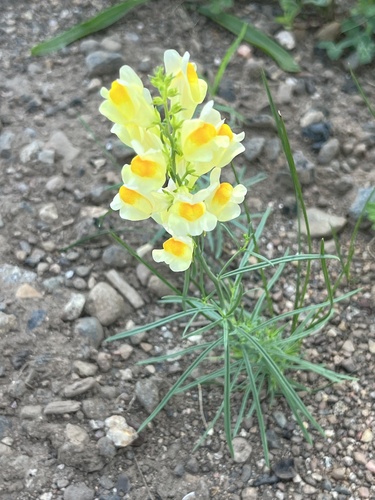
Linaria vulgaris is an upright perennial in the plantain family, growing 1-3 feet (30-90 cm) tall on slender stems from a spreading, creeping root system. The stems are crowded with narrow, linear, blue-green leaves 1-3 inches (2.5-7.5 cm) long, giving a soft, flax-like look. From early summer into fall it bears dense, upright spikes of snapdragon-like flowers, each 0.8-1.4 inches (2-3.5 cm) long, pale yellow with a deeper orange spot on the lower lip and a long, straight spur at the base. The two-toned flowers give the plant its common name of butter-and-eggs. Only long-tongued bumblebees are heavy enough to open the closed flower and reach the nectar in the spur. The plant spreads by seed and aggressively by creeping roots, sending up new shoots across a wide area and forming patches on roadsides, fields, and disturbed ground. In North America it is naturalized and listed as a noxious weed in several states and provinces. It tolerates poor, dry, gravelly soils and resprouts from root fragments after cutting or tilling. The foliage contains compounds that are mildly toxic and bitter, so grazing animals usually avoid it.
Native Range
Linaria vulgaris is native to Europe and temperate Asia. It has naturalized across North America, where it grows on roadsides, fields, and disturbed ground and is listed as a noxious weed in parts of the United States and Canada.Suggested Uses
Linaria vulgaris is grown occasionally in cottage and wildflower plantings for its long season of yellow flowers, though its creeping roots and weedy spread limit its garden use. It is usually confined to contained ground where it cannot escape. In most settings it occurs as a weed of roadsides and disturbed land rather than a planted species.How to Identify
Appearance
Size & Dimensions
Height1' - 3'
Width/Spread1' - 2'
Bloom Information
Flowering runs from early summer into fall, roughly June through October. The pale yellow and orange flowers open from the base of the spike upward and are pollinated mainly by bumblebees strong enough to force the closed flowers open. Blooming continues over a long season, with seed capsules forming below as the spike lengthens.
Detailed Descriptions
Flower Description
pale yellow with orangeFoliage Description
blue-greenGrowing Conditions
Sun Requirements
Requires 6-10 hours of direct sunlight daily
• Full Sun: 6+ hours of direct sunlight
• Partial Shade: 3-6 hours of direct sunlight
• Full Shade: Less than 3 hours of direct sunlight
Care & Maintenance
Care Guide
Linaria vulgaris grows in full sun in dry, poor, sandy, or gravelly soils and needs no watering or feeding once established. It spreads quickly by creeping roots that send up new shoots well beyond the original clump, so patches enlarge year to year. Cutting the stems does not control it, since the roots resprout, and tilling spreads the fragments. Removing it requires lifting the whole root system, as pieces left behind regrow. The plant tolerates drought and roadside conditions. Its root spread makes containment difficult once it establishes.Pruning
Cutting or deadheading the spikes before seed forms limits seeding for the season. The creeping roots are not affected by cutting and continue to spread. Repeated removal over several seasons weakens patches but rarely clears them.Pruning Schedule
Prune: July–August
summer
Container Growing
Suitable for container growing
Minimum container size: 3 gallons