Image 1 of 15
1 / 15
Plant Reference
Linaria, Genus, purpurea, Species,
- Genus & species
toadflax
Native to central and southern Italy, growing in rocky ground, old walls, cliff faces, and disturbed sites in well-drained calcareous soil in full sun; widely naturalized in western and northern Europe, parts of North America, Australia, and New Zealand
Overview
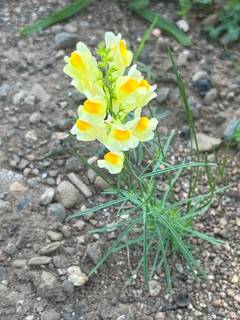
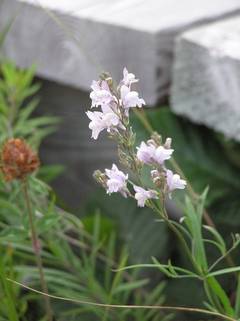
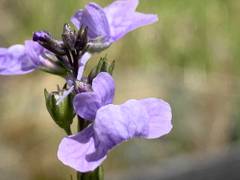
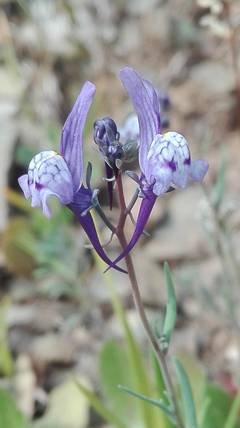
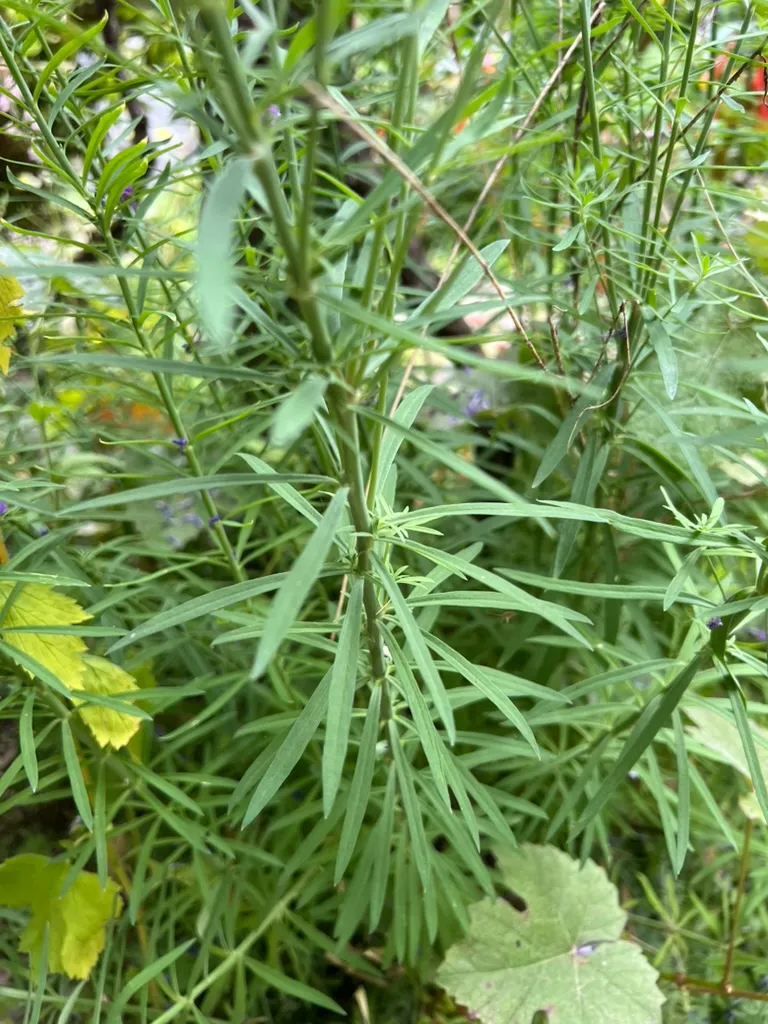
Linaria purpurea is a slender upright short-lived perennial in the plantain family (Plantaginaceae) native to rocky slopes, walls, and disturbed ground in central and southern Italy. Plants form narrow clumps of wiry stems 24-36 inches (60-90 cm) tall clothed in whorls of narrow linear blue-green leaves 0.5-1.5 inches (1.5-4 cm) long. From early summer through fall, the upper portions of the stems carry dense slender racemes of small snapdragon-like (two-lipped) flowers 0.5 inch (1.5 cm) long with a slender spur projecting from the back and a white palate (throat), in soft violet-purple. The spur, the two-lipped flower form, and the narrow blue-green whorled foliage together separate the species from most other garden perennials at a glance. The overall plant silhouette is airy and see-through — wiry stems carry visual weight without blocking plantings behind. Plants bloom almost continuously across a 20-week window with minimal deadheading. The white-flowered cultivar 'Alba' and pale pink 'Canon Went' are the common color variants. Self-seeds prolifically — individual plants are often short-lived (3-4 years) but garden populations self-maintain through seeding, which makes the species a colony-forming rather than clump-forming perennial in most settings. Naturalized in parts of North America, Australia, and the British Isles.
Native Range
Linaria purpurea is native to central and southern Italy, growing in rocky ground, old walls, cliff faces, and disturbed sites, typically in well-drained calcareous soil in full sun. Widely naturalized in western and northern Europe, parts of North America, Australia, and New Zealand.Suggested Uses
Planted in dry borders, gravel gardens, rock gardens, and along old stone walls in zones 5-9 at 12-18 inch (30-45 cm) spacing. The airy narrow habit weaves among other perennials without competing visually or for soil volume, which suits the species to mid-border positions where it fills gaps between clumping neighbors. Pairs with ornamental grasses, eryngiums, and alliums in dry sun-baked plantings where the shared color palette and texture range supports a cohesive planting. Self-seeds into crevices at the base of old stone walls, where the species establishes naturally and maintains itself indefinitely. Rich moist soils and shaded positions fall outside the tolerance range — plants grow lax and flower poorly in fertile conditions.How to Identify
Appearance
Size & Dimensions
Height2' - 3'
Width/Spread1' - 1'6"
Bloom Information
Blooms June through October in zones 5-9 across a 20-week bloom window with near-continuous flowering. Deadheading the spent racemes when they begin to set seed prolongs bloom and reduces self-seeding, though allowing some seeding maintains garden populations. In mild climates (zones 7-9) plants may begin flowering in May.
Detailed Descriptions
Flower Description
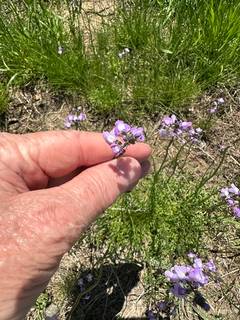
Soft violet-purple snapdragon-like two-lipped flowers 0.5 inch (1.5 cm) long with a slender spur projecting from the back and a white palate (throat); carried in dense slender racemes in the upper portions of the stems; 'Alba' is white, 'Canon Went' is pale pinkFoliage Description
Blue-green narrow linear leaves 0.5-1.5 inches (1.5-4 cm) long arranged in whorls along wiry upright stemsGrowing Conditions
Sun Requirements
Requires 6-8 hours of direct sunlight daily
• Full Sun: 6+ hours of direct sunlight
• Partial Shade: 3-6 hours of direct sunlight
• Full Shade: Less than 3 hours of direct sunlight
Care & Maintenance
Care Guide
Grows in full sun in poor to moderately fertile well-drained neutral to alkaline soil at pH 6.5-8.0. Rich moist soils produce lax floppy plants with reduced flower production. Established plants are extremely drought-tolerant. Staking is unnecessary in lean well-drained positions — the wiry stems hold upright without support. Allow some self-seeding to maintain garden populations, since individual plants are short-lived (3-4 years) and colonies are maintained through seed rather than through long-lived individual specimens. Thin self-sown seedlings to avoid overcrowding. Propagation is from seed or through natural self-seeding; division is not appropriate for the clump structure.Pruning
Trim back by one-third after the main summer flush to stimulate fresh growth and continued bloom through fall. Allow some seed heads to mature for self-seeding and bird food. Cut stems to ground level in late fall or early spring. Individual plants may be short-lived; garden populations self-maintain through seeding. Division is not appropriate for the plant's clump structure.Pruning Schedule
Prune: August & October
summerfall