Linaria, Genus, repens, Species,
- Genus & species
pale toadflax
Overview
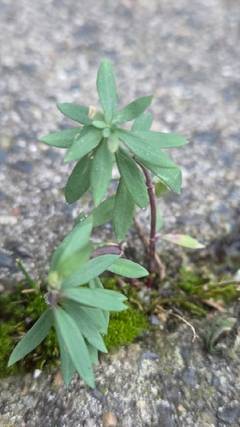
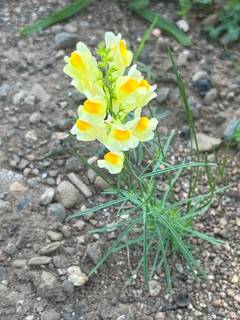
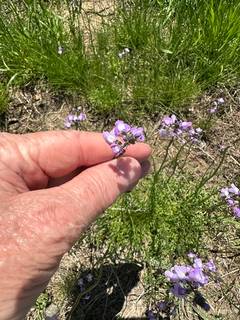
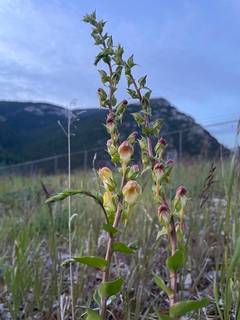
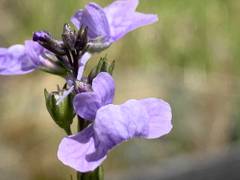
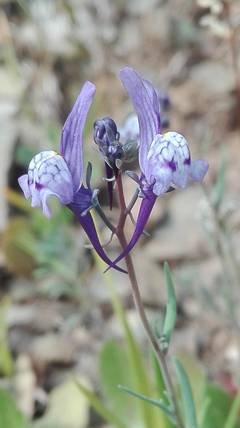
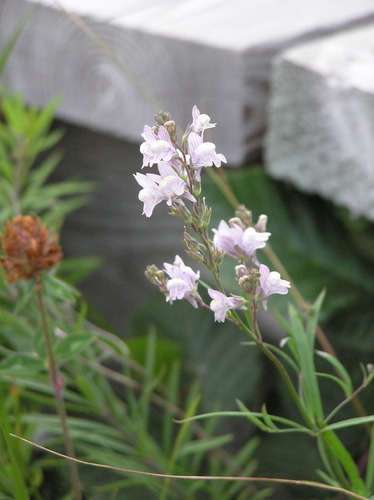
Linaria repens is an upright herbaceous perennial 12-36 inches (30-90 cm) tall that spreads by creeping rhizomes to form loose, drifting colonies. The slender stems carry many narrow, grey-green linear leaves 0.4-2 inches (1-5 cm) long, crowded below and scattered above. From June to September it bears slim spikes of small snapdragon-like flowers, each about 0.3-0.5 inch (8-12 mm) long, pale lilac to whitish and pencilled with violet veins, with a deeper violet or yellow spot on the lower lip and a short backward-pointing spur. Bees force open the closed mouth of the flower to reach nectar in the spur. It grows on dry, stony, and disturbed ground, including banks, railway ballast, walls, shingle, and rough grassland across western and central Europe. The plant spreads by rhizome and self-seeds on open ground, so it can form colonies on poor, sunny sites. It dies back to the rootstock each winter. Where it grows alongside common toadflax L. vulgaris the two hybridise, producing intermediate plants. Its pale, violet-veined flowers and grey-green narrow leaves separate it from the yellow-flowered common toadflax.
Native Range
Native to western and central Europe. It grows on dry, stony, and disturbed ground, including banks, walls, shingle, railway ballast, and rough grassland.Suggested Uses
Grown in gravel gardens, dry banks, and wild or naturalistic plantings for its summer flower spikes and tolerance of poor ground. It is used in pollinator plantings for long-tongued bees. Its spreading habit suits informal, low-maintenance areas.How to Identify
Appearance
Size & Dimensions
Height1' - 3'
Width/Spread1' - 2'
Colors
Bloom Information
Pale lilac, violet-veined flowers open from June to September on slim upright spikes. Each spike flowers from the base upward over several weeks. Long-tongued bees open the closed flower mouth to reach nectar in the spur.
Detailed Descriptions
Flower Description
pale lilac with violet veinsFoliage Description
grey-greenGrowing Conditions
Sun Requirements
Requires 6-12 hours of direct sunlight daily
• Full Sun: 6+ hours of direct sunlight
• Partial Shade: 3-6 hours of direct sunlight
• Full Shade: Less than 3 hours of direct sunlight
Care & Maintenance
Care Guide
Linaria repens grows in dry, free-draining stony or sandy soils in full sun and tolerates a soil pH from about 6.0 to 8.0. It withstands drought and poor, disturbed ground and is hardy to USDA zone 5. The plant spreads by creeping rhizome and self-sown seed, so it can colonise open sites and may need confining in a border. It dies back to the rootstock in winter and regrows in spring. Lean, sunny conditions keep it compact, while rich soil makes it lax. Division in spring or removal of rhizome pieces controls its spread.Pruning
Spent flower spikes can be cut back to prompt a second flush and to limit self-seeding. The stems are cut down in late autumn or winter once growth dies back. Lifting stray rhizomes holds the colony in check.Container Growing
Suitable for container growing
Minimum container size: 2 gallons