Overview
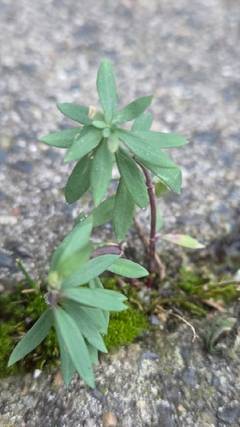
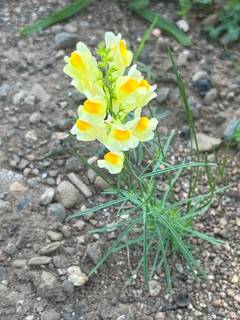
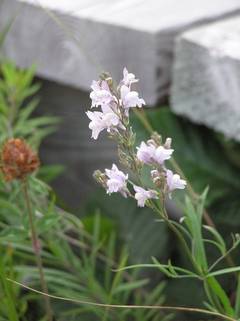
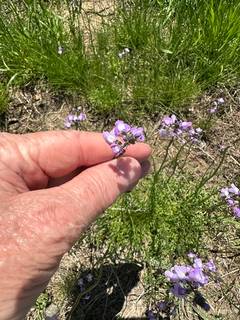
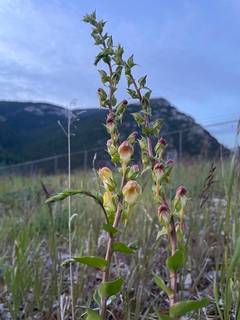
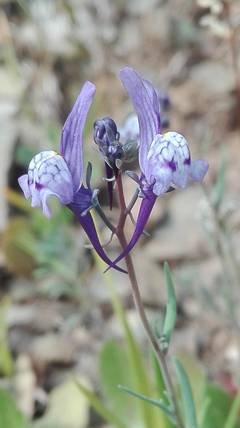
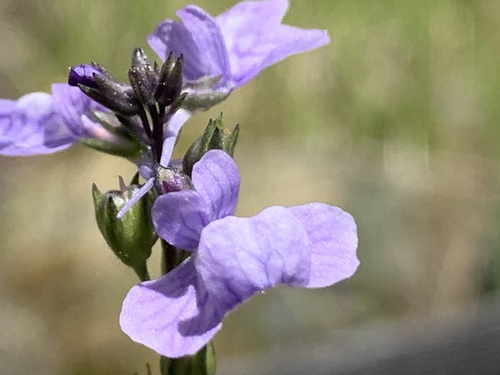
Linaria texana is a slender annual or biennial wildflower in the plantain family, growing 8-24 in (20-60 cm) tall on thin, upright stems. Low non-flowering shoots spread along the ground in a loose mat, while the flowering stems rise vertically and bear narrow, linear leaves. From late winter into spring it produces loose spikes of small blue to violet flowers about 0.3-0.4 in (8-10 mm) long, each with a two-lipped, snapdragon-like face, a white-marked throat, and a slender backward-pointing spur. The flowers open from the bottom of the spike upward over several weeks. Tiny seeds form in rounded capsules and scatter when the stems dry. It grows in sandy fields, roadsides, open woods, and disturbed ground across the southern and central United States, often forming drifts of pale blue in early spring. As a short-lived plant it relies on reseeding and fades by early summer. Its slight, wiry frame contributes little mass to a planting and registers mainly when grown in drifts.
Native Range
Linaria texana is native to North America, ranging across the southern and central United States from the Southeast west to California and north into the Great Plains, and south into northern Mexico. It grows in open, sandy, and disturbed ground.Suggested Uses
Used in wildflower meadows, native plantings, and naturalized sandy areas, sown to form spring drifts. Combines with other cool-season annual wildflowers in lean, sunny ground. Suited to roadside and restoration seed mixes within its range.How to Identify
Appearance
Size & Dimensions
Height8" - 2'
Width/Spread4" - 8"
Bloom Information
Small blue to violet flowers open from late winter through spring, mainly February to May depending on latitude. Bloom progresses up the spike over several weeks. Bees and other small pollinators work the flowers, reaching nectar held in the spur.
Detailed Descriptions
Flower Description
blue to violetFoliage Description
greenGrowing Conditions
Sun Requirements
Requires 6-10 hours of direct sunlight daily
• Full Sun: 6+ hours of direct sunlight
• Partial Shade: 3-6 hours of direct sunlight
• Full Shade: Less than 3 hours of direct sunlight
Water & Climate
Water Needs
Drought Tolerance
Drought tolerant when established
Care & Maintenance
Care Guide
Grows in full sun on sandy, well-drained soils of low fertility and tolerates drought and poor ground. Soil pH from 6.0 to 7.5 is suitable. It establishes from seed sown directly in fall or late winter and does not transplant well once rooted. Water is needed mainly to start seedlings, while mature plants need little. Rich or wet soils shorten the life and reduce flowering. It self-sows freely where the soil stays open and bare.Pruning
No pruning is needed for this short-lived plant. Stems can be left to set and drop seed for the next season, or pulled once flowering ends to limit reseeding. Cutting plants while in flower shortens an already brief display.Toxicity: Not assessed
UnknownPlanting Guide
Planting Methods & Timing
Planting Method
direct sow
Direct Sow Timing
fall or late winter
Days to Maturity
70–100 days
Plant Spacing
6 inches