Lilium, Genus, pumilum, Species,
- Genus & species
coral lily
Eastern Asia (northern China, Mongolia, eastern Siberia, Korean Peninsula; open grasslands, meadow steppes, rocky slopes at 1000-8000 feet / 300-2400 m)
Overview
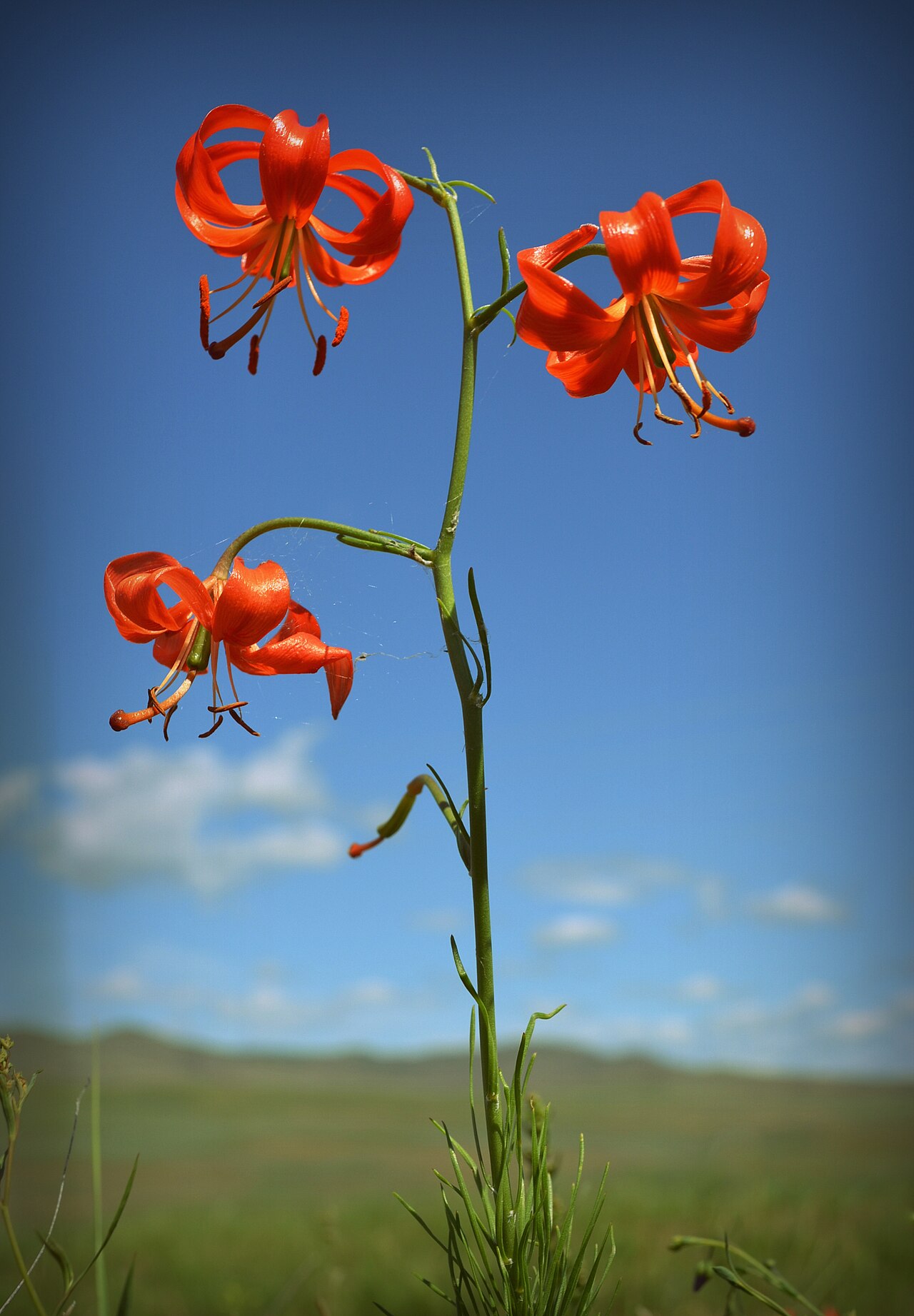
Lilium pumilum (also listed under the synonym L. tenuifolium) is a bulbous herbaceous perennial in the lily family (Liliaceae) reaching 12–24 inches (30–60 cm) tall. This compact East Asian species carries pendant Turk's cap-form flowers with strongly recurved petals, 1–1.5 inches (2.5–4 cm) across, in vivid scarlet-red to coral-red tones without dark spots — the unspotted Turk's cap form runs atypical across the lily genus, where most Turk's cap species carry dark spotting on the petal surfaces. Each slender flower stem carries 5–20 flowers arranged in an open raceme from June through July. The narrow grass-like linear leaves run 3–5 inches (8–13 cm) long and only 0.1–0.2 inches (2–4 mm) wide, scattered along the wiry flower stems, which builds an atypically narrow-textured delicate plant silhouette across the growth form. The small white ovoid bulb runs 1–1.5 inches (2.5–4 cm) in diameter. The species runs short-lived — individual bulbs typically persist 3–5 years in cultivation before declining. Self-seeding from mature seed pods runs readily in sharply drained garden conditions, and the species naturalizes where drainage suits. Hardy to zone 3.
Native Range
Lilium pumilum is native to eastern Asia, where wild populations range across northern China, Mongolia, eastern Siberia, and the Korean Peninsula. The species grows in open grasslands, meadow steppes, and rocky slopes at elevations between 1,000 and 8,000 feet (300–2,400 m).Suggested Uses
Grown in rock gardens, gravel gardens, and sharply drained borders at 6–8 inch (15–20 cm) spacing in groups of 10–20 bulbs for a reading-scale display. The vivid scarlet-red flower color and narrow grass-like foliage separate the species from the coarse-leaved garden hybrid lilies that dominate commercial cultivation. Self-seeding runs readily where drainage suits and the species naturalizes into informal colonies over several garden generations. Short-lived individual bulbs at 3–5 years per bulb mean the colony either carries forward through self-seeding or requires periodic replanting to hold the display. Rich moist soils, heavy clay substrates, and formal border positions that require fixed plant spacing across years are all unsuitable given the cultural profile and short bulb lifespan.How to Identify
Appearance
Size & Dimensions
Height1' - 2'
Width/Spread4" - 6"
Bloom Information
Pendant Turk's cap-form flowers 1–1.5 inches (2.5–4 cm) across with strongly recurved petals open from June through July across a 2–3-week bloom window. The flower color runs vivid scarlet-red to coral-red without dark spots, and each flower stem carries 5–20 flowers in an open raceme. The flowers carry a light sweet fragrance that reads at close range.
Detailed Descriptions
Flower Description
Vivid scarlet-red to coral-red unspotted pendant Turks cap form 1-1.5 inches across; strongly recurved petalsFoliage Description
Medium green narrow grass-like linear 3-5 inches long and 2-4 mm wide; scattered on wiry stemsGrowing Conditions
Sun Requirements
Requires 6-10 hours of direct sunlight daily
• Full Sun: 6+ hours of direct sunlight
• Partial Shade: 3-6 hours of direct sunlight
• Full Shade: Less than 3 hours of direct sunlight
Care & Maintenance
Care Guide
Bulbs are planted 4–5 inches (10–13 cm) deep in autumn in full sun in lean sharply drained neutral to slightly alkaline soil at pH 6.5–7.5, tolerating sand, loam, and rocky substrates. Hardy to zone 3. Sharp drainage is the key cultural requirement — bulb rot runs the primary cause of loss in garden cultivation, and wet winter soils kill dormant bulbs reliably. Lean poor soils run within the cultural tolerance range better than rich amended soils that hold excess moisture around the bulb. The species is short-lived at 3–5 years per bulb, but self-seeding from mature seed pods runs readily where drainage suits and the self-sown seedlings carry the colony forward across garden generations. Heavy overwatering and thick mulch layers around the bulbs should both be avoided.Pruning
Foliage and flower stems are allowed to die back naturally after bloom ends. Only fully dead stems are removed in late autumn — the dying foliage transfers reserves back to the bulb across the dormancy transition. Mature seed pods are allowed to open and scatter seed across the surrounding soil if naturalization is the target outcome for the planting.Container Growing
Suitable for container growing
Minimum container size: 2 gallons