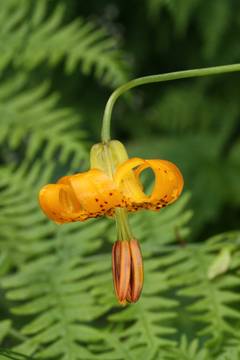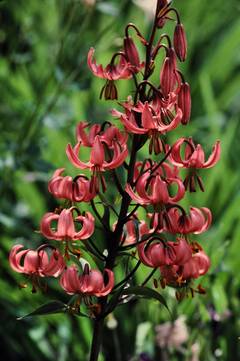
Lilium, Genus, regale, Species,
- Genus & species
regal lily
W Sichuan, China (Min River valley near Songpan; rocky limestone slopes and cliffs; 2600-5200 ft / 800-1600 m)
Overview
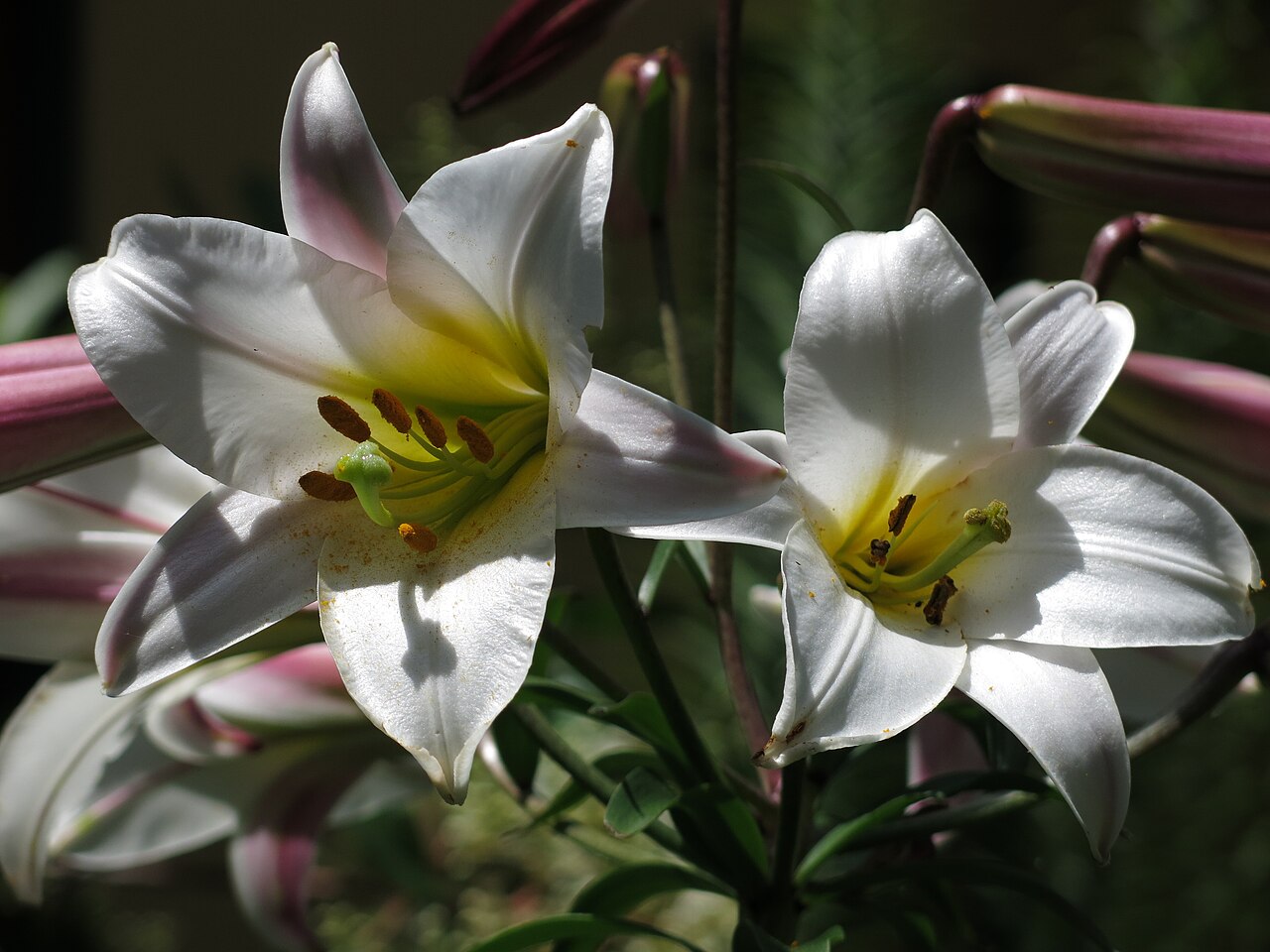
Lilium regale is a bulbous herbaceous perennial reaching 36–72 inches (0.9–1.8 m) tall. This western Chinese species carries large outward-facing to slightly nodding trumpet-shaped flowers 5–6 inches (13–15 cm) long, with white interior coloration centered on a golden-yellow throat and wine-purple to rose-pink coloration on the exterior petal surfaces. Each stem bears 5–15 flowers arranged in a terminal umbel that opens from June through July. Narrow lance-shaped dark green leaves 3–5 inches (8–13 cm) long crowd densely along the stiff upright stem from base to inflorescence. The purplish-brown scaly bulb reaches 3–4 inches (8–10 cm) in diameter at maturity. Flowers carry an intense sweet pervasive fragrance that travels over long distances in still evening air and reaches peak strength after sunset. Stem-rooting habit produces feeder roots along the stem above the bulb, which means bulbs need deep planting to expose enough stem for above-bulb root development. Seed-grown plants reach flowering size in 2–3 years, which is fast for the genus. Hardy to zone 4.
Native Range
Lilium regale is native to a very restricted range in western Sichuan Province, China, growing in the Min River valley near the town of Songpan on rocky limestone slopes and cliffs at 2,600–5,200 feet (800–1,600 m) elevation. The species was introduced to western cultivation by Ernest H. Wilson in 1903 on behalf of the Veitch Nurseries and later the Arnold Arboretum, and Wilson's plant-collecting expeditions to the Min valley carried the species to European and American horticulture where it rapidly became one of the foundational trumpet lilies of the modern nursery trade.Suggested Uses
Planted in perennial borders, cottage gardens, and cutting gardens at 12–18 inch (30–45 cm) spacing in groups of 3–5 bulbs per position to concentrate the fragrance and visual impact. The intense fragrance carries across gardens and reaches peak intensity in evening air, so positioning near seating areas, regularly-used pathways, and open windows maximizes the fragrance return through summer evenings. Large flowers and strong stems suit the species for cutting, and cut stems hold well in vase arrangements with ample water. Tall stems may require staking in wind-exposed positions. Winter dormancy leaves bare ground where bulbs are planted—companion perennials that emerge in spring cover the vacant winter ground. Lily beetles are a persistent pest where the species is established. Waterlogged soils, deep shade, and acidic peat soils are poor fits for the species.How to Identify
Appearance
Size & Dimensions
Height3' - 6'
Width/Spread1' - 1'6"
Bloom Information
Large trumpet-shaped flowers 5–6 inches (13–15 cm) long open from June through July, with white interior coloration centered on a golden-yellow throat and wine-purple to rose-pink coloration on the exterior of the petals. Each stem carries 5–15 flowers arranged in a terminal umbel that opens sequentially across the 2–3 week active bloom period. The intense sweet fragrance travels over long distances in still air and reaches peak strength in evening and early night, which positions the species well for garden viewing during warm summer evenings.
Detailed Descriptions
Flower Description
White interior with golden-yellow throat; wine-purple to rose-pink exterior; trumpet-shaped 5-6 inches longFoliage Description
Dark green, narrow lance-shaped 3-5 inches; densely scattered along stiff upright stemGrowing Conditions
Sun Requirements
Requires 5-10 hours of direct sunlight daily
• Full Sun: 6+ hours of direct sunlight
• Partial Shade: 3-6 hours of direct sunlight
• Full Shade: Less than 3 hours of direct sunlight
Care & Maintenance
Care Guide
Bulbs are planted 6–8 inches (15–20 cm) deep in autumn in full sun to partial shade in fertile well-drained neutral to slightly alkaline soil (pH 6.0–7.5) matching the native limestone-slope ecology. Hardy to zone 4 (−30°F / −34°C). Tolerance of alkaline and limestone soils is rare among lilies, and the species handles garden positions with lime-rich soils where Oriental and Asiatic hybrids suffer chlorosis. The stem-rooting habit makes deep planting essential—shallow-planted bulbs produce inadequate above-bulb root development and weak stems. Stakes hold tall stems upright in wind-exposed positions. Seed propagation carries flowering plants to maturity in 2–3 years. Lily beetles (Lilioceris lilii) defoliate stems rapidly when present and require monitoring through the growing season.Pruning
Stems and foliage die back naturally after bloom, and the above-ground tissue returns stored energy to the bulb across the late-summer senescence period—cutting stems back while still green reduces the bulb's energy reserves for the following year's bloom. Fully dead brown stems are removed at ground level in late autumn. Staking tall stems (above 48 inches / 120 cm) through the growing season prevents wind damage in exposed positions.Container Growing
Suitable for container growing
Minimum container size: 5 gallons