Image 1 of 18
1 / 18
Plant Reference
Lilium, Genus, (Oriental, Species, Hybrids), Subspecies,
- Genus & species
- Subspecies
oriental lilies
Hybrid of garden origin — Division VII of the international hybrid lily classification; parent species — primarily {L. auratum}, {L. speciosum}, {L. japonicum}, and {L. rubellum} — are native to Japan, growing in mountain meadows, forest margins, and rocky slopes in acidic well-drained soils; the fragrance of the Oriental group is the strongest of all lily hybrid groups, with a heavy spicy pervasive character that carries across a large garden on warm evenings
Overview
Oriental lily hybrids (Division VII of the international hybrid lily classification) are derived primarily from crosses involving the Japanese species Lilium auratum, L. speciosum, L. japonicum, and L. rubellum. Plants grow from large scaly bulbs producing erect stems 24-60 inches (60-150 cm) tall with lance-shaped to broadly elliptic leaves arranged spirally along the stem. In mid to late summer, stems carry 4-12 large outward-facing to reflexed flowers 6-10 inches (15-25 cm) across with broad often wavy or ruffled tepals in white, pink, crimson, and bicolor combinations, typically with prominent spotting, raised papillae (surface bumps), and a central stripe or signal. The fragrance is the strongest among all lily hybrid groups — heavy, spicy, and pervasive, carrying across a large garden on warm evenings. Oriental lilies are less heat-tolerant than Asiatic or Orienpet hybrids and grow most successfully with afternoon shade in climates with hot summers. The group requires strongly acidic well-drained soil and is hardy in zones 4-9. Long-established cultivars include 'Stargazer', 'Casa Blanca', 'Dizzy', and 'Mona Lisa'. All parts of Lilium species are extremely toxic to cats — even small exposures cause acute kidney failure, which rules the genus out of gardens and cut-flower positions where cats have access.
Native Range
Oriental lily hybrids are of garden origin. The parent species — primarily L. auratum, L. speciosum, L. japonicum, and L. rubellum — are native to Japan, growing in mountain meadows, forest margins, and rocky slopes in acidic well-drained soils.Suggested Uses
Planted in perennial borders (mid to back positions), cutting gardens, and large containers in zones 4-9 at 12-18 inch (30-45 cm) spacing. Evening fragrance is the primary garden feature and reads most strongly from 20-30 ft (6-9 m) away on warm still evenings, which suits placement near patios, seating areas, and pathways where garden users pass slowly. Partnering with summer-blooming shrubs and low perennials that fill in as the lily foliage yellows holds the visual coverage after the lily stems die back. Cut flowers last 7-14 days in water; the stamens should be removed at harvest to prevent pollen staining on fabric. Cat toxicity rules the group out of households with cats.How to Identify
Appearance
Size & Dimensions
Height2' - 5'
Width/Spread1' - 1'6"
Bloom Information
Blooms July through September in zones 4-9, peaking in August — the latest of the major lily groups. Individual stems bloom over 2-4 weeks. In the Pacific Northwest (zones 7-9), plants grow reliably; in zones 8-9 with hot summers, partial afternoon shade improves the display and prolongs flower life. Fragrance is strongest in the evening and carries across open garden spaces.
Detailed Descriptions
Flower Description
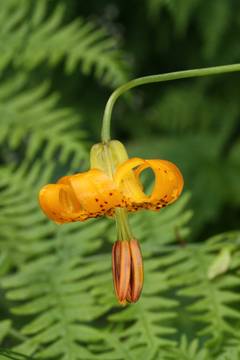
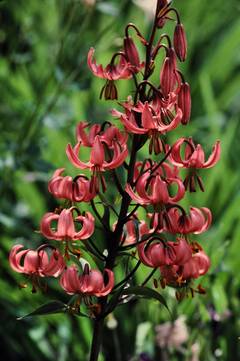
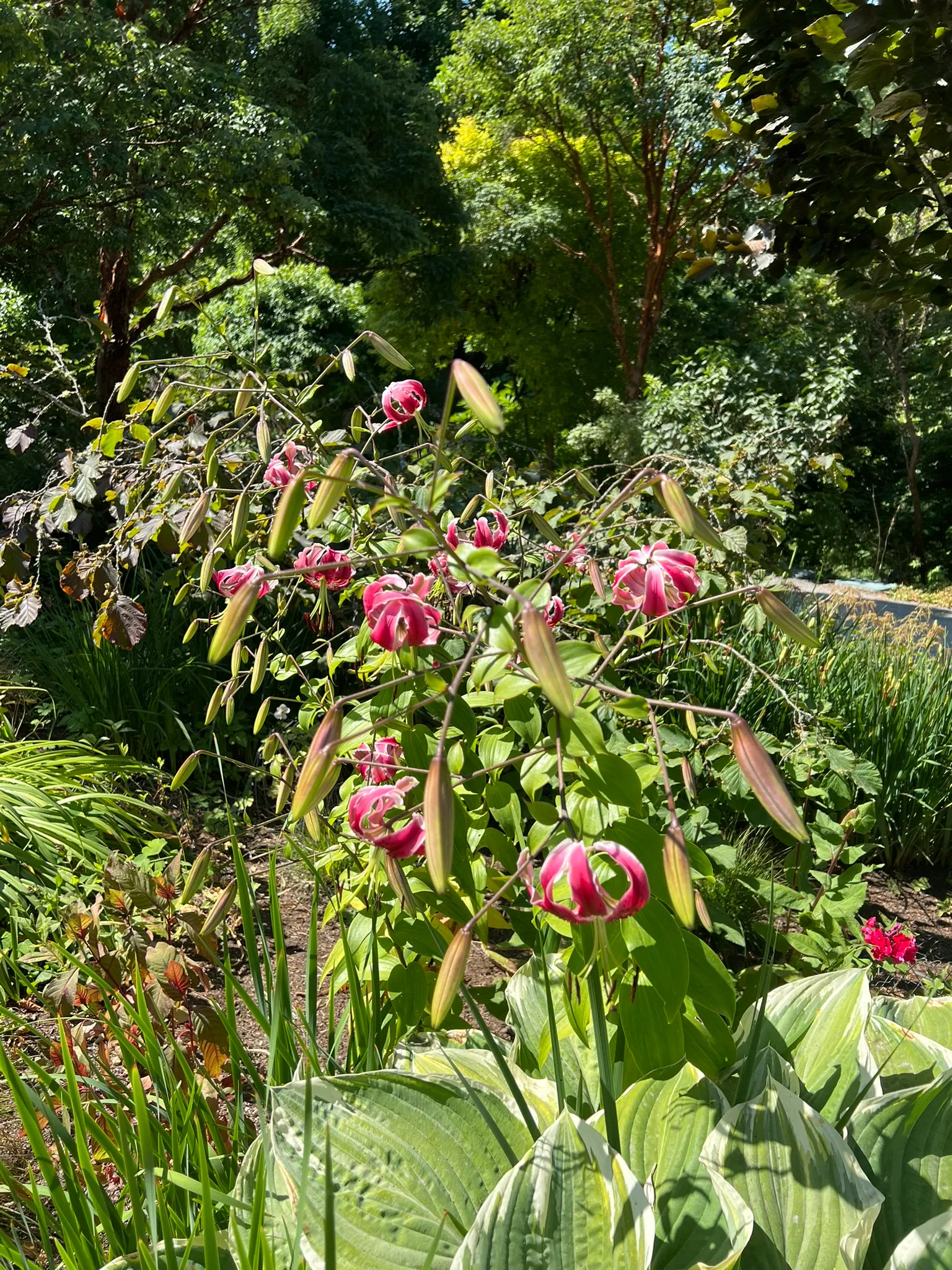
White, pink, crimson, and bicolor combinations; flowers 6-10 inches (15-25 cm) across with broad often wavy or ruffled tepals, outward-facing to reflexed; typically with prominent spotting, raised papillae surface bumps, and a central stripe or signalFoliage Description
Medium to dark green lance-shaped to broadly elliptic leaves arranged spirally along erect stemsGrowing Conditions
Sun Requirements
Requires 4-6 hours of direct sunlight daily
• Full Sun: 6+ hours of direct sunlight
• Partial Shade: 3-6 hours of direct sunlight
• Full Shade: Less than 3 hours of direct sunlight
Care & Maintenance
Care Guide
Plant bulbs in fall or spring 6 inches (15 cm) deep and 12-18 inches (30-45 cm) apart in full sun to partial afternoon shade in well-drained fertile acidic soil at pH 5.5-6.5. Oriental lilies require more acidic conditions than other lily groups — alkaline soils cause yellowing and decline. Mulch heavily to keep the root zone cool and moist. Water consistently during growth and reduce watering after foliage yellows. Apply an acid-forming fertilizer as shoots emerge. Stake tall cultivars in exposed positions. All parts are highly toxic to cats and lethal in small quantities — the group should not be grown in households or gardens with cats.Pruning
Deadhead individual spent flowers and remove seed capsules as they form to conserve bulb energy. Leave the full stem and foliage to die back naturally — premature removal depletes the bulb and reduces the following year's bloom. Cut to ground level only after stems have fully yellowed. Divide congested clumps every 4-5 years in early fall. When dividing, handle bulb scales gently since the scales bruise easily and bruised scales rot in storage.Pruning Schedule
Prune: September–October
fall
Container Growing
Suitable for container growing
Minimum container size: 5 gallons