Lilium, Genus, candidum, Species,
- Genus & species
madonna lily
Eastern Mediterranean (the Balkans through Turkey and the Levant); rocky calcareous slopes and light woodland from near sea level to approximately 3,000 feet (900 m). Cultivated for at least 3,500 years and depicted in Minoan frescoes from approximately 1,500 BCE.
Overview
Lilium candidum is a bulbous perennial in the lily family (Liliaceae) and one of the older cultivated ornamental plants in continuous garden use, with depictions in Minoan frescoes from approximately 1,500 BCE establishing a documented horticultural history of at least 3,500 years. Plants reach 36-60 inches (90-150 cm) tall in flower from a large scale-covered bulb 2-3 inches (5-8 cm) in diameter, and bulb planting depth differs from most lilies in that L. candidum is planted shallowly with the bulb tip barely covered by 1 inch (2.5 cm) of soil, rather than at the deeper 4-6 inch (10-15 cm) depth used for most Lilium species; deeper planting is the most common cause of cultivation failure with this species. Basal leaves emerge in autumn (September through October), forming a rosette of glossy green lance-shaped leaves 6-8 inches (15-20 cm) long that overwinter through the cold season and persist through flowering. Stem leaves are smaller, spirally arranged, sessile, and reduce gradually in size up the flowering stalk. In June, each stem bears 5-20 trumpet-shaped outward-facing flowers 2.5-3 inches (6-8 cm) long, pure white with golden-yellow anthers, with a heavy sweet waxy fragrance that is perceptible from 10-15 feet (3-4.5 m) on warm still evenings. The annual growth cycle differs from most lilies and runs counter to the typical spring-sprout-summer-bloom-fall-dormancy pattern of most Lilium species: new basal foliage appears in September and October, overwinters as evergreen rosette, supports spring stem growth, flowers in late June, and the stem dies back in August leaving a brief 4-6 week dormancy in July through August. The bulbs should not be stored dry for extended periods and are planted in late August or September to take advantage of the species' autumn-active growth phase. All plant parts are toxic to cats: ingestion of any part (leaves, stems, flowers, pollen, water from a vase containing cut Lilium stems) produces acute renal failure in cats from a not-yet-fully-identified compound class, with symptoms developing within 6-12 hours and renal damage progressing rapidly without veterinary intervention. The toxic principle in Lilium has been studied for decades but its specific identity remains uncertain, though it acts on renal proximal tubule cells and produces oxidative damage characteristic of the compound class. Toxicity is specific to cats; dogs, humans, and other mammals are unaffected by the compound. Botrytis blight (Botrytis elliptica) and lily beetle (Lilioceris lilii) are the standard cultivation pressures.
Native Range
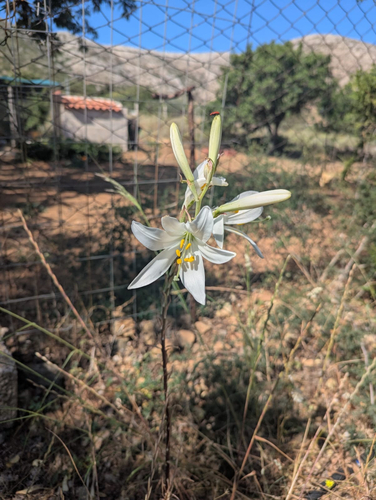
Lilium candidum is native to the eastern Mediterranean region, with a range from the Balkans (Greece, Albania) through Turkey, Lebanon, Syria, and Israel into the broader Levant. The species occurs on rocky calcareous slopes and in light open woodland from near sea level to approximately 3,000 feet (900 m). The species has been cultivated so long (with documented use in Minoan culture from approximately 1,500 BCE and continuous European cultivation since at least the Roman period) that wild populations are difficult to distinguish from ancient garden escapes, and the cultivated and wild populations have been intermixed for so many generations that the genetic distinction has substantially blurred. The Madonna lily common name reflects the species' association with religious art beginning in the medieval period.Suggested Uses
Used in warm sheltered borders against south- or west-facing walls at 10-12 inch (25-30 cm) spacing, where the heat reflection from the wall extends the species' performance in cooler maritime climates. The tall stems and intense evening fragrance suit placement near paths, doorways, and seating areas where the bloom-period scent reaches the living spaces. Combinations with lavender, rosemary, and other Mediterranean perennials work well because the species shares the Mediterranean climate preference for full sun, alkaline soil, and summer-dry summer-warm conditions. In the Pacific Northwest, the warmest most sheltered microsite available is recommended; the species performs west of the Cascades in USDA zones 7b-8b on well-drained alkaline sites and is less reliable in cooler inland sites. Cat-safe alternatives (Allium giganteum, Galtonia candicans, Polianthes tuberosa) replace this species in households with cats, because of the severe feline renal toxicity associated with all plant parts.How to Identify
Appearance
Size & Dimensions
Height3' - 5'
Width/Spread8" - 1'
Bloom Information
White trumpet flowers open from mid-June through early July, with each stem bearing 5-20 flowers that open sequentially from the bottom upward over 2-3 weeks. Individual flowers last 5-7 days. Fragrance is strongest in warm still evening air and matches the hawk-moth pollination syndrome (long deep tube, pale color, evening fragrance peak), with hawk moths and bumblebees as the primary pollinators in the species' Mediterranean native range. After flowering completes, the stem dies back by August, and the new basal rosette emerges in September to begin the next growth cycle.
Detailed Descriptions
Flower Description
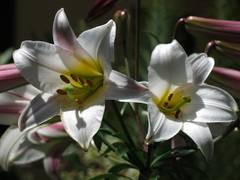
Pure white with golden-yellow anthers; trumpet-shaped outward-facing flowers 2.5-3 inches (6-8 cm) long carried in racemes of 5-20 per stem on tall flowering stalksFoliage Description
Glossy green; basal rosette of lance-shaped leaves 6-8 inches (15-20 cm) long emerging in autumn and overwintering, with smaller spirally-arranged sessile stem leaves above through the spring growth windowGrowing Conditions
Sun Requirements
Requires 6-10 hours of direct sunlight daily
• Full Sun: 6+ hours of direct sunlight
• Partial Shade: 3-6 hours of direct sunlight
• Full Shade: Less than 3 hours of direct sunlight
Care & Maintenance
Care Guide
Bulbs are planted in late August through September because the dormant period is brief (approximately 4-6 weeks in July through August) and the bulbs do not tolerate extended dry storage. Planting depth is shallow at 1 inch (2.5 cm) of soil over the bulb tip; deeper planting is a common cause of cultivation failure with this species. Site selection runs to full sun with shelter from cold wind, in fertile well-drained alkaline soil at pH 7.0-8.0, with spacing of 10-12 inches (25-30 cm) apart. Established clumps should not be disturbed: the species resents transplanting and may take 2-3 years to resume flowering after a move. Watering is moderate during the growing season and reduced during the brief summer dormancy in July and August, and a balanced bulb fertilizer applied in early spring as the flower stalk begins to rise supports the bloom. Lily beetle (Lilioceris lilii, with bright red 8 mm adults) is the principal insect pest, and the larvae feed on the foliage beneath a shield of frass. Households with cats: the species' toxicity to cats is severe and ingestion of any plant part produces acute renal failure within 6-12 hours, so household placement and cut-flower use require consideration of cat access; alternative summer-flowering bulbs (Allium giganteum, Galtonia candicans, Polianthes tuberosa) carry no equivalent feline toxicity for cat-occupied households.Pruning
The flowering stem is removed at the base after bloom completes once it yellows in July and August. The basal leaf rosette is left in place because it overwinters through the cold season and supplies the energy reserve that supports the next year's flowering. Botrytis-damaged leaves are removed promptly to reduce spore spread to neighboring plants. No other pruning is needed.Pruning Schedule
Prune: August
summer
Container Growing
Suitable for container growing
Minimum container size: 5 gallons