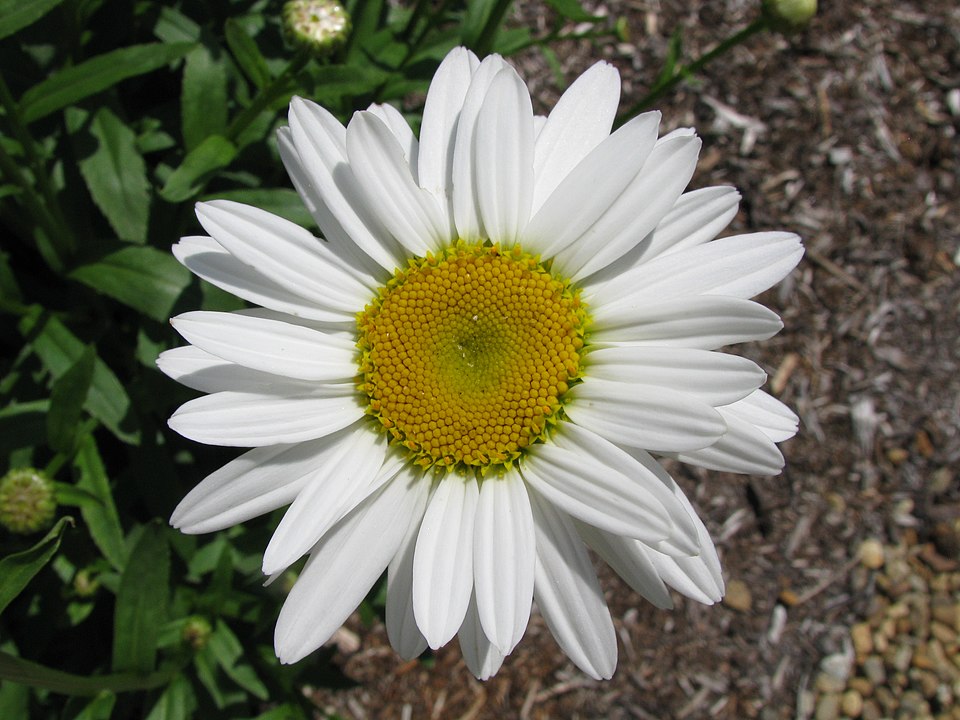
Leucanthemum × superbum 'Becky'
becky shasta daisy
Cultivar of garden origin; the species {Leucanthemum × superbum} is a hybrid between {L. lacustre} and {L. maximum}, originally created by Luther Burbank in California in 1890; {Leucanthemum × superbum 'Becky'} was named Perennial Plant of the Year in 2003 by the Perennial Plant Association — the standard against which other Shasta daisies are measured for stem strength and bloom duration
Overview
Leucanthemum × superbum 'Becky' is the benchmark Shasta daisy — named Perennial Plant of the Year in 2003 by the Perennial Plant Association and the standard against which other Shastas are measured. Plants grow 30-40 inches (75-100 cm) tall and 18-24 inches (45-60 cm) wide. Pure white single daisies with bright yellow centers 3-4 inches (8-10 cm) across bloom from July through September — later and longer than most Shasta daisies. Leucanthemum × superbum 'Becky' is taller, sturdier, later-blooming, and more heat-tolerant than other Shastas. The strong stems rarely need staking — a significant improvement over older cultivars that flop. The later bloom (July-September vs. June-July) extends the Shasta season into late summer when most other daisies have finished. Dark green glossy semi-evergreen foliage. Deadhead for extended bloom. Divide every 2-3 years to maintain vigor. Well-drained soil in full sun. Deer may eat Shasta daisies.
Native Range
Leucanthemum × superbum 'Becky' is a garden hybrid. PPA Perennial Plant of the Year 2003.Suggested Uses
Used in borders, cut flower gardens, and cottage gardens. The benchmark Shasta daisy — PPA 2003. The tall late-blooming habit extends the white daisy season into late summer. Container culture (5 gallons / 19 liters).How to Identify
Appearance
Size & Dimensions
Height2'6" - 3'4"
Width/Spread1'6" - 2'
Reaches mature size in approximately 2 years
Colors
Bloom Information
Detailed Descriptions
Flower Description
Pure white single daisies with bright yellow centers, 3-4 inches (8-10 cm) across, on tall sturdy stemsFoliage Description
Dark green lance-shaped glossy semi-evergreen leaves form a dense basal moundGrowing Conditions
Sun Requirements
Requires 6-10 hours of direct sunlight daily
• Full Sun: 6+ hours of direct sunlight
• Partial Shade: 3-6 hours of direct sunlight
• Full Shade: Less than 3 hours of direct sunlight
Care & Maintenance
Care Guide
Plant in full sun. Well-drained soil. Deadhead for extended bloom. Divide every 2-3 years. Strong stems rarely need staking.Pruning
Deadhead spent flowers. Cut all stems to ground in late fall or early spring.Pruning Schedule
J
F
M
A
M
J
J
A
S
O
N
D
fallearly spring
Container Growing
✓ Suitable for container growing
Minimum container size: 5 gallons