Leucanthemum, Genus,
- Genus
daisy
{L.} ×{superbum} is a hybrid of garden origin created by Luther Burbank in California in the 1890s. {L. vulgare} (oxeye daisy) is native to Europe, naturalized and listed as a Class B noxious weed in Washington and a Class B invasive in Oregon — it should not be planted
Overview
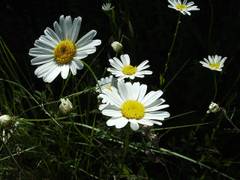
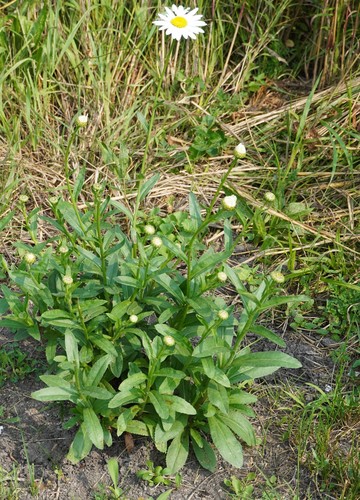
Leucanthemum is an upright deciduous perennial growing 18-36 inches (45-90 cm) tall and 18-24 inches (45-60 cm) wide. Flower heads in the familiar daisy form — white ray florets surrounding yellow disk centers, 2-4 inches (5-10 cm) across — are carried on long upright stems from June through September (14 weeks). Strap-shaped to spoon-shaped dark green toothed leaves are larger at the base and progressively smaller up the stem. In Asteraceae. L. × superbum (Shasta daisy) is the standard cultivated species — a hybrid created by Luther Burbank in California in the 1890s, named for snow-capped Mt. Shasta. Species distinction is important: L. vulgare (oxeye daisy) is naturalized and listed as a Class B noxious weed in Washington and Oregon — L. × superbum cultivars are used instead. Regular deadheading extends bloom. Clumps are divided every 3-4 years to maintain vigor — without division, centers die out. Non-toxic. This entry represents the genus.
Native Range
L. × superbum (Shasta daisy) is a hybrid of garden origin created by Luther Burbank in California in the 1890s. L. vulgare (oxeye daisy) is native to Europe, naturalized and listed as a Class B noxious weed in Washington and Oregon — it should not be planted.Suggested Uses
Grown in cottage gardens, mixed borders, cut flower gardens, and in containers of at least 3 gallons (11 L), spaced 18-24 inches (45-60 cm) apart. Cut flower. L. × superbum cultivars are used (not L. vulgare, which is a noxious weed). Non-toxic. Hardy in zones 4-9.How to Identify
Appearance
Size & Dimensions
Height1'6" - 3'
Width/Spread1'6" - 2'
Bloom Information
Detailed Descriptions
Flower Description
white ray florets surrounding yellow disk centers in the familiar daisy form; flower heads 2-4 inches (5-10 cm) across on long upright stems; single or fully double depending on cultivar; June-SeptemberFoliage Description
strap-shaped to spoon-shaped, toothed, dark green; basal leaves larger (4-6 inches / 10-15 cm) and stem leaves progressively smaller — the typical Asteraceae rosette-and-stem patternGrowing Conditions
Sun Requirements
Requires 5-12 hours of direct sunlight daily
• Full Sun: 6+ hours of direct sunlight
• Partial Shade: 3-6 hours of direct sunlight
• Full Shade: Less than 3 hours of direct sunlight
Care & Maintenance
Care Guide
Site in full sun to partial shade (5-12 hours direct sun) in well-drained loam or sand with a pH of 5.5-7.0. Deadhead regularly. Divide every 3-4 years to maintain vigor — centers die out without division. L. × superbum (Shasta daisy) cultivars are the appropriate selection; L. vulgare (oxeye daisy) is a Class B noxious weed in Washington and Oregon and should not be planted. Non-toxic. Hardy in zones 4-9.Pruning
Deadhead spent flowers throughout the season to extend bloom and prevent self-sowing. Cut back to basal foliage in fall (November). Divide overcrowded clumps every 3-4 years to maintain vigor.Pruning Schedule
Prune: June–September & November
summerfall
Container Growing
Suitable for container growing
Minimum container size: 3 gallons