Leucanthemum, Genus, maximum, Species,
- Genus & species
max chrysanthemum
Overview
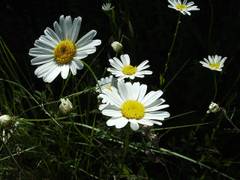
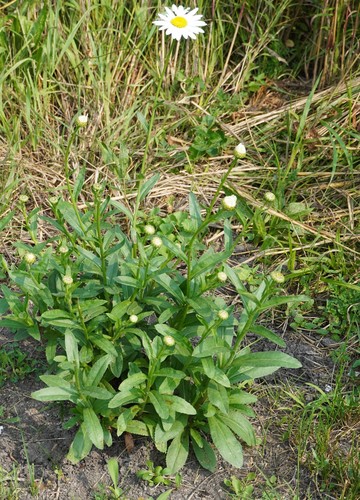
Leucanthemum maximum is a clump-forming herbaceous perennial growing 2-3 feet (60-90 cm) tall and 1.5-2 feet (45-60 cm) wide, with a basal rosette of dark green, narrow, toothed leaves up to 5 inches (12 cm) long. Through summer it sends up sturdy stems each topped by a single daisy flower head 2-3 inches (5-7.5 cm) across, with white ray florets surrounding a yellow disc. The leaves are slightly leathery and hold as a low evergreen tuft over winter in mild climates. A long-lived parent of the garden Shasta daisy (Leucanthemum × superbum), the species blooms from June into August and often repeats when spent heads are removed. It forms expanding clumps that benefit from division every few years as the centers grow woody and bare. The white-and-yellow flowers are carried on stems strong enough to stand without staking in most sites, though they may flop in rich soil or shade. Foliage stays mostly clean, though leaf miners and aphids appear at times. The plant sets abundant seed and can self-sow into surrounding ground.
Native Range
Leucanthemum maximum is native to the Pyrenees of France and Spain, where it grows on mountain slopes, rocky ground, and meadow margins. It is widely grown in gardens and has given rise, through hybridizing, to the Shasta daisies.Suggested Uses
Grown in mixed and herbaceous borders, cottage gardens, and cutting beds for its summer daisies. The long sturdy stems hold up well in cut-flower arrangements. It combines with other sun-loving perennials in informal and wildlife plantings.How to Identify
Appearance
Size & Dimensions
Height2' - 3'
Width/Spread1'6" - 2'
Bloom Information
Flowering runs from June to August, with a single white-and-yellow daisy head on each stem. The flowers draw bees, butterflies, and hoverflies. Removing faded heads extends the display and limits self-seeding into late summer.
Detailed Descriptions
Flower Description
White with yellow centerFoliage Description
Dark greenGrowing Conditions
Sun Requirements
Requires 6-10 hours of direct sunlight daily
• Full Sun: 6+ hours of direct sunlight
• Partial Shade: 3-6 hours of direct sunlight
• Full Shade: Less than 3 hours of direct sunlight
Care & Maintenance
Care Guide
Grows in full sun to light shade in fertile, moist, well-drained soil at a pH of 6.0-7.5. It is hardy to USDA zone 5 and overwinters as a low evergreen rosette in milder areas. Steady moisture supports flowering, though the crown rots in wet winter ground, so sharp drainage matters most in cold, damp climates. Clumps are lifted and divided every two to three years to keep them growing strongly and to renew bare centers. Tall stems in rich soil or part shade may need support. Leaf miners, aphids, and crown rot are the main problems.Pruning
Faded flower heads are cut back through summer to prolong bloom and reduce self-seeding. The whole plant is cut to the base after flowering or in late winter before new growth. Clumps are divided in spring or early autumn to renew them.Pruning Schedule
Prune: February & July–August
summerwinter
Container Growing
Suitable for container growing
Minimum container size: 3 gallons