Image 1 of 17
1 / 17
Plant Reference
Leucanthemum, Genus, ×, Hybrid, superbum, Species,
- Genus & species
- Hybrid
shasta daisy
Hybrid of garden origin; developed by Luther Burbank in California in the late 19th century through crosses involving {L. lacustre}, {L. maximum}, and other European species; parent species are native to western Europe — primarily Portugal, France, and the Pyrenees region; widely naturalized across North America and parts of Europe after long garden cultivation
Overview
Leucanthemum × superbum is a clump-forming perennial in the daisy family (Asteraceae) of hybrid origin developed by Luther Burbank in California in the late 19th century through crosses involving L. lacustre, L. maximum, and other European species. Plants form basal rosettes of dark green lance-shaped to spatula-shaped coarsely toothed leaves 3-6 inches (8-15 cm) long. In summer, branched stems 18-36 inches (45-90 cm) tall carry daisy flower heads 2-4 inches (5-10 cm) across with 15-30 pure white ray florets surrounding a flat bright yellow disc. Modern cultivars include double and semi-double forms with ruffled or fringed petals, as well as dwarf selections 12-18 inches (30-45 cm) tall. The white-and-yellow daisy flower form is one of the long-established perennial shapes of temperate-garden cultivation and immediately recognizable to most garden visitors. Regular deadheading of spent flower heads extends the bloom window significantly; without deadheading, the main flush ends in July. Short-lived in the Pacific Northwest and warm climates (typically 2-4 years); division every 2-3 years is required to maintain vigor. All parts mildly toxic to dogs and cats.
Native Range
Leucanthemum × superbum is of hybrid origin developed in the late 19th century by Luther Burbank in California. The parent species are native to Europe — primarily Portugal, France, and the Pyrenees region. Shasta daisy is widely naturalized across North America and parts of Europe.Suggested Uses
Used in cottage gardens, perennial borders, and cutting gardens in zones 4-9 at 18-24 inch (45-60 cm) spacing. The traditional pairing with blue-flowered perennials — delphinium, salvia, veronica — and with shrub roses and ornamental grasses is a long-established combination in the English border tradition, where the crisp white-and-yellow daisy carries visual weight against the cooler blue and pink tones of typical companion plants. Vase life runs 7-10 days in water, which supports use as a cutting-garden staple. Dwarf cultivars suit container culture. Division every 2-3 years is a standing requirement; plants that are not divided decline within 3-4 years.How to Identify
Appearance
Size & Dimensions
Height1'6" - 3'
Width/Spread1'6" - 2'
Bloom Information
Blooms June through August in zones 4-9 across a 10-week bloom window, with the primary flush in June-July. Regular deadheading of spent flower heads extends the window into September. Reblooming cultivars (such as 'Becky' and 'Snowcap') produce a second flush in late summer if cut back after the first bloom. Individual flower heads last 7-10 days.
Detailed Descriptions
Flower Description
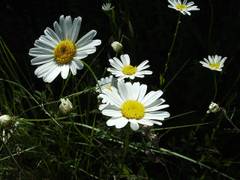
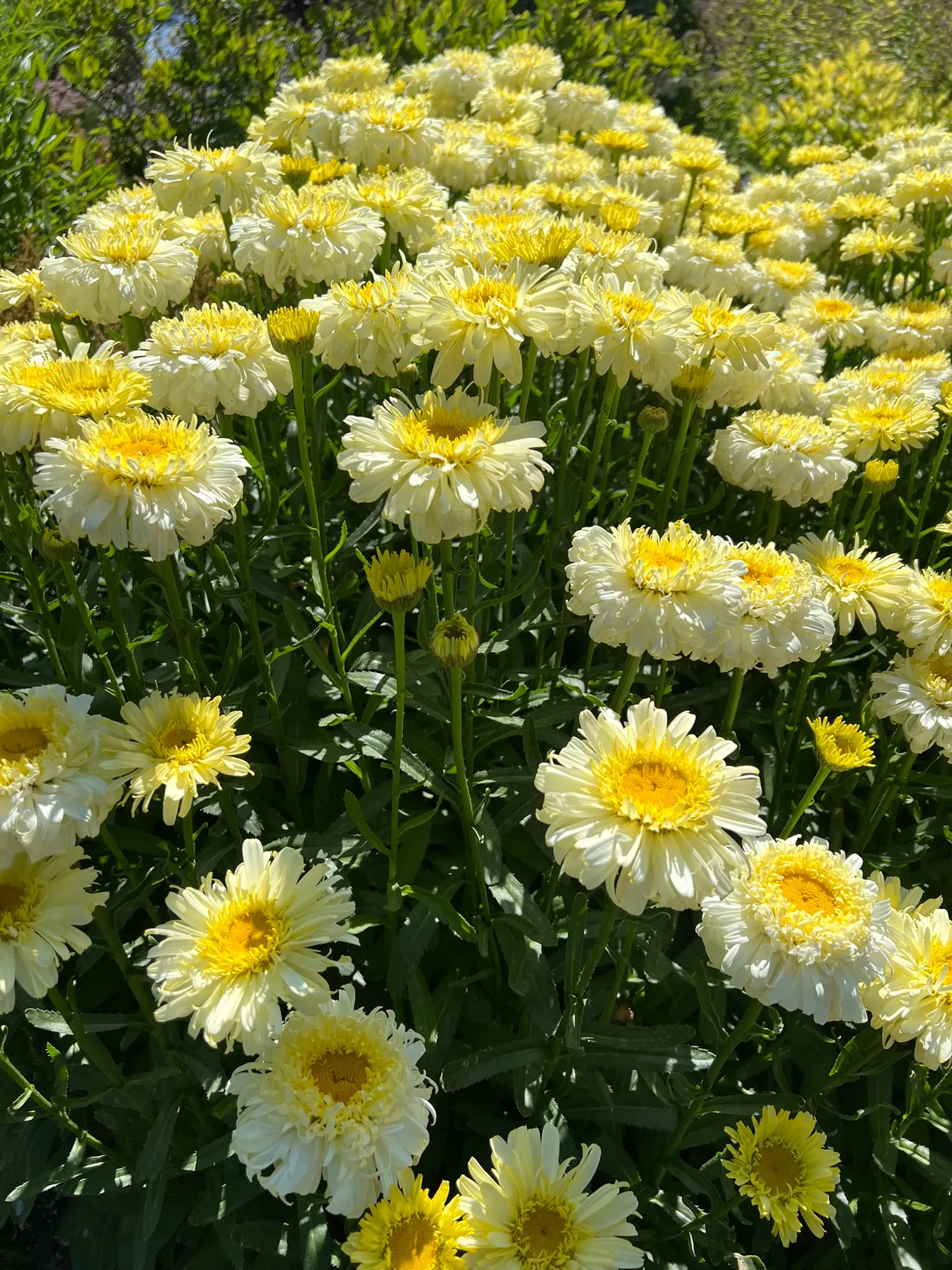
Pure white ray florets surrounding a flat bright yellow disc; single-form heads 2-4 inches (5-10 cm) across with 15-30 rays per head; modern cultivars include double and semi-double forms with ruffled or fringed petalsFoliage Description
Dark green lance-shaped to spatula-shaped coarsely toothed leaves 3-6 inches (8-15 cm) long forming a basal rosette; semi-evergreen in mild wintersGrowing Conditions
Sun Requirements
Requires 6-8 hours of direct sunlight daily
• Full Sun: 6+ hours of direct sunlight
• Partial Shade: 3-6 hours of direct sunlight
• Full Shade: Less than 3 hours of direct sunlight
Care & Maintenance
Care Guide
Grows in full sun in fertile well-drained soil at pH 5.5-7.0. Tolerates a range of soil types but declines in waterlogged or constantly wet conditions. Water regularly; the species prefers consistent moisture but resents standing water. Deadhead spent flowers through the season to extend bloom. Apply a balanced fertilizer in early spring. Division every 2-3 years in early spring or fall is required; clumps deteriorate at the center and decline without division. Discard the old woody center when dividing and replant vigorous outer sections.Pruning
Deadhead spent flower heads down to the next lateral bud or leaf to extend the bloom window through summer. After the main bloom flush, cut stems back by half to stimulate a second flush in some cultivars. Cut all stems to ground level in late fall after frost. Divide in early spring every 2-3 years, discarding the old center and replanting vigorous outer sections at 18 inch (45 cm) spacing.Pruning Schedule
Prune: March, July–August & October
summerfallearly spring
Container Growing
Suitable for container growing
Minimum container size: 3 gallons