Lespedeza, Genus, thunbergii, Species,
- Genus & species
Thunberg bush clover
Overview
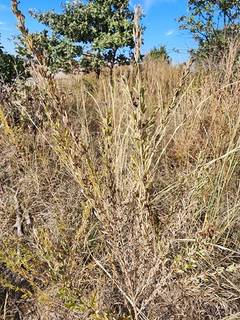
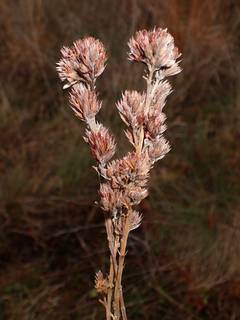
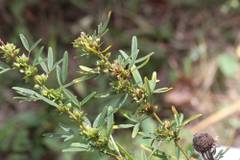
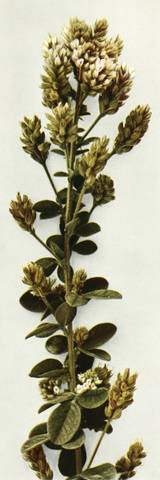
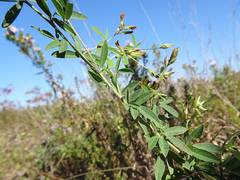
Lespedeza thunbergii is a deciduous subshrub forming a fountain of arching stems 4-6 feet (1.2-1.8 m) tall and 6-10 feet (1.8-3 m) wide in a single season. Stems rise from a woody crown and are killed back to near ground level by frost in zones 4-6, while in zones 7-8 the lower 12-18 inches (30-45 cm) persists as woody growth. Leaves are trifoliate on stalks 0.5-1 inch (1.2-2.5 cm) long, with elliptic to oblong leaflets 1-2 inches (2.5-5 cm) long, blue-green above and covered in flat silky hairs beneath. Rose-purple pea flowers 0.5 inch (1.2 cm) long open in axillary racemes 2-6 inches (5-15 cm) long from late August through October, weighing the stem tips toward the ground as they fill. White-flowered forms are grown under cultivar names. Roots carry nitrogen-fixing nodules, and plants grow on thin soils where nitrogen is low. Stems extend 4-6 feet (1.2-1.8 m) per season from the crown. The arching stems fall outward and smother neighbouring plants within a 3 foot (90 cm) radius, and seed sets freely, raising volunteer seedlings on open ground nearby.
Native Range
Lespedeza thunbergii grows on grassy slopes, riverbanks, forest margins, and roadside embankments across Japan and in eastern and central China. It occupies open, sunny, free-draining ground on sandy and gravelly soils from sea level to 3,300 feet (1,000 m). The species has been grown in Japanese gardens for centuries and is counted among the seven autumn flowers of classical Japanese poetry.Suggested Uses
Planted in mixed borders, on banks, and at the top of retaining walls at 5-8 foot (1.5-2.4 m) spacing, where arching stems fall clear of the structure. Used in erosion control on cut slopes and roadside embankments, since roots bind loose ground and the plant grows on subsoil low in nitrogen. Container culture uses pots of 15 gallons (57 L) or larger, where plants hold at 3-4 feet (0.9-1.2 m); border plantings need 6-8 feet (1.8-2.4 m) of clear ground around the crown.How to Identify
Appearance
Size & Dimensions
Height4' - 6'
Width/Spread6' - 10'
Bloom Information
Flowering runs from late August through October in zones 5-8, beginning 2-3 weeks earlier in zones 8-9. Racemes open from the base upward over 10-14 days, and total bloom on a plant lasts 6-8 weeks. Flowers form on the current season growth, so stems cut back in late winter still flower on schedule. Frost at 28F (-2C) ends flowering and blackens the foliage within a few days.
Detailed Descriptions
Foliage Description
blue-greenGrowing Conditions
Sun Requirements
Requires 6-12 hours of direct sunlight daily
• Full Sun: 6+ hours of direct sunlight
• Partial Shade: 3-6 hours of direct sunlight
• Full Shade: Less than 3 hours of direct sunlight
Care & Maintenance
Care Guide
Plants take 1 inch (25 mm) of water weekly through the first season and go 4-6 weeks without rain once established, wilting at the stem tips before recovering overnight. Nitrogen fertiliser is not applied, since root nodules fix nitrogen and added feed produces soft stems that collapse under the weight of the flowers. Ground that stays wet in winter kills the crown, and plants on heavy clay are set on a raised mound 4-6 inches (10-15 cm) above grade. Crowns survive -20F (-29C) with the top growth killed to the ground, regrowing to full size the following season. Powdery mildew appears on foliage in late summer in humid regions without reducing flowering. Seedlings rise on bare ground within 3 feet (90 cm) of the plant and are hoed out in spring, since Lespedeza taproots resist pulling once seedlings pass 6 inches (15 cm) tall.Pruning
Stems are cut to 4-6 inches (10-15 cm) above ground level in February or March before new shoots emerge, since flowers form on the current season growth. Old stems left standing through winter hold the crown clear of wet debris and come off in one operation in late winter. Cutting stems back by half in early June reduces final height by 12-18 inches (30-45 cm) and delays bloom by 7-10 days. No summer pruning is carried out once flower buds form in July.Pruning Schedule
Prune: February–March
winterearly spring
Container Growing
Suitable for container growing
Minimum container size: 15 gallons