Image 1 of 9
1 / 9
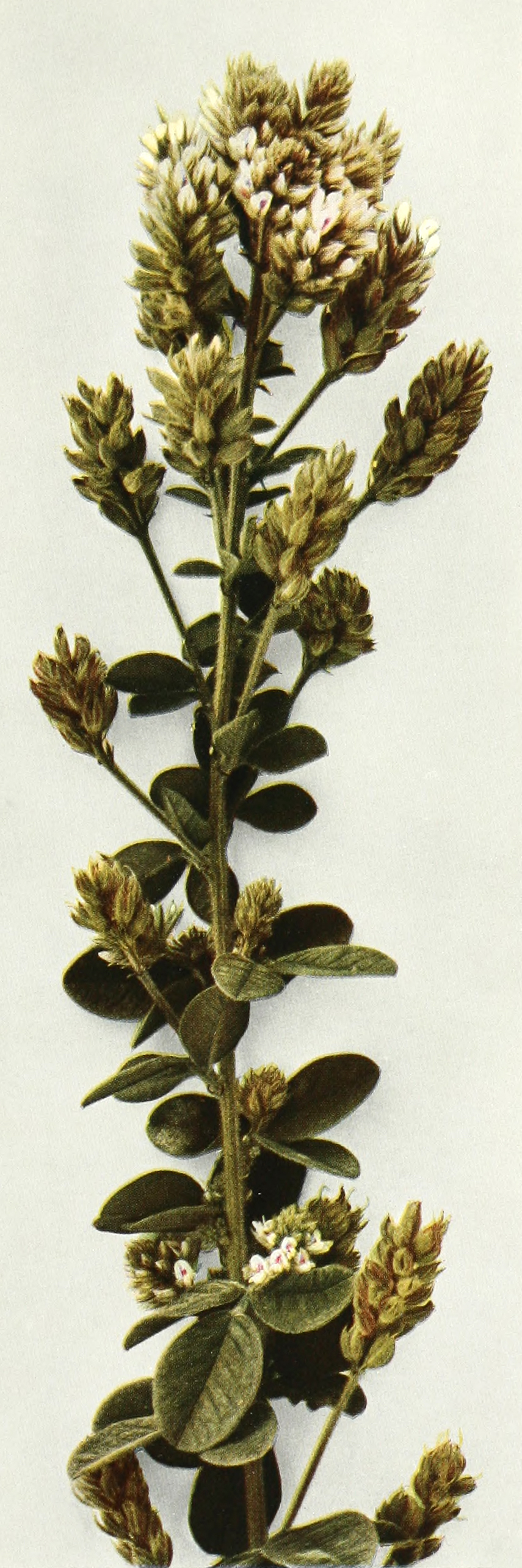
Homer D. House, New York State Botanist. Walter B. Starr of the Matthews-Northrup Company, Buffalo, and Harold H. Snyder of the Zeese-Wilkinson Company, New York, photographers., no rights reserved (CC0) · Wikimedia Commons
Lespedeza, Genus, hirta, Species,
- Genus & species
hairy lespedeza
Overview
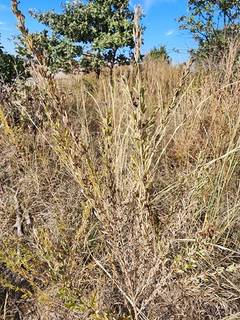
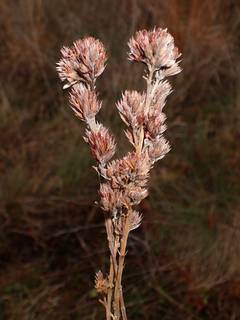
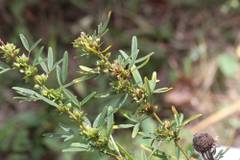
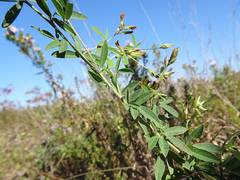
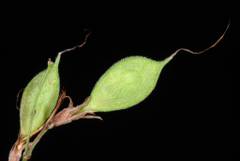
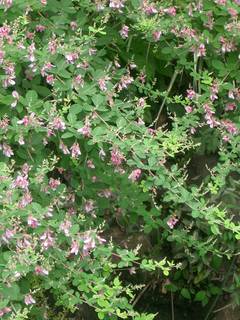
An upright perennial legume growing 2–4 feet (60–120 cm) tall, with one to several stems rising from a woody crown. Stems and foliage are densely covered in spreading whitish hairs. Leaves are alternate and divided into three rounded to oval leaflets, each 0.5–1 inch (1.3–2.5 cm) long, gray-green, and hairy on both surfaces. Cream to yellowish-white pea-shaped flowers, each about 0.25 inch (6 mm) long and often marked with a purple spot at the base, are crowded into dense rounded to cylindrical heads 0.5–1 inch (1.3–2.5 cm) wide on stalks from the upper leaf axils. Bloom occurs from August to October. Small single-seeded pods follow and persist into winter. The plant grows from a deep taproot and dies back to the ground each year. It fixes nitrogen through root nodules. Lower leaves may drop in late-season drought. Growth is upright, and the plant does not spread laterally.
Native Range
Native to eastern and central North America from Maine and Ontario south to Florida and west to Texas and Kansas. Grows in dry, open woodlands, sandy fields, clearings, and roadsides in full sun to light shade.Suggested Uses
Grown in native plantings, meadows, and restoration sites at 18–24 inch (45–60 cm) spacing. Used on dry, infertile slopes and sandy ground, where it stabilizes soil and fixes nitrogen. Suited to wildlife and prairie plantings rather than irrigated borders.How to Identify
Appearance
Size & Dimensions
Height2' - 4'
Width/Spread1' - 2'
Colors
Bloom Information
Detailed Descriptions
Flower Description
Cream to yellowish-white with a purple base spotFoliage Description
Gray-greenGrowing Conditions
Sun Requirements
Requires 6-10 hours of direct sunlight daily
• Full Sun: 6+ hours of direct sunlight
• Partial Shade: 3-6 hours of direct sunlight
• Full Shade: Less than 3 hours of direct sunlight
Care & Maintenance
Care Guide
Grows in full sun to light shade in dry, well-drained sandy or rocky soils of low fertility. Water during the first season to establish the taproot; established plants tolerate drought and need no supplemental water. As a nitrogen-fixing legume, it grows in poor soils without added fertilizer. The deep taproot makes established plants difficult to transplant. Few pests or diseases affect it. Foliage is grazed by deer and other browsers, and the seeds are eaten by birds and small mammals.Pruning
Cut dead stems to the ground in late fall or early spring. Deadheading is not necessary; seed heads persist into winter and feed wildlife. Plants reseed where soil is open. No other pruning is needed.Pruning Schedule
Prune: March & November
fallearly spring