Lespedeza, Genus, capitata, Species,
- Genus & species
round-headed bush clover
Overview
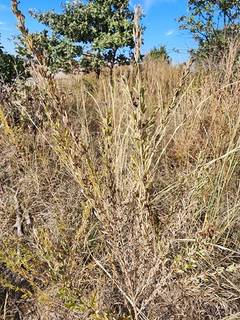
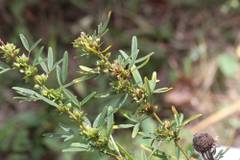
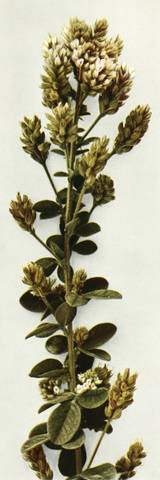
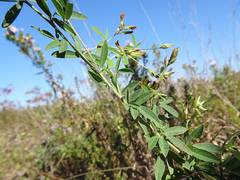
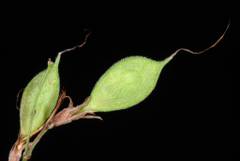
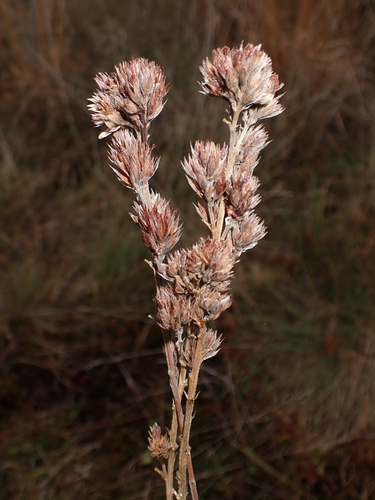
Lespedeza capitata is an upright herbaceous perennial legume 2-5 feet (60-150 cm) tall, with stiff, unbranched to lightly branched stems clothed in silvery hairs. The leaves are divided into three narrow, oblong leaflets 1-2 inches (2.5-5 cm) long, gray-green and silky-hairy, especially beneath. From late summer into early fall, small cream to yellowish flowers marked with a purple spot crowd into dense, rounded to oval heads 0.5-1 inch (1.5-2.5 cm) wide clustered toward the stem tips. The heads turn brown and persist into winter, holding small seeds that feed birds and game. As a legume it fixes nitrogen and grows on dry, lean prairie soils. The deep taproot anchors plants and carries them through drought. It stands stiffly upright and turns bronze-brown in fall, holding form through the cold months. Native to prairies, savannas, and open woods across the eastern and central United States, it spreads by seed rather than running roots. One trade-off is the late, muted bloom, since the cream heads are subtle and the main interest is the dried winter structure.
Native Range
Native to the eastern and central United States and adjacent Canada, from Maine and Ontario south to Florida and west to the Great Plains. It grows on dry prairies, savannas, open woods, glades, and roadsides on lean sandy or rocky soils.Suggested Uses
Used in prairie restorations, native meadows, and erosion control on dry banks, and in forage and wildlife plantings. It is grown for winter structure and as seed and cover for quail and songbirds.How to Identify
Appearance
Size & Dimensions
Height2' - 5'
Width/Spread1' - 2'
Bloom Information
Detailed Descriptions
Flower Description
Cream with purple markingsFoliage Description
Gray-green, silvery-hairyGrowing Conditions
Sun Requirements
Requires 6-12 hours of direct sunlight daily
• Full Sun: 6+ hours of direct sunlight
• Partial Shade: 3-6 hours of direct sunlight
• Full Shade: Less than 3 hours of direct sunlight
Care & Maintenance
Care Guide
Grows in full sun in dry, well-drained sandy, loamy, or rocky soils at pH 5.5-7.5, and tolerates drought and lean ground once the taproot is set. It fixes its own nitrogen and needs no fertilizer, growing weak and floppy on rich or shaded sites. Hardy in zones 3-8, it dies back to the root in winter and resprouts in late spring. Seed sprouts more evenly after scarification, and seedlings build a taproot before much top growth. Established plants reseed and are long-lived but slow to move because of the deep root.Pruning
Maintenance is minimal. Dried stems are left standing through winter for structure and seed, then cut to the ground in late winter before new shoots rise. Seed heads can be removed earlier to limit self-sowing.Pruning Schedule
Prune: February–March
winter