Lespedeza, Genus, cuneata, Species,
- Genus & species
Chinese bushclover
Overview
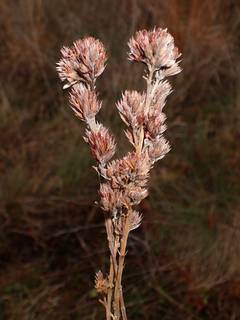
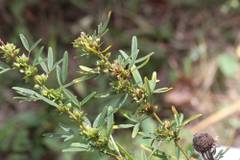
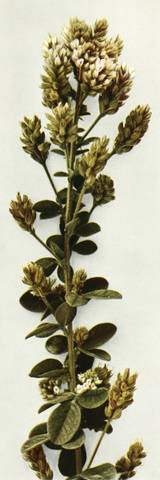
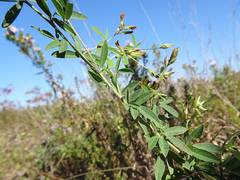
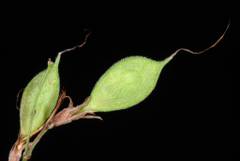
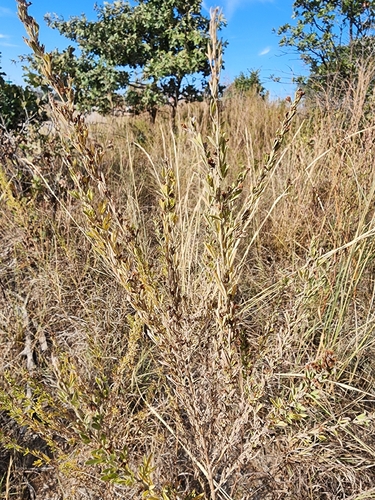
Lespedeza cuneata, known as sericea or Chinese bushclover, is an upright, wiry perennial legume 3-5 feet (90-150 cm) tall with a woody base and many slender, ascending stems. The stems are densely clothed in small trifoliate leaves whose wedge-shaped leaflets are 0.3-0.8 inch (8-20 mm) long, grey-green, and flattened against the stem. From midsummer into autumn it bears small pea-type flowers in the leaf axils, creamy white marked with purple to violet, about 0.2-0.3 inch (6-8 mm) long; many flowers are self-pollinating and never fully open. As a legume it fixes nitrogen and tolerates poor, dry, and acidic soils, which lets it colonize roadsides, pastures, and disturbed land. It builds a deep taproot and a persistent seed bank, and the foliage carries high tannin levels that make it unpalatable to most grazers. In much of the central and southeastern United States it forms dense stands that displace native vegetation and is listed as a noxious or invasive weed. These traits make it hard to control once it is established.
Native Range
Native to eastern and southern Asia, including China, Japan, Korea, Taiwan, and the Indian subcontinent. It was introduced to North America for forage and erosion control and is now widely naturalized.Suggested Uses
Historically sown for erosion control, forage, and mine-spoil reclamation on poor soils. It is now discouraged or banned across much of the United States because of its invasive spread. Where permitted, it is limited to contained reclamation sites rather than gardens.How to Identify
Appearance
Size & Dimensions
Height3' - 5'
Width/Spread1' - 2'
Bloom Information
Detailed Descriptions
Flower Description
creamy white with purple markingsFoliage Description
grey-greenGrowing Conditions
Sun Requirements
Requires 6-10 hours of direct sunlight daily
• Full Sun: 6+ hours of direct sunlight
• Partial Shade: 3-6 hours of direct sunlight
• Full Shade: Less than 3 hours of direct sunlight