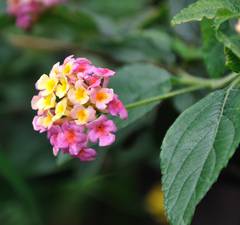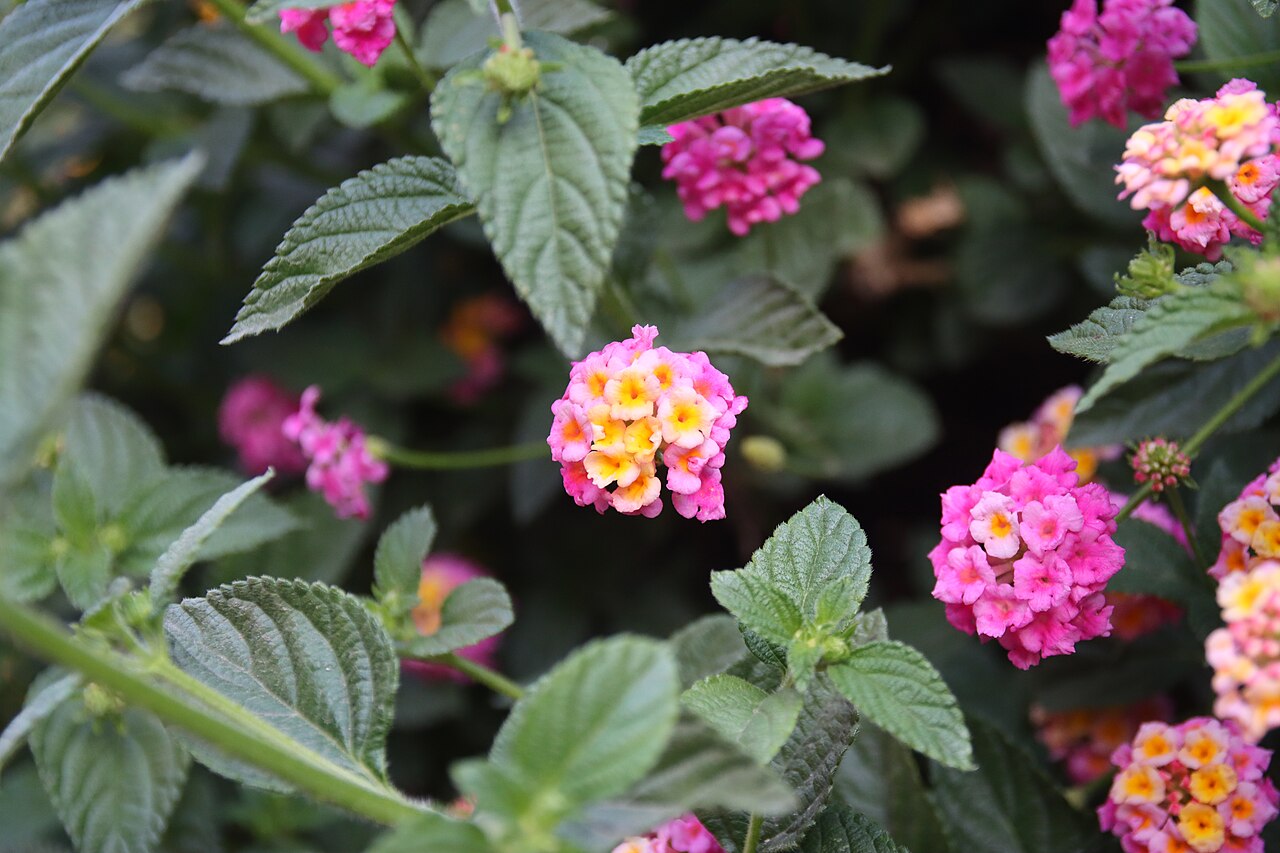
Lantana, Genus, camara, Species,
- Genus & species
Lantana
Tropical Americas: Mexico, Central America, the West Indies, and northern South America
Overview
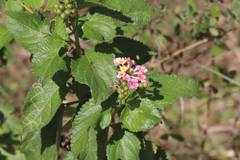
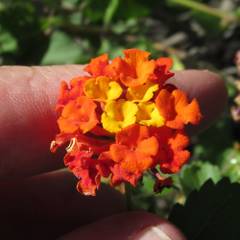
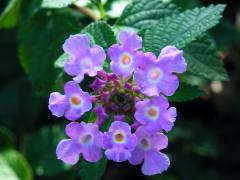
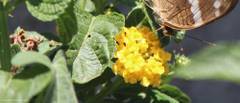
Lantana camara is a broadleaf evergreen shrub in zones 9-11, reaching 3-6 feet (0.9-1.8 m) tall and wide, and grown as a warm-season annual in colder zones where it makes 18-36 inches (45-90 cm) in one season. Stems are square in cross-section and carry short recurved prickles on older growth. Leaves are opposite, ovate, 2-5 inches (5-12 cm) long, with a rough sandpaper-textured upper surface, toothed margins, and a pungent scent when crushed. Flowers sit in dense flat heads 1-2 inches (2.5-5 cm) across, each holding 20-40 tubular florets that open from the outside inward and shift color as they age, so a single head carries yellow, orange, and red, or white through pink, at one time. Flowering runs from late spring until frost in zones 6-8 and year-round in zones 10-11. Fruit is a fleshy drupe 0.2 inch (5 mm) across, green ripening blue-black, holding triterpenoids that damage the liver in grazing livestock and cause illness in people who eat the unripe fruit. Seedlings and root fragments spread readily, and the species is listed as a noxious or restricted weed in Australia, South Africa, India, and several Pacific island groups.
Native Range
Native to the tropical Americas across Mexico, Central America, the West Indies, and northern South America, growing in disturbed ground, forest margins, and coastal scrub from sea level to 6,600 feet (2,000 m). Naturalized through the tropics and subtropics of Africa, Asia, Australia, and the Pacific after introduction as a garden plant during the 1800s. In the United States it is naturalized in Florida, along the Gulf Coast, and in Hawaii.Suggested Uses
Planted at 24-36 inch (60-90 cm) spacing in beds, on banks, and in coastal plantings with salt exposure, and grown in containers of 3-5 gallons (11-19 L) and hanging baskets as a warm-season annual. Flower heads are worked by butterflies through the season, with swallowtails and skippers among the frequent visitors. Its status as a regulated weed in several countries and states restricts planting, and sterile or low-seeding cultivars are used where the species itself is prohibited.How to Identify
Appearance
Size & Dimensions
Height3' - 6'
Width/Spread3' - 6'
Colors
Bloom Information
Flowers from late spring until the first frost in zones 6-8, from March to December in zone 9, and year-round in zones 10-11 with a pause during spells below 55F (13C). Individual heads hold 10-14 days, opening from the outside inward. Bloom stops within 2-3 weeks in shade under 6 hours of direct sun and slows through periods above 100F (38C). Flowers form on new growth, so plants cut back carry fresh bloom within 3-4 weeks.
Detailed Descriptions
Flower Description
Yellow, orange, red, pink, and white, changing with age within one headFoliage Description
Mid to dark greenGrowing Conditions
Sun Requirements
Requires 6-10 hours of direct sunlight daily
• Full Sun: 6+ hours of direct sunlight
• Partial Shade: 3-6 hours of direct sunlight
• Full Shade: Less than 3 hours of direct sunlight
Care & Maintenance
Care Guide
Water weekly until roots establish over 4-6 weeks, then every 2-3 weeks; established plants hold through 4-6 weeks of drought and flower more heavily in lean dry soil than in rich moist ground. High-nitrogen fertilizer produces leaf growth and cuts flower numbers. Whitefly and spider mites colonize plants in still sheltered positions and under glass, and powdery mildew coats leaves grown in shade. Plants in zones 9-11 are cut back hard each spring as growth restarts, since untrimmed specimens build bare woody stems and flower only at the branch tips. Contact with the foliage causes skin irritation in some individuals. Suckers appear around established plants, and seed carried by birds establishes in surrounding land.Pruning
Stems are cut back by one-third to one-half in late winter or early spring in zones 9-11, once temperatures hold above 50F (10C), which restores dense growth and flowering along the stems. Light shearing of spent heads every 4-6 weeks through the season brings a further flush within 3-4 weeks. Plants cut to 6-12 inches (15-30 cm) regrow to full size within one season.Pruning Schedule
Prune: February–March
early spring
Container Growing
Suitable for container growing
Minimum container size: 3 gallons