Kalmia, Genus, polifolia, Species,
- Genus & species
bog laurel
Northern North America (boreal and circumboreal)
Overview
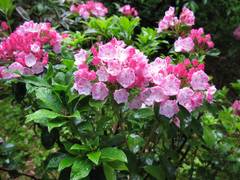
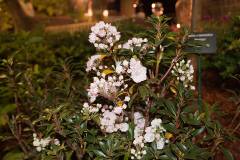
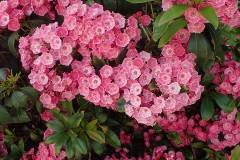
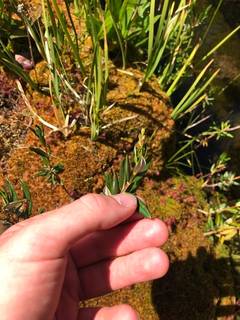
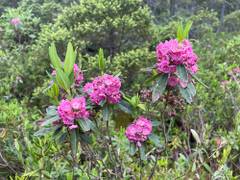
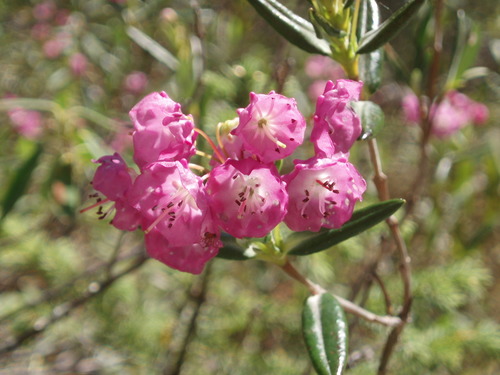
Kalmia polifolia is a low evergreen shrub in the heath family, reaching 8-24 inches (20-60 cm) tall and 12-24 inches (30-60 cm) wide with a spreading, often straggly habit. Leaves opposite, narrowly lance-shaped, 0.4-1.5 inches (10-38 mm) long, leathery, dark green above with revolute (downturned) margins and a pale waxy-white underside. Flowers rose-pink to deep pink, 0.4-0.6 inch (10-15 mm) across, with five fused petals forming a shallow cup; borne in terminal clusters of 5-15 flowers from May through July. Stamens are held under tension in pouches in the petals and snap upward to dust visiting bees with pollen when triggered. Spreads by short rhizomes to form loose mats over decades; growth is slow at 1-2 inches (2.5-5 cm) per year. All parts contain grayanotoxins; ingestion of leaves, flowers, or pollen-laden honey causes vomiting, slow heart rate, and low blood pressure in humans and livestock.
Native Range
Native to acidic peat bogs, muskegs, and wet conifer forest margins across northern North America from Alaska east to Newfoundland and south to mountainous regions of New Jersey, Michigan, and Oregon at elevations from sea level to 6,000 feet (1,830 m).Suggested Uses
Used in bog gardens, acid-soil rain gardens, and naturalistic peat-soil plantings at 18-24 inch (45-60 cm) spacing in zones 2-7. Combines with Andromeda polifolia, Rhododendron groenlandicum, and Sphagnum mosses in restored bog plantings. Containers require ericaceous (acidic) potting mix in pots of at least 3 gallons (11 L) sunk into a moist saucer or sub-irrigated tray; plants fail in non-acidic potting mix.How to Identify
Appearance
Size & Dimensions
Height8" - 2'
Width/Spread1' - 2'
Bloom Information
May through July across most of the species range, with peak bloom from late May through mid-June. In sub-arctic and alpine sites, bloom extends into August. Individual flower clusters open over 2-3 weeks; total stand bloom spans 5-7 weeks. Hot dry conditions during bud development reduce flower count by 30-50%.
Detailed Descriptions
Flower Description
Rose-pink to deep pinkFoliage Description
Dark green above, white-waxy belowGrowing Conditions
Sun Requirements
Requires 4-8 hours of direct sunlight daily
• Full Sun: 6+ hours of direct sunlight
• Partial Shade: 3-6 hours of direct sunlight
• Full Shade: Less than 3 hours of direct sunlight
Care & Maintenance
Care Guide
Establishes from container stock in 2-3 years in consistently moist acidic peat with weekly water through the first two summers. Mature plants do not tolerate dry soil and decline within 1-2 years if root zone moisture drops below saturated peat conditions for extended periods. Requires soil pH 4.0-5.5; chlorosis develops at pH above 6.0 even with adequate iron. Foliage scorches in soils that warm above 75 degrees F (24 degrees C) at root depth, restricting use to cool-summer climates or shaded north-facing sites in zones 6-7. No serious pest or disease problems occur in suitable sites. Plants resent transplanting once established and rarely recover when moved after year 3.Pruning
Light pruning to remove dead or broken branches is done after flowering ends in July. Plants respond poorly to hard cutback and may not recover from removal of more than one-third of live wood in a season. Spent flower clusters are hand-pinched to redirect energy to vegetative growth in young plants.Pruning Schedule
Prune: July
summer
Container Growing
Minimum container size: 3 gallons