Kalmia, Genus, microphylla, Species,
- Genus & species
western bog laurel
Overview
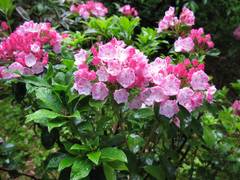
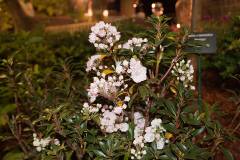
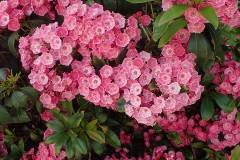
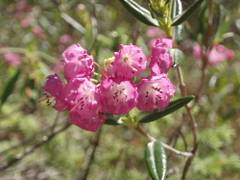
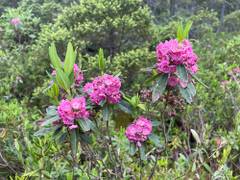
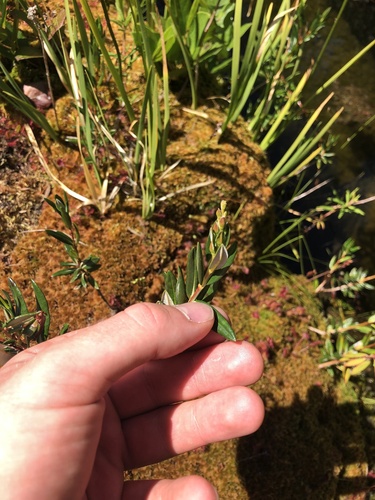
Kalmia microphylla is a low-growing evergreen shrub reaching 4-20 inches (10-50 cm) tall and spreading 12-24 inches (30-60 cm) wide via creeping stems that root at nodes. Branches are slender and woody at the base; bark is reddish-brown on older stems. Leaves are opposite, leathery, and oblong-elliptic, 0.4-1 inch (1-2.5 cm) long, dark green on the upper surface and white-pubescent on the underside, with margins rolled inward. Flowers are saucer-shaped, 0.4-0.6 inch (1-1.5 cm) across, deep pink to rose-purple with 10 fused spring-loaded anthers held in pockets in the corolla; bumblebee visitation triggers anther release, dusting pollen on the visitor. Bloom occurs from June through August in flat-topped clusters at branch tips. Fruits are 5-celled capsules 0.1-0.2 inch (3-5 mm) long that release small seeds in late fall. Plants persist 20-40 years on stable bog or wet meadow sites and form low colonies via layering. All parts contain grayanotoxins; ingestion causes severe gastrointestinal and neurological symptoms in humans, dogs, cats, horses, and livestock. Honey produced from the flowers is also toxic.
Native Range
Native to western and northwestern North America from Alaska south through British Columbia, Washington, Oregon, the Sierra Nevada, and the Rocky Mountains to New Mexico, with arctic populations across northern Canada to Greenland. Found in subalpine and alpine bogs, wet meadows, sphagnum mats, and seepage slopes at 2,000-12,000 feet (600-3,650 m) elevation, typically on cool, acidic, organic substrates.Suggested Uses
Used in bog gardens, alpine troughs, ericaceous-themed shaded plantings, and sphagnum bog restorations at 12-18 inch (30-45 cm) spacing. Suited to specialty rock gardens with permanently moist acidic substrate and cool conditions, and to alpine plant collections. Performs poorly in standard garden soils, alkaline conditions, hot summer climates, and plantings where children, pets, or livestock can access foliage.How to Identify
Appearance
Size & Dimensions
Height4" - 1'8"
Width/Spread1' - 2'
Bloom Information
Flowers open from late June through August across most of the range, with peak bloom in July at mid-elevations and into early August in subalpine and alpine sites. Individual flowers last 5-10 days; total bloom period extends 3-4 weeks per plant. Bloom timing shifts later by 2-3 weeks at higher elevations and in cool, late-snowmelt seasons. Reblooming is uncommon.
Detailed Descriptions
Flower Description
deep pink to rose-purpleFoliage Description
dark green above; white-pubescent below; leathery with inrolled marginsGrowing Conditions
Sun Requirements
Requires 4-8 hours of direct sunlight daily
• Full Sun: 6+ hours of direct sunlight
• Partial Shade: 3-6 hours of direct sunlight
• Full Shade: Less than 3 hours of direct sunlight
Care & Maintenance
Care Guide
Plants require permanently moist, acidic (pH 4.0-5.5), peaty soil with cool root conditions; foliage and root systems decline rapidly in alkaline garden soils or on dry sites. Container culture is feasible in pots of at least 5 gallons (19 L) with sphagnum-amended ericaceous mix and partial shade. Plants are prone to leaf spot and chlorosis if soil pH rises above 6.5. Aphids occasionally cluster on new growth. Plants take 4-6 years to flower from seed and 2-3 years from rooted layered branches. Established colonies expand at 2-4 inches (5-10 cm) per year. All parts contain grayanotoxins; sap contact can cause skin irritation in sensitive individuals.Pruning
Cut back damaged or dead branches in early spring before new growth resumes. Light shaping is acceptable but the species develops a natural low form and rarely needs corrective pruning. Old wood does not break readily; cuts into thick stems heal slowly.Pruning Schedule
Prune: March–April
early spring
Container Growing
Suitable for container growing
Minimum container size: 5 gallons